
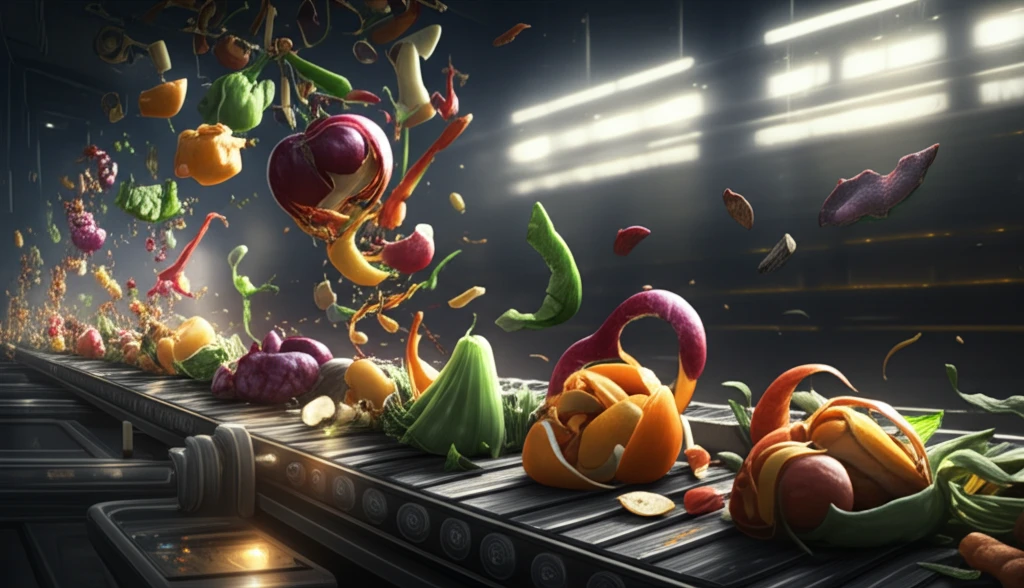
Waste Not, Want Not: The Surprising Second Life of Food Byproducts

"Discover how innovative technologies are transforming food waste into valuable resources, from dietary fibers to natural antioxidants."
In an era increasingly defined by sustainability and resourcefulness, the concept of 'waste' is undergoing a radical transformation. What was once discarded is now being reimagined as a valuable resource, particularly within the food industry. Food waste, an issue of enormous global concern, is no longer just a problem to be managed; it's an opportunity to be seized. Innovative technologies and creative applications are turning discarded food materials into valuable commodities, paving the way for a more sustainable and economically sound future.
This transformation, known as food byproduct valorization, is gaining momentum as researchers, businesses, and policymakers recognize the immense potential hidden within these discarded resources. From the peels of fruits to the remnants of olive oil production, food byproducts are rich in valuable compounds that can be extracted, refined, and repurposed into a wide range of products. These include dietary fibers, natural antioxidants, food additives, and even materials for cosmetics and packaging.
This article explores the fascinating world of food byproduct valorization, delving into the innovative technologies that are making this transformation possible. We'll examine specific examples of how food waste is being repurposed, highlighting the benefits for the environment, the economy, and human health. Join us as we uncover the surprising second life of food byproducts and explore the exciting possibilities of a more sustainable food system.
Global Food Waste Statistics and Valorization Potential
According to 2026 figures, urban organic waste valorization is being implemented in Latin American SMEs to align with SDG 12.3. Food waste valorization through anaerobic digestion offers a wide variety of options for converting waste into valuable products. Research indicates that agri-food waste valorization challenges can be addressed with smart technologies and integrated decision-making approaches. The circular urban food system approach emphasizes resource recovery and sustainable food supply chains.
Integrated Valorization Methods and Their Constraints
Integrated valorization approaches are being adopted to produce high-energy-yielding products such as solid biofuels, liquid biofuels, biogas, and hydrogen-rich syngas. Food waste valorization involves a range of innovative processes designed to convert waste into valuable products, catering to different waste types and desired outcomes. Agro-food waste valorization for sustainable materials highlights the need for renewable polymers and bio-based films, but non-sustainable and non-biodegradable options remain limitations. Implementing a circular economy approach shows that while prevention is most valuable, valorisation through composting, anaerobic digestion, or bio-refining is legitimate for unavoidable by-products.
Evolution of Food Waste Valorization Practices
Industrial food waste valorization has evolved with attention to food supply chain waste and societal behavior toward waste. Food waste can be classified based on the point in the food supply chain where it is generated, from harvesting to consumption. Historically, nearly one-third of all food produced globally is wasted, prompting valorization efforts. Large-scale processes have been developed and are being tested for municipal-scale use, marking milestones in waste management.
Turning Trash into Treasure: The Science of Valorization
The industrialization of processes dealing with recovering compounds from food wastes is a complex undertaking. It begins with laboratory research and moves through pilot planning and full-scale production. Protecting intellectual properties and developing definite applications are also vital. These steps ensure the process's sustainability, economic benefits, and market establishment. Focusing solely on extraction technologies without investigating tailor-made applications is a path to failure. A successful scale-up should maintain the functional properties of target compounds while meeting consumers' high-quality standards.
- Thinking of the idea as a financial asset.
- Implementing policies and processes for identifying, disclosing, and assigning patentable inventions as an integral part of research and development efforts of the organization.
- Considering advantages and disadvantages of patent protection and to check alternatives (secrecy, utility models, etc.).
- Performing a prior art search to verify if the invention is not already claimed by another individual or business, and identify competitors or potential partners.
Recent Advances in Food Waste Valorization Research
Recent research focuses on valorization of agri-food waste and by-products in cheese and other dairy foods, with studies over the last decade showing impacts on nutritional quality and sensory properties. The circular food and food-waste valorization platforms market is expanding, redefining excess food management and resource utilization. Latest research papers continue to explore waste valorization across various sectors, including the production of biochemicals and packaging materials.
Challenges and Systemic Failures in Valorization
Despite food waste being a $540 billion opportunity, valorization turns systemic failure into a resource opportunity, yet barriers remain. The transformation of urban food systems is essential for achieving sustainable, resilient, and climate-smart cities, but implementation faces challenges. While the potential is recognized, failures in scaling and integrating valorization approaches highlight the need for systemic change.
Comparative Assessment of Valorization Pathways
Food waste valorization options from the bioeconomy include practices that require sustainability assessment comparing bio-based products to fossil-based alternatives. Waste valorization in food science shows how sustainable food production works at the system level, not just at the recipe level. Current and future trends in food waste valorization focus on production of chemicals, materials, and fuels, with a global perspective on maximizing value from waste.
Looking Ahead: The Future of Food Waste Valorization
The future of food waste valorization is bright, with ongoing research and development pushing the boundaries of what's possible. Emerging technologies like pulsed electric fields and subcritical water extraction hold promise for more efficient and sustainable extraction of valuable compounds. As consumer awareness of sustainability grows, the demand for upcycled food products is likely to increase, driving further innovation and investment in this field. By embracing food byproduct valorization, we can create a more resilient and sustainable food system that benefits the environment, the economy, and human health.
Expert Insights on Barriers and Enablers
A phenomenological analysis of 16 actors in food waste valorisation identifies the current state of the sector and highlights barriers and enablers for success. Black soldier fly larvae are being used for organic waste valorization, offering bioconversion and frass fertilizer, though contaminant risk from microplastics and PFAS remains a concern. Food waste valorization strategies emphasize the role of valorization in advancing the circular bioeconomy and sustainable food production systems.
Market Growth and Future Trends
The global food waste valorization market is accounted for $58.7 billion in 2025 and is expected to reach $85.9 billion by 2032, growing at a CAGR of 5.6% during the forecast period. Current and future trends in food waste valorization focus on production of chemicals, materials, and fuels, with a global perspective. Food waste valorization is the sustainable process of converting waste into valuable products like biofuels, fertilizers, and bioplastics, with ongoing research to enhance these processes.
Nutrient Management and Systemic Issues
Sustainable nutrient management remains a critical challenge for agri-food systems worldwide, particularly in resource-constrained island regions. Excessive nitrogen and phosphorus losses are driven by reliance on imported fertilizers, feed, and inefficient waste management. Addressing these systemic challenges is essential for improving nutrient efficiency and reducing waste in food production.
Household Food Waste and Community Action
Circular urban food systems innovations in food waste valorization are essential for sustainable cities, focusing on household food waste and resource recovery. Sustainable food supply chains and urban agriculture are key components, with waste-to-value approaches supporting community-level impact. The human element involves changing behavior toward food waste and integrating valorization into daily practices.