
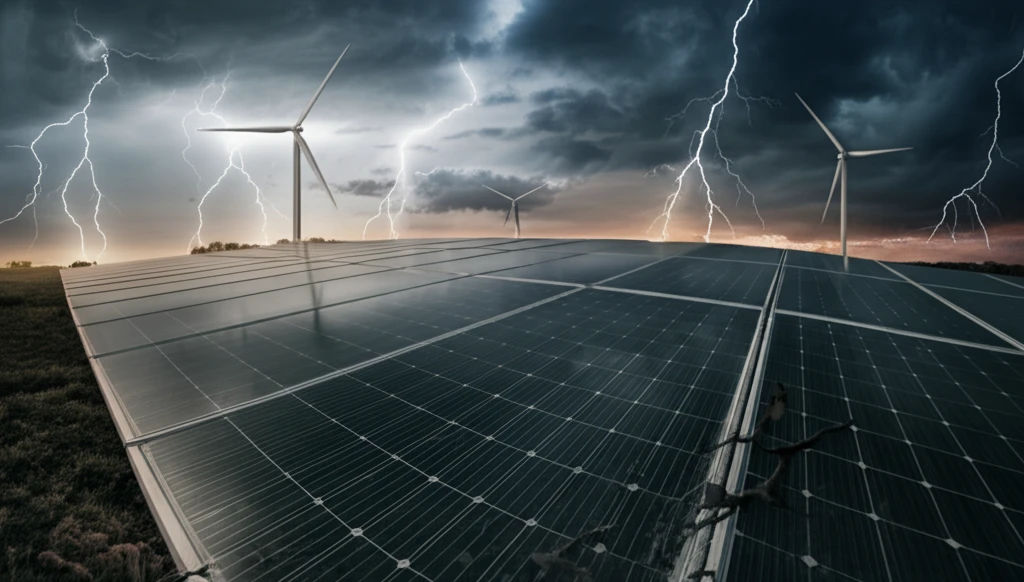
Surreal illustration of a renewable energy shortage with a solar panel and wind turbine against a stormy sky.

Dunkelflaute: How to Prepare for Renewable Energy Shortages

"Understanding and mitigating variable renewable energy shortages for a sustainable future."


As the world increasingly relies on variable renewable energy sources (VREs) like wind and solar power, a new challenge has emerged: periods of renewable energy shortage, often referred to as "Dunkelflaute," a German term meaning "dark doldrums." These periods, characterized by low wind and solar availability, pose significant risks to energy security and grid stability. As countries transition to cleaner energy sources, understanding and mitigating Dunkelflaute events become increasingly critical.

Defining and quantifying Dunkelflaute events is not straightforward. Unlike traditional energy sources that offer predictable output, VREs are subject to weather patterns and seasonal variations, leading to fluctuations in energy supply. These fluctuations can be particularly pronounced during specific weather conditions, such as prolonged periods of cloud cover or low wind speeds, resulting in significant energy shortages. The challenge lies in accurately identifying, measuring, and forecasting these shortage events to ensure a reliable energy supply.

Recent research highlights the growing importance of addressing Dunkelflaute in energy planning and policy. Various methodologies have been developed to analyze VRE shortages, focusing on factors like supply from variable renewables and the mismatch between supply and electricity demand. By understanding these methods and their limitations, energy stakeholders can better prepare for and mitigate the impact of Dunkelflaute events, ensuring a smooth transition to a sustainable energy future.

Understanding Renewable Energy Shortages

Surreal illustration of a renewable energy shortage with a solar panel and wind turbine against a stormy sky.

A renewable energy shortage, or Dunkelflaute, occurs when the output from variable renewable energy sources (VREs) like wind and solar is significantly reduced due to weather conditions. This can lead to an imbalance between energy supply and demand, potentially causing grid instability and power outages. Addressing Dunkelflaute is crucial for maintaining a reliable energy supply as VREs become a larger part of the energy mix.

Analyzing renewable energy shortages involves considering several key factors:

  • Defining the shortage: Establishing clear criteria for what constitutes a shortage event, including the duration and severity of the energy deficit.
  • Quantifying the shortage: Measuring the magnitude of the energy shortfall and its impact on the energy grid.
  • Comparing shortage events: Analyzing shortage events across different renewable generation technologies and locations to understand patterns and trends.
Various methodological approaches exist for quantifying VRE shortages, each with its own strengths and limitations. These methods can be broadly categorized into those that focus on the supply of variable renewables and those that focus on the mismatch between supply and electricity demand. By understanding these different approaches, energy stakeholders can choose the most appropriate methods for their specific needs and circumstances.

Moving Forward: Preparing for a Renewable Energy Future

As the world transitions to a cleaner energy future, addressing variable renewable energy shortages becomes increasingly important. By understanding the different methodologies for analyzing VRE shortages, energy stakeholders can make informed decisions about energy planning and policy. This includes investing in energy storage solutions, improving grid infrastructure, and implementing demand-side management strategies. By proactively addressing the challenges of Dunkelflaute, we can ensure a reliable and sustainable energy future for all.

About this Article -

This article was crafted using a human-AI hybrid and collaborative approach. AI assisted our team with initial drafting, research insights, identifying key questions, and image generation. Our human editors guided topic selection, defined the angle, structured the content, ensured factual accuracy and relevance, refined the tone, and conducted thorough editing to deliver helpful, high-quality information.See our About page for more information.

Everything You Need To Know

1

What is 'Dunkelflaute,' and why is it a concern as we shift towards renewable energy?

'Dunkelflaute' is a German term that translates to 'dark doldrums,' referring to periods of low wind and solar energy production. As the world relies more on variable renewable energy sources (VREs) like wind and solar power, 'Dunkelflaute' events pose risks to energy security and grid stability. These periods of low renewable energy availability can lead to significant energy shortages, making it crucial to understand and mitigate their impact to ensure a smooth transition to sustainable energy.

2

How do variable renewable energy shortages, or 'Dunkelflaute' events, impact the stability of energy grids?

Variable renewable energy shortages, or 'Dunkelflaute' events, significantly impact energy grid stability by creating an imbalance between energy supply and demand. When wind and solar energy production decreases due to weather conditions, the grid may struggle to meet electricity demand, potentially leading to power outages. This necessitates a comprehensive understanding of 'Dunkelflaute' and the implementation of mitigation strategies such as energy storage solutions and improved grid infrastructure.

3

What are the key steps in analyzing renewable energy shortages, or 'Dunkelflaute' events?

Analyzing renewable energy shortages, or 'Dunkelflaute' events, involves several key steps. First, establishing clear criteria for defining a shortage event, including its duration and severity. Second, quantifying the energy shortfall and its impact on the energy grid. Third, comparing shortage events across different renewable generation technologies and locations to identify patterns and trends. Methodologies focus either on the supply of variable renewables, or on the mismatch between supply and electricity demand.

4

Beyond analyzing 'Dunkelflaute,' what solutions can energy stakeholders invest in to prepare for variable renewable energy shortages?

Energy stakeholders can invest in several solutions to prepare for variable renewable energy shortages and mitigate 'Dunkelflaute.' These include investing in energy storage solutions to store excess energy during periods of high renewable energy production, improving grid infrastructure to enhance the transmission and distribution of energy, and implementing demand-side management strategies to better align energy demand with available supply. By proactively addressing the challenges of 'Dunkelflaute', a reliable and sustainable energy future can be ensured.

5

What are some of the methodologies used to quantify variable renewable energy (VRE) shortages during a 'Dunkelflaute', and why is understanding these methods important?

Methodologies for quantifying VRE shortages during a 'Dunkelflaute' can be broadly categorized into those focusing on the supply of variable renewables and those focusing on the mismatch between supply and electricity demand. Understanding these different approaches is crucial because each method has its own strengths and limitations, and choosing the most appropriate method depends on specific needs and circumstances. A holistic assessment often involves considering multiple methodologies to gain a comprehensive understanding of the potential energy shortfall during 'Dunkelflaute' events.

Newsletter Subscribe

Subscribe to get the latest articles and insights directly in your inbox.