
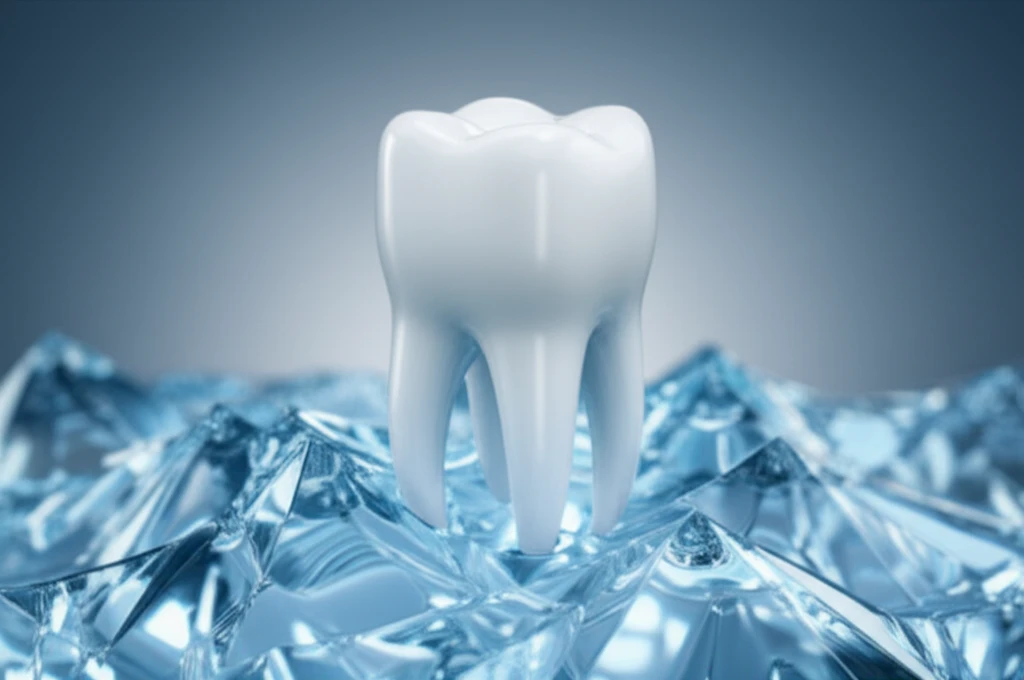
Healthy tooth emerging from crystalline bone structure

Demineralized Freeze-Dried Bone Allograft (DFDBA): A Breakthrough for Intrabony Defects?

"Explore how adjuncts combined with DFDBA are revolutionizing the treatment of intrabony defects, offering hope for enhanced bone regeneration and periodontal health."


Periodontal regeneration, aimed at restoring lost or damaged tissues, is crucial for rebuilding the architecture and function of the periodontium. This includes not only the structural components but also a functional periodontal ligament, alveolar bone, and cementum. The ultimate goal is to regenerate all tissues affected by periodontal diseases, ensuring full recovery and long-term health.

Currently, various treatment modalities are available for periodontal regenerative therapy. These include bone grafts, guided tissue regeneration (GTR), growth factors, and combinations thereof. Among these, allografts, particularly Demineralized Freeze-Dried Bone Allograft (DFDBA), have gained prominence. Derived from tissue banks, DFDBA offers a matrix that encourages bone regeneration.

This review explores the effectiveness of combining DFDBA with various adjuncts in treating intrabony defects. By systematically evaluating clinical and radiological outcomes, it provides insights into optimizing regenerative strategies for periodontal health. Understanding these advancements offers new avenues for enhancing patient care and improving the success of periodontal treatments.

What is the Role of Demineralized Freeze-Dried Bone Allograft (DFDBA) in Periodontal Regeneration?

Healthy tooth emerging from crystalline bone structure

Demineralized Freeze-Dried Bone Allograft (DFDBA) has emerged as a cornerstone in periodontal therapy, particularly for treating intrabony defects. Studies indicate that DFDBA can achieve defect fills greater than 50% in treated sites, making it a reliable option for regenerative procedures. Histological analyses reveal that DFDBA promotes significant new cementum, connective tissue, and bone formation within these defects compared to non-grafted sites. This regenerative potential stems from the osteoinductive properties inherent in allografts, which stimulate bone formation through bone induction proteins (BMPs).

The primary action of BMPs involves differentiating mesenchymal precursor cells, which are vital for tissue repair and regeneration. The allograft material provides a scaffold that supports cellular infiltration and subsequent tissue development. While DFDBA offers structural support and biological cues for regeneration, combining it with adjuncts can further enhance its effectiveness. Adjuncts such as platelet-rich plasma (PRP), enamel matrix derivatives (EMD), and guided tissue regeneration (GTR) membranes can augment the regenerative process by promoting cell proliferation, differentiation, and tissue integration.

  • Platelet-Rich Plasma (PRP): Enhances cell division and tissue regeneration through growth factors.
  • Enamel Matrix Derivatives (EMD): Improve soft and hard tissue healing.
  • Guided Tissue Regeneration (GTR): Prevents unwanted cell infiltration, promoting periodontal ligament cell colonization.
Understanding the mechanisms through which DFDBA and its adjuncts facilitate regeneration is crucial for optimizing treatment outcomes. By strategically combining these elements, clinicians can create a synergistic effect that maximizes tissue repair and restores periodontal health. This approach represents a significant advancement in regenerative dentistry, offering improved solutions for patients with intrabony defects.

Future Directions in DFDBA Research

The systematic review underscores the potential of combining adjuncts like PRP, cyclosporine, and EMD with DFDBA to improve outcomes in treating intrabony defects. However, the authors emphasize the need for long-term studies to fully clarify the effectiveness of these combined approaches. While current evidence suggests significant benefits in soft tissue healing, bone fill, and clinical attachment levels, more extensive research is necessary to validate these findings and optimize treatment protocols for sustained periodontal health.

About this Article -

This article was crafted using a human-AI hybrid and collaborative approach. AI assisted our team with initial drafting, research insights, identifying key questions, and image generation. Our human editors guided topic selection, defined the angle, structured the content, ensured factual accuracy and relevance, refined the tone, and conducted thorough editing to deliver helpful, high-quality information.See our About page for more information.

Everything You Need To Know

1

What is Demineralized Freeze-Dried Bone Allograft (DFDBA), and how does it help with intrabony defects?

Demineralized Freeze-Dried Bone Allograft (DFDBA) is a bone graft material derived from tissue banks, used in periodontal regenerative therapy, especially for intrabony defects. It acts as a matrix that encourages bone regeneration by providing a scaffold for cellular infiltration and offering biological cues for tissue development. DFDBA contains osteoinductive properties, primarily through bone induction proteins (BMPs), which stimulate bone formation. Studies indicate that DFDBA can achieve defect fills greater than 50% in treated sites, promoting new cementum, connective tissue, and bone formation.

2

How do adjuncts like Platelet-Rich Plasma (PRP), Enamel Matrix Derivatives (EMD), and Guided Tissue Regeneration (GTR) improve the effectiveness of DFDBA?

Adjuncts enhance the regenerative capabilities of Demineralized Freeze-Dried Bone Allograft (DFDBA) by promoting cell proliferation, differentiation, and tissue integration. Platelet-Rich Plasma (PRP) releases growth factors that enhance cell division and tissue regeneration. Enamel Matrix Derivatives (EMD) improve both soft and hard tissue healing. Guided Tissue Regeneration (GTR) membranes prevent unwanted cell infiltration, specifically promoting periodontal ligament cell colonization, leading to better tissue repair and improved periodontal health when used in conjunction with DFDBA.

3

What are the primary goals of periodontal regeneration, and how does DFDBA contribute to achieving these goals?

Periodontal regeneration aims to restore lost or damaged tissues, rebuilding the architecture and function of the periodontium. This includes the periodontal ligament, alveolar bone, and cementum. Demineralized Freeze-Dried Bone Allograft (DFDBA) directly contributes to this goal by promoting significant new cementum, connective tissue, and bone formation within intrabony defects. By providing a scaffold and osteoinductive properties, DFDBA supports the regeneration of the structural and functional components essential for long-term periodontal health.

4

Can you explain the role of Bone Morphogenetic Proteins (BMPs) in the context of DFDBA and periodontal regeneration?

Bone Morphogenetic Proteins (BMPs) are crucial to the regenerative potential of Demineralized Freeze-Dried Bone Allograft (DFDBA). These proteins are inherent in allografts and stimulate bone formation by differentiating mesenchymal precursor cells, which are vital for tissue repair and regeneration. The presence of BMPs within the DFDBA material provides the biological signal necessary for cells to initiate and sustain the process of bone regeneration, making it a key factor in the success of periodontal regenerative treatments.

5

What future research is needed to optimize the use of DFDBA and its adjuncts for treating intrabony defects?

Future research should focus on long-term studies to fully clarify the effectiveness of combined approaches using Demineralized Freeze-Dried Bone Allograft (DFDBA) with adjuncts like platelet-rich plasma (PRP), cyclosporine, and enamel matrix derivatives (EMD). While current findings suggest benefits in soft tissue healing, bone fill, and clinical attachment levels, additional research is necessary to validate these outcomes and refine treatment protocols. Such studies should aim to provide a more comprehensive understanding of how to optimize regenerative strategies for sustained periodontal health, ensuring improved and predictable clinical results.

Newsletter Subscribe

Subscribe to get the latest articles and insights directly in your inbox.