
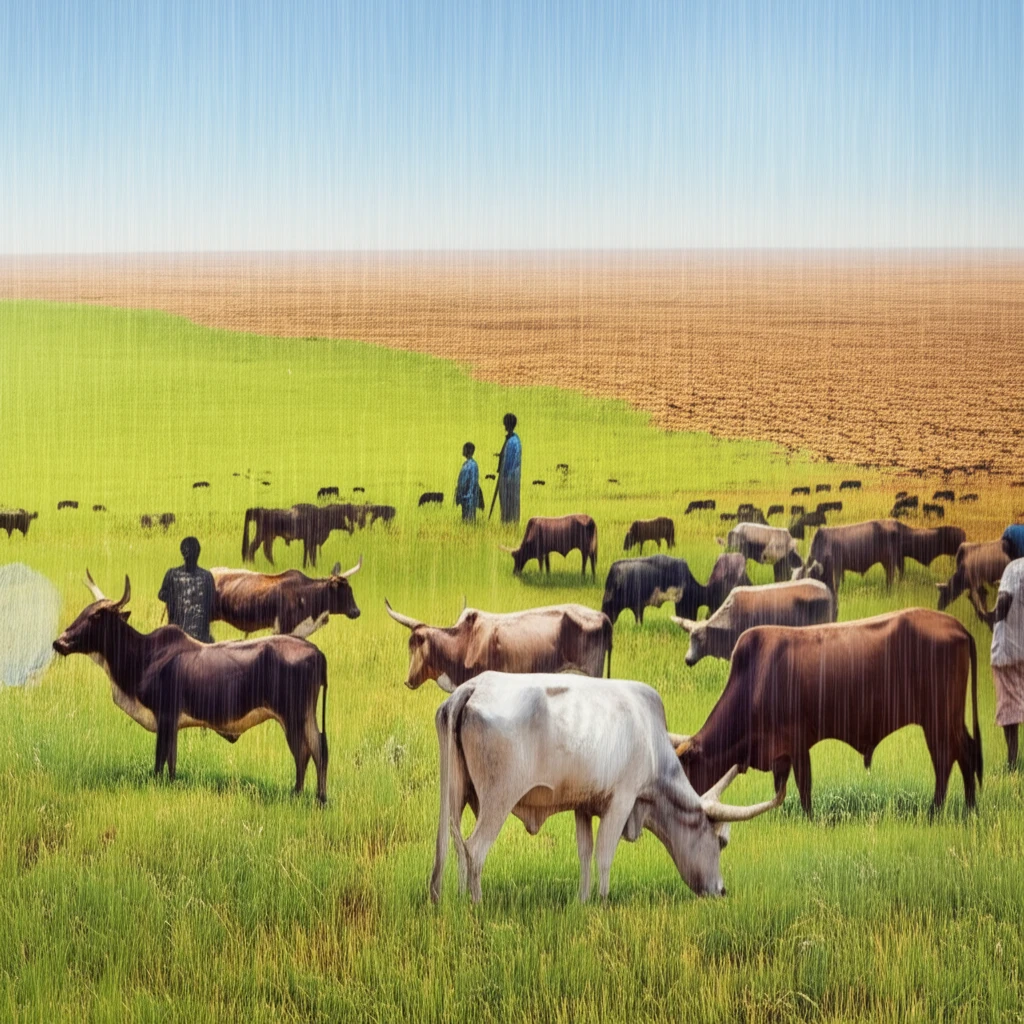
West African Landscape with Cattle Grazing

Decoding West African Pastures: How Local Herders Value Forage in a Changing Climate

"Dive into the ethnoecological insights of West African agro-pastoralists and discover the hidden criteria they use to assess forage quality, crucial for livestock and livelihoods."


In West Africa, where rural households grapple with water scarcity and limited forage, local agro-pastoralists hold a wealth of knowledge about their environment. This knowledge, passed down through generations, is essential for feeding livestock in both wet and dry seasons. However, this expertise remains largely undocumented, creating a gap in our understanding of how these communities value and manage their natural resources.

A recent study bridges this gap by examining the criteria used by agro-pastoralists in West Africa to evaluate forage resources. By combining quantitative ethnoecological analysis with insights into socio-demographic and climatic factors, the research unveils the complexities of local valuation systems and their implications for sustainable livestock production.

This article delves into the study's findings, revealing the specific forage resources used for different seasons and livestock types, the explicit valuation criteria employed by agro-pastoralists, and the influence of socio-demographic and climatic aridity on these local valuation systems. Discover how this knowledge can inform policies and practices that support both the livelihoods of local communities and the health of West African ecosystems.

Unveiling the Secrets of Forage Valuation: What Matters to West African Herders?

West African Landscape with Cattle Grazing

The study, conducted across 16 villages in Ghana and Burkina Faso, involved detailed interviews with 526 individuals from Dagbani, Gurunsi, and Mossi ethnic groups. Researchers also meticulously sampled vegetation across 144 plots, providing a comprehensive picture of forage availability and use. This rigorous approach allowed for a nuanced understanding of the factors shaping local valuation criteria.

The results revealed a strong seasonal pattern in forage preferences. During the rainy season, the vast majority (73%) of agro-pastoralists favored herbaceous forage plants like grasses for their livestock, particularly cattle. In contrast, woody vegetation and crop-related forage plants were considered more important during the dry season, especially for goats and sheep.

  • Palatability: How tasty and appealing the forage is to livestock.
  • Stimulation of Milk Production: The forage's ability to enhance milk output in livestock.
  • Healthy Growth of Livestock: The forage's contribution to the overall health and development of the animals.
Interestingly, the study also revealed that climatic aridity plays a significant role in shaping valuation criteria. Agro-pastoralists in drier regions cited a greater number of criteria when evaluating forage, highlighting the adaptive strategies employed in more challenging environments. These findings underscore the importance of considering both environmental and socio-economic factors when assessing the value of natural resources in West Africa.

Implications for a Sustainable Future

This research highlights the critical role of local knowledge in sustainable livestock production. By understanding the criteria used by agro-pastoralists to value forage resources, policymakers and stakeholders can develop more effective strategies for supporting these communities and promoting ecological health. This study serves as a valuable resource for scientists, policymakers, and anyone interested in the intersection of agriculture, culture, and environmental sustainability in West Africa and beyond.

About this Article -

This article was crafted using a human-AI hybrid and collaborative approach. AI assisted our team with initial drafting, research insights, identifying key questions, and image generation. Our human editors guided topic selection, defined the angle, structured the content, ensured factual accuracy and relevance, refined the tone, and conducted thorough editing to deliver helpful, high-quality information.See our About page for more information.

Everything You Need To Know

1

What specific types of forage do West African agro-pastoralists prioritize for their livestock, and how do these preferences change with the seasons?

The study indicates that West African agro-pastoralists show distinct seasonal preferences. During the rainy season, 73% of agro-pastoralists favor herbaceous forage plants like grasses, particularly for cattle. In contrast, during the dry season, woody vegetation and crop-related forage plants become more important, especially for goats and sheep. This shift reflects an adaptive strategy to the changing availability of forage resources throughout the year.

2

What are the key criteria that West African herders use to assess the quality of forage, and why are these criteria important for livestock management?

The study identifies three key criteria: Palatability (how tasty the forage is to livestock), Stimulation of Milk Production (the forage's ability to enhance milk output), and Healthy Growth of Livestock (the forage's contribution to the overall health and development). These criteria are crucial because they directly impact the health, productivity, and ultimately, the livelihoods of the agro-pastoralists who depend on their livestock.

3

How does climatic aridity influence the way West African agro-pastoralists value forage resources, and what does this tell us about their adaptive strategies?

The study found that climatic aridity significantly impacts the valuation criteria. Agro-pastoralists in drier regions cited a greater number of criteria when evaluating forage. This suggests that in more challenging environments, these communities employ more complex and nuanced strategies to ensure their livestock can thrive despite limited resources. It showcases an adaptive capacity developed over generations.

4

Which ethnic groups were involved in the study, and where was the research conducted to understand forage valuation in West Africa?

The study involved detailed interviews with individuals from the Dagbani, Gurunsi, and Mossi ethnic groups. The research was conducted across 16 villages in Ghana and Burkina Faso, with vegetation sampled across 144 plots. This comprehensive approach allowed for a nuanced understanding of forage valuation criteria within these communities.

5

What are the broader implications of this research for sustainable livestock production and the well-being of West African communities?

The research underscores the critical role of local knowledge in sustainable livestock production. By understanding the valuation criteria of West African agro-pastoralists, policymakers and stakeholders can develop more effective strategies. These strategies can support local communities, promote ecological health, and ensure the long-term viability of livestock production in a region facing significant environmental challenges. This approach helps align interventions with local realities, enhancing their impact and sustainability.

Newsletter Subscribe

Subscribe to get the latest articles and insights directly in your inbox.