
Decoding Vasospasm: How Timely Treatment Can Save Lives After Brain Hemorrhage

"A Deep Dive into Endovascular Interventions for Aneurysmal Subarachnoid Hemorrhage and the Critical Role of Rapid Response"
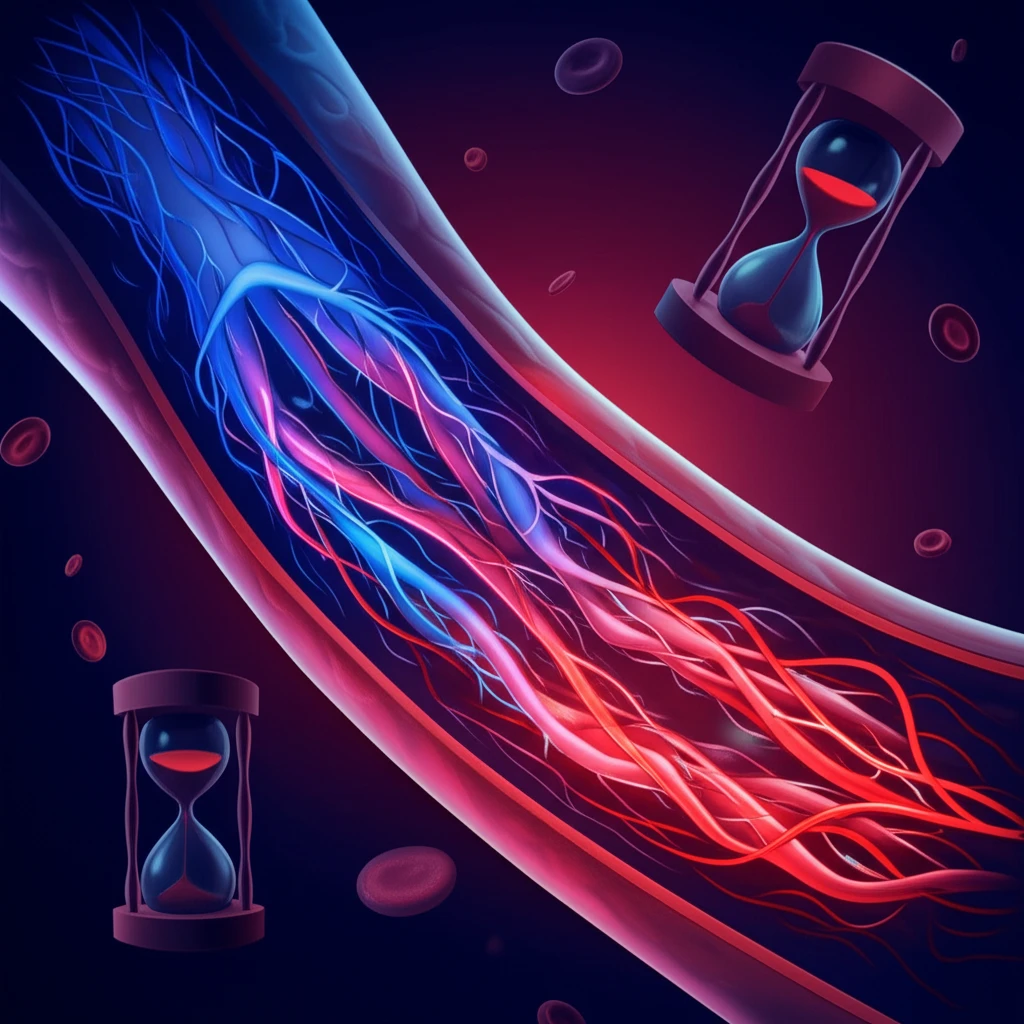
Subarachnoid hemorrhage (SAH), a type of stroke involving bleeding in the space surrounding the brain, can lead to a dangerous complication called vasospasm. This occurs when blood vessels in the brain constrict, reducing blood flow and potentially causing further brain damage or even death. Imagine your brain's highways suddenly shrinking, causing a traffic jam of vital nutrients and oxygen. That's essentially what happens during a vasospasm.
Vasospasm typically occurs several days after the initial hemorrhage and can be difficult to manage. Traditional medical therapies often prove insufficient, leaving doctors searching for more effective interventions. Endovascular treatment, a minimally invasive procedure that involves navigating catheters through blood vessels to deliver medication or mechanically open constricted vessels, has emerged as a promising option.
A recent study, leveraging data from the Japanese Registry of Neuroendovascular Therapy (JR-NET3), sheds light on the effectiveness of endovascular treatment for vasospasm. By analyzing a large dataset of over 1200 treatments, researchers have identified key factors that influence outcomes, particularly the critical role of timely intervention. The study underscores the importance of rapid diagnosis and treatment to minimize the devastating consequences of vasospasm.
Why Vasospasm Matters
Cerebral vasospasm is a serious potential complication after brain hemorrhage, particularly subarachnoid hemorrhage. By narrowing cerebral arteries, it may reduce blood flow and contribute to delayed brain injury. Its effects can vary widely, so timely monitoring and treatment are important, although the overall burden differs among patients.
Current Treatment Approaches
Management of symptomatic vasospasm and delayed cerebral ischemia after aneurysmal subarachnoid hemorrhage commonly includes endovascular rescue therapies such as intra-arterial spasmolysis and balloon angioplasty. Reviews also identify multimodality monitoring and reduction of blood in the cerebrospinal fluid as areas of clinical or investigative interest. However, the impact of endovascular rescue therapy on functional recovery remains unclear, and research continues into options including haptoglobin use and retrieval-stent angioplasty. Ongoing technological advances may support more personalized treatment, but their effectiveness is still being evaluated.
An Evolving Field
Understanding of vasospasm after brain hemorrhage has developed gradually alongside advances in aneurysm treatment, vascular imaging, and critical care. Earlier clinical approaches established the importance of recognizing delayed neurological deterioration after subarachnoid hemorrhage. More recent work has broadened attention toward monitoring, endovascular rescue, and treatments targeting mechanisms beyond arterial narrowing. The field continues to change as researchers refine how vasospasm and delayed cerebral ischemia are defined and managed.
Why Does Timing Matter So Much in Vasospasm Treatment?
The JR-NET3 study revealed a strong correlation between the timing of endovascular treatment and patient outcomes. Specifically, treatments initiated within 3 hours of vasospasm onset demonstrated significantly better results in terms of both imaging improvement and neurological function. This highlights a crucial window of opportunity for intervention.
- Early Treatment is Key: Endovascular treatment within 3 hours of vasospasm onset significantly improves imaging and neurological outcomes.
- First Intervention Matters: The initial treatment attempt is the most crucial for successful vasospasm reversal.
- IA Vasodilators Lead the Way: Intra-arterial vasodilators, medications delivered directly to the affected blood vessels, are the most common and effective first-line treatment.
- PTA for Persistent Cases: Percutaneous transluminal angioplasty (PTA), a procedure to mechanically widen the constricted vessels, is reserved for cases that don't respond to medication.
What Recent Reviews Show
Recent research has focused heavily on whether endovascular therapy improves outcomes for patients with cerebral vasospasm after aneurysmal subarachnoid hemorrhage. A 2024 systematic review and meta-analysis compared endovascular therapy with standard treatment, while a 2026 review examined patient-centered functional outcomes after intra-arterial spasmolysis and balloon angioplasty. These reviews reflect continued uncertainty about how treatment selection affects recovery. Updated reviews also emphasize emerging technologies and the need for stronger evidence to guide clinical decisions.
When Treatment Falls Short
Vasospasm can cause lasting neurological deficits or death even when it is recognized and treated, according to a 2024 prognosis review. A retrospective analysis of 1,520 subarachnoid hemorrhage patients examined treatment failure with hypertensive therapy and its long-term impact, underscoring that medical treatment does not work uniformly. The appropriate response depends on the severity of vasospasm, neurological changes, and the patient's response to initial management. These limitations support escalation to other interventions when medical therapy is insufficient, while also highlighting the need for realistic outcome counseling.
Medical and Endovascular Options
The literature describes haemodynamic augmentation and endovascular therapy as principal options for treating cerebral vasospasm and delayed cerebral ischemia. Comparative reviews place these established approaches alongside experimental or alternative strategies, including intra-aortic counterpulsation, therapeutic hypothermia, and barbiturate coma. The sources also note persistent problems in the vasospasm literature, making direct comparisons difficult. Treatment decisions therefore require attention to the evidence base as well as the patient's clinical severity and response.
The Future of Vasospasm Treatment: A Call for Rapid Response
The JR-NET3 study provides compelling evidence for the effectiveness of endovascular treatment for vasospasm, particularly when administered promptly. These findings underscore the need for increased awareness among medical professionals and the public regarding the importance of early recognition and treatment of vasospasm symptoms. By prioritizing rapid diagnosis and intervention, we can significantly improve outcomes for patients suffering from this devastating complication of subarachnoid hemorrhage.
Putting the Evidence Together
Vasospasm substantially contributes to morbidity and mortality after subarachnoid hemorrhage, and outcome analyses have examined whether endovascular treatment changes that risk. A 2023 study specifically evaluated outcome predictors and the role of endovascular treatment. Separately, a network meta-analysis reviewed preventive and curative treatments for vasospasm and brain ischemia in subarachnoid hemorrhage patients. Together, these sources suggest a broad evidence base, but the variety of interventions and outcomes makes definitive treatment conclusions challenging.
Where Research Is Heading
Future research is moving beyond conventional vessel-focused treatment toward a more detailed understanding of inflammation and cellular responses after subarachnoid hemorrhage. A review of microglia and post-subarachnoid hemorrhage vasospasm identifies these processes as important areas for investigation. Other reviews point to emerging endovascular technologies and continuing uncertainty about their effect on functional recovery. Potentially more effective and personalized care will depend on translating these research directions into reliable clinical strategies.
Inflammation and Individual Risk
Systemic inflammation from other conditions affecting patients with subarachnoid hemorrhage may contribute to brain injury and vasospasm. This interaction makes vasospasm more than an isolated problem within the cerebral arteries. Ongoing work on inflammatory biomarkers could help identify patient-specific risks and support development of individualized anti-inflammatory therapies. These possibilities remain an area for continuing research rather than an established treatment standard.
The Patient Experience
For patients and families, vasospasm can add a period of uncertainty after the initial brain hemorrhage, when neurological status may change unexpectedly. Recovery may depend on how quickly deterioration is recognized, how well treatment works, and whether lasting injury occurs. Even after acute care, rehabilitation and support may be important parts of rebuilding function. Individual experiences vary, so prognosis should be discussed in the context of each patient's clinical course.