
Aortic Thrombosis After Chemo? How a Minimally Invasive Procedure Saved the Day

"Discover how endovascular treatment offers a beacon of hope for high-risk patients facing acute aortic thrombosis following cisplatin-based chemotherapy."
Cisplatin-based chemotherapy, while effective against cancer, carries a significant risk of thromboembolic events. Acute thrombosis of the aorta, a rare but serious complication, demands swift and effective management. This article explores a case where a patient developed this condition following chemotherapy for gastric cancer.
Traditional treatments for aortic thrombosis include thrombolysis, anticoagulation, and surgical removal. However, these approaches may not always be suitable for high-risk patients, especially those with underlying malignancies or those needing further surgery. Endovascular treatment offers a less invasive alternative, potentially reducing the risks associated with open surgery.
This article delves into a specific case where endovascular treatment, combining Fogarty thrombectomy and stent graft exclusion, was successfully used to manage acute abdominal aortic thrombosis in a patient who had undergone cisplatin-based chemotherapy.
How Rare Aortic Thrombosis Is
Aortic thrombosis without pre-existing atherosclerotic or aneurysmal disease is rare, and cases associated with cisplatin have been assessed using the U.S. Food and Drug Administration Adverse Event Reporting System (FAERS) pmc.ncbi.nlm.nih.gov. In patients with active cancer, acute aortic thrombosis during cisplatin-based chemotherapy is described as exceedingly rare but potentially devastating pmc.ncbi.nlm.nih.gov. More broadly, cancer patients have higher risks of both arterial and venous thrombotic events than the general population; cancer site and stage, along with treatment-related factors, can contribute to that risk ahajournals.org.
Urgent Assessment and Treatment
A reported case detected acute ascending aortic thrombosis by computed tomography angiography one week after a chemotherapy cycle. Because the thrombus was floating and considered at high risk of embolization, the team performed emergency ascending aortic thrombectomy, followed by an uncomplicated postoperative course pmc.ncbi.nlm.nih.gov. The available sources describe this case-specific surgical response and chemotherapy-related mechanisms, including cisplatin-associated vascular injury and increased von Willebrand factor activity, rather than establishing a single standard treatment for every patient journals.sagepub.com.
The Case: Acute Aortic Thrombosis Following Chemotherapy
A 75-year-old male undergoing preoperative cisplatin-based chemotherapy for advanced gastric cancer experienced severe abdominal pain and calf claudication just three days after treatment. A multidetector computed tomography (MDCT) scan revealed a floating mass in the infrarenal abdominal aorta, a previously unseen condition.
- Fogarty Thrombectomy: A catheter with a balloon is inserted into the artery to remove the thrombus (blood clot).
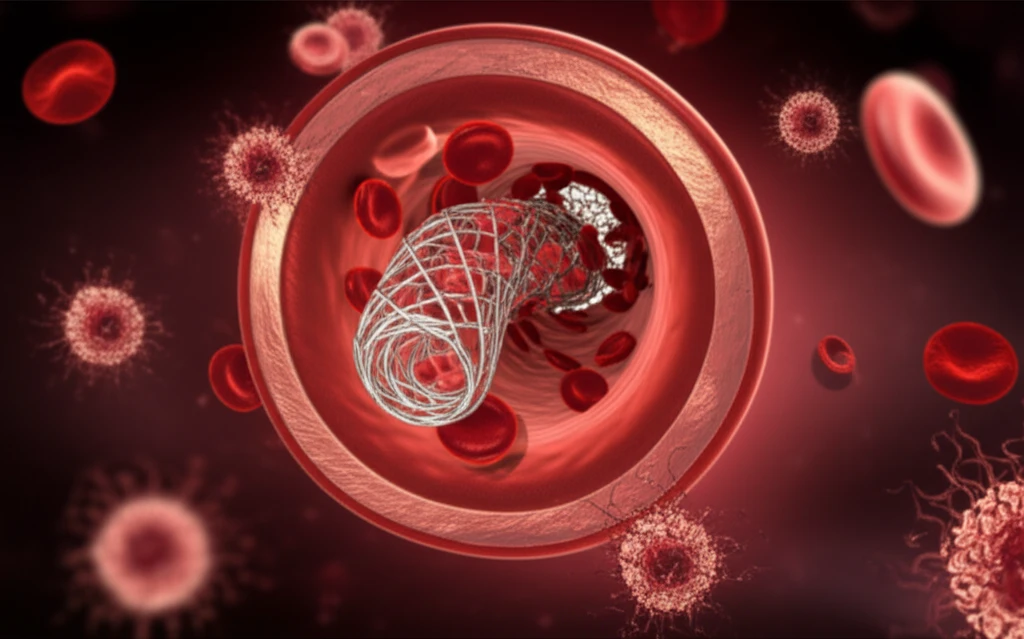
- Stent Graft Exclusion: A stent graft is placed to cover the damaged area of the aorta, preventing further clot formation.
Cases Span Different Cancers and Treatments
A 2017 report describes a 77-year-old woman with a free-floating abdominal aortic thrombus and acute renal dysfunction; its snippet notes abdominal pain and intermittent calf claudication beginning on the third day of cisplatin ingestion doi.org. A 2025 case report describes a 70-year-old woman with stage IVA lung adenocarcinoma who developed an aortic thrombus during chemo-immunotherapy; low-molecular-weight heparin (LMWH) treatment was successful, allowing her cancer therapy to continue without further complications frontiersin.org. A 2026 narrative review characterizes radiotherapy as potentially stabilizing aortic pathology, chemotherapy as having neutral effects, and cancer-related systemic changes as potentially deleterious link.springer.com.
Treatment Choice Remains Unsettled
Aortic mural thrombosis associated with malignant disease is rare, and whether anticoagulation or surgery is the more definitive primary treatment remains uncertain journals.sagepub.com. Cancer chemotherapies can also cause cardiovascular toxicities, including hypertension, thrombosis, heart failure, cardiomyopathy, and arrhythmias; these complications may restrict treatment options and negatively affect cancer management onlinecjc.ca.
Endovascular Treatment: A Promising Alternative
While surgical removal remains a standard treatment for aortic thrombosis, endovascular treatment offers a valuable alternative, especially for high-risk patients. It provides a less invasive approach, potentially reducing complications and improving recovery times.
Recognizing a Rare Complication
A 2022 case report describes ascending aortic thrombosis in a patient with esophageal cancer after starting neoadjuvant chemotherapy, and reports treatment by ascending aortic thrombectomy link.springer.com. A separate report notes that aortic thrombosis without atherosclerosis, dissection, or aneurysm is rare and identifies cisplatin-based chemotherapy as a treatment with varied side effects; it emphasizes the importance of detecting aortic thrombosis jstage.jst.go.jp. Together, these reports illustrate that the complication can arise during cancer treatment, while the supplied sources do not establish one universally preferred intervention.
Management Options in Reported Cases
Chemotherapeutics have been reported as risk factors for arterial thrombosis, but aortic thrombus induced by chemotherapy is rare sciencedirect.com. A report of four acute aortic thrombus cases after chemotherapy says they were successfully treated with systemic anticoagulation or endovascular management sciencedirect.com.
The combination of Fogarty thrombectomy and stent graft exclusion appears to be a safe and effective strategy for managing acute aortic thrombosis following chemotherapy. However, further research is needed to establish clear guidelines for postoperative anticoagulation and long-term management.
This case highlights the potential of endovascular treatment as a reliable and less invasive option for patients with acute aortic thrombosis, particularly those with underlying conditions that make open surgery a higher risk.