
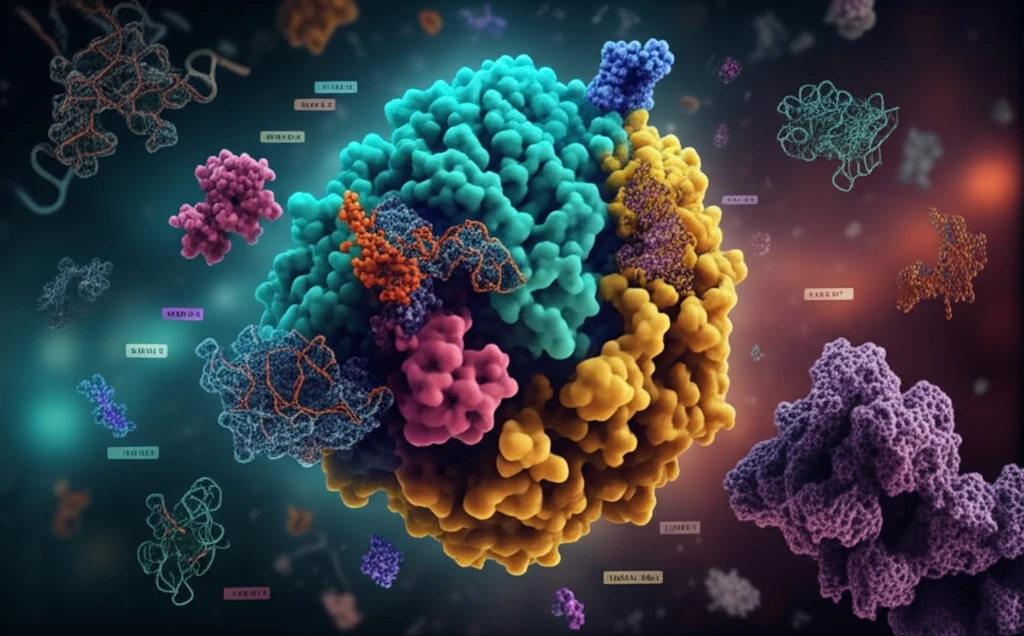
Decoding the Secrets of Glucocorticoid Receptors: How They Shape Your Health

"Unraveling the mystery of glucocorticoid receptor activation and its implications for overall well-being."
In the realm of molecular biology, glucocorticoid receptors (GRs) stand as pivotal players in regulating a myriad of physiological processes. These receptors, activated by glucocorticoids like cortisol, influence everything from immune responses and metabolism to cognitive functions and emotional balance. Understanding how these receptors function at the molecular level is crucial for developing targeted therapies for a range of conditions, including autoimmune diseases, metabolic disorders, and even certain cancers.
The study of GRs has a rich history, with early research focusing on their role in inflammation and stress response. However, modern techniques in molecular biology have revealed a far more complex picture, highlighting the intricate mechanisms by which GRs interact with DNA, recruit other proteins, and ultimately alter gene expression. This complexity underscores the importance of ongoing research aimed at fully elucidating the GR signaling pathway.
Recent findings have shed light on the significance of specific proteins, such as BRG1, TOP2β, and Ku70/86, in the GR-mediated transcriptional activation process. These proteins play critical roles in chromatin remodeling, DNA topology, and DNA repair, respectively. Understanding how these factors collaborate with GRs provides a deeper insight into the dynamics of gene regulation and opens new avenues for therapeutic intervention.
Cortisol Resistance and Its Health Toll
Poor glucocorticoid receptor function can develop under chronic stress and high CRH levels, a state that researchers describe as cortisol resistance. This resistance may in turn increase the risk of inflammation, autoimmunity, and weight gain. Because so many modern health problems are linked to chronic stress, the health of the receptor itself becomes a meaningful target for wellness.
Looking Beyond Hormone Levels
A standard approach in stress research has been to measure cortisol levels in the blood, but experts note that how tissues respond to cortisol is just as important as the levels of the hormone itself. The extent of the cortisol effect may be proportional to glucocorticoid receptor function, which means two people with identical cortisol readings can have very different physiological outcomes. This limitation is especially visible in critically ill patients, where receptor function rather than hormone concentration may determine the response.
Named for Sugar, Active Everywhere
Glucocorticoids were named for their actions on blood glucose concentration, reflecting the earliest discoveries about their role in metabolism. Yet the foundational finding expanded quickly: the glucocorticoid receptor, once bound to its hormone, moves into the nucleus to induce transcription of DNA. This nuclear action revealed that these receptors have equally important effects on systems far beyond blood sugar.
The Intricate Dance of Glucocorticoid Receptors and Transcriptional Activation
Glucocorticoid receptors do not work in isolation. Their activity is heavily dependent on interactions with other proteins and DNA sequences within the cell. When a glucocorticoid hormone binds to its receptor, the GR undergoes a conformational change, enabling it to interact with specific DNA sequences known as glucocorticoid response elements (GREs). However, this is just the beginning of a complex molecular dance.
- BRG1: Functions as a chromatin remodeler, altering the structure of DNA to make it more accessible to transcription factors.
- TOP2β: Modifies DNA topology, relieving torsional stress and facilitating DNA unwinding during transcription.
- Ku70/86: Primarily involved in DNA repair, but also plays a role in transcriptional regulation by stabilizing DNA structures.
Early Experience Shapes Receptor Function
Recent research has begun to test whether environmental conditions early in life can protect glucocorticoid receptor signaling against later stress. In a study of maternal separation, pre-weaning environmental enrichment blunted the stress-induced decrease in intra-nuclear translocation of glucocorticoid receptors within amygdala neurons when the animals were tested later. The finding suggests that early-life experience can leave a lasting imprint on how stress receptors function in the brain.
When Receptor Function Fails
A key limitation of treating stress and inflammation by focusing on cortisol levels alone is that receptor function can fail even when the hormone is abundant. Chronic stress and high CRH can drive poor glucocorticoid receptor function and cortisol resistance, undermining the expected anti-inflammatory response. In critically ill patients this raises the question of whether adding more corticosteroid is effective when the tissue cannot respond to it.
Hormone Concentration Versus Receptor Activity
Comparing the two pillars of glucocorticoid signaling, the hormone itself and the receptor, shows that neither works in isolation. The glucocorticoid receptor forms a complex with the hormone that then acts in the nucleus to induce transcription of DNA. When the receptor is impaired, tissue responsiveness drops, so the extent of cortisol effect appears to be proportional to receptor function rather than to hormone levels alone.
Implications and Future Directions
Understanding the intricate mechanisms by which glucocorticoid receptors regulate gene expression has profound implications for human health. By unraveling the molecular details of GR signaling, researchers can develop targeted therapies for a wide range of diseases. For instance, drugs that selectively modulate GR activity could be used to treat autoimmune disorders, metabolic diseases, and even certain types of cancer. As research continues to uncover new insights into the GR signaling pathway, the potential for therapeutic innovation is immense.
The Receptor Is the Real Story
Expert commentary increasingly converges on one point: how tissues respond to cortisol is as important as the levels of the hormone itself. Because the extent of the cortisol effect may be proportional to glucocorticoid receptor function, interventions that protect or restore the receptor may matter more than simply measuring or manipulating cortisol. This reframing shifts attention from hormone concentration to receptor sensitivity as the true driver of health outcomes.
Enrichment as a Preventive Tool
One of the most promising frontiers is the possibility of intervening before stress leaves its mark on receptor function. Studies of pre-weaning environmental enrichment show that a positive early environment can blunt the effects of maternal separation on glucocorticoid receptor translocation within amygdala neurons later in life. Future work may explore how such enrichment-style interventions could be translated into practical strategies for building stress resilience.
Chronic Stress at a Population Level
The consequences of poor glucocorticoid receptor function extend beyond individual biology into broader public health concerns. Chronic stress and high CRH are widespread, and the resulting cortisol resistance is suspected of contributing to inflammation, autoimmunity, and weight gain on a large scale. Addressing this means tackling the systemic sources of chronic stress rather than treating it as an isolated hormonal problem.
Early Life Leaves a Lasting Mark
The research carries a personal message: experiences early in life can shape how the stress system operates for years to come. Pre-weaning enrichment blunted the effects of maternal separation on glucocorticoid receptor translocation in the amygdala, underscoring that nurturing early environments may protect brain circuits involved in stress. For readers, this highlights both the vulnerability of the stress system and the protective power of early support.