
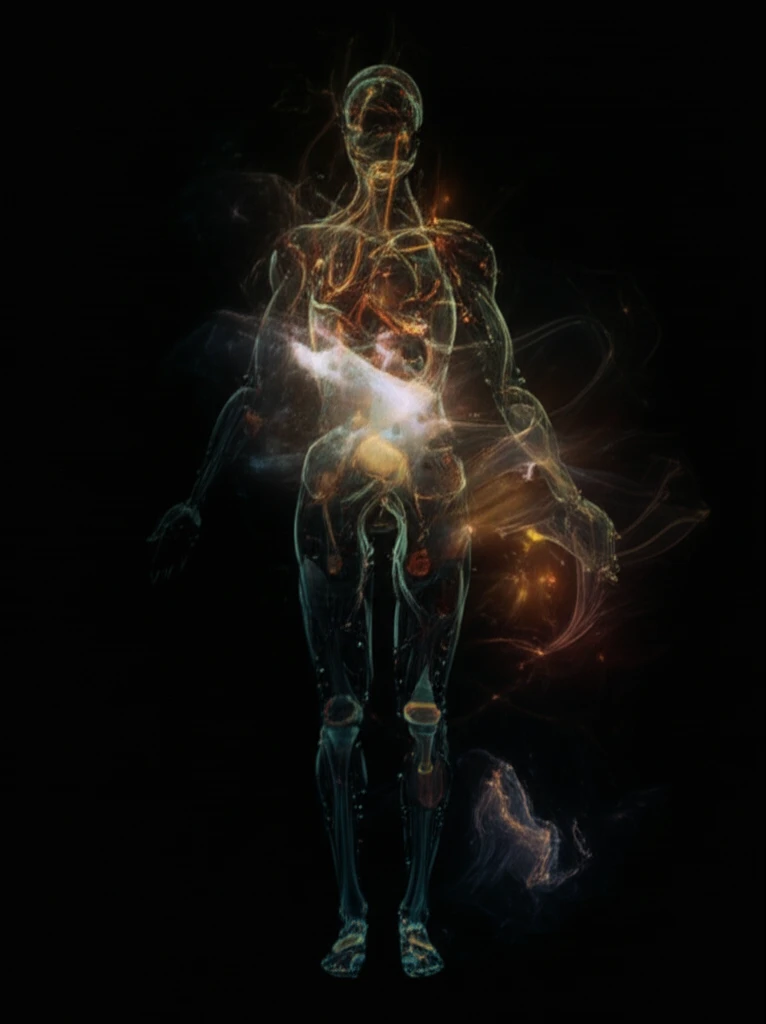
Interconnected microbes forming a human body, representing the link between microbiome and health.

Decoding the Hidden Links Between Microbes and Disease: A New Path to Personalized Medicine

"Cutting-edge research reveals how understanding the intricate connections between our microbiome and various diseases could revolutionize prevention, diagnosis, and treatment strategies."


For years, scientists have been uncovering the profound influence of the trillions of microbes residing in and on our bodies—our microbiome—on human health. Accumulating clinical evidence now demonstrates that specific microbes, when present in abnormal levels, are closely linked to the development of a wide range of diseases. From inflammatory bowel disease to certain types of cancer, the role of the microbiome is becoming increasingly clear.

Understanding these intricate microbe-disease associations holds immense potential. It could revolutionize how we approach disease prevention, leading to targeted interventions that promote a healthy microbiome balance. Early and accurate diagnoses could become a reality by identifying microbial signatures indicative of disease risk. Moreover, these insights could pave the way for novel treatments that harness the power of the microbiome to combat illness.

However, unraveling the complex web of interactions between microbes and diseases is a monumental task. Traditional research methods often struggle to capture the dynamic interplay between the host and the microbial community. Recognizing this challenge, a team of researchers has developed a groundbreaking computational model called NGRHMDA (Neighbor- and Graph-Based Recommendation Model for Human Microbe-Disease Association Prediction). This innovative approach promises to accelerate the discovery of microbe-disease associations, opening new doors to personalized medicine.

How NGRHMDA Works: A Cutting-Edge Approach to Predicting Microbe-Disease Links

Interconnected microbes forming a human body, representing the link between microbiome and health.

At its core, NGRHMDA operates on a fundamental principle: functionally similar microbes tend to be involved in the mechanisms of similar diseases. This assumption, borrowed from the world of recommendation systems, suggests that just as users with similar tastes enjoy similar products, microbes with similar functions contribute to the development of related diseases.

To bring this principle to life, NGRHMDA combines two distinct recommendation methods:

  • Neighbor-Based Collaborative Filtering: This approach identifies microbes and diseases that share common "neighbors" – other microbes or diseases with which they are associated. By analyzing these shared connections, the model can predict new associations.
  • Graph-Based Scoring Method: This method leverages the topological information of the known microbe-disease network, mapping the complex relationships between microbes and diseases. By analyzing this network, the model can identify potential associations based on the overall structure of the network.
In addition to these two methods, NGRHMDA incorporates two key measures of similarity:

The Future of Medicine: Harnessing the Power of Microbe-Disease Associations

The development of NGRHMDA represents a significant step forward in our ability to understand and leverage the complex relationship between the microbiome and human health. By providing a powerful tool for predicting microbe-disease associations, this research paves the way for personalized medicine, innovative therapeutic interventions, and a future where we can harness the power of the microbiome to prevent and treat disease.

About this Article -

This article was crafted using a human-AI hybrid and collaborative approach. AI assisted our team with initial drafting, research insights, identifying key questions, and image generation. Our human editors guided topic selection, defined the angle, structured the content, ensured factual accuracy and relevance, refined the tone, and conducted thorough editing to deliver helpful, high-quality information.See our About page for more information.

This article is based on research published under:

DOI-LINK: 10.1186/s12967-017-1304-7, Alternate LINK

Title: Prediction Of Microbe–Disease Association From The Integration Of Neighbor And Graph With Collaborative Recommendation Model

Subject: General Biochemistry, Genetics and Molecular Biology

Journal: Journal of Translational Medicine

Publisher: Springer Science and Business Media LLC

Authors: Yu-An Huang, Zhu-Hong You, Xing Chen, Zhi-An Huang, Shanwen Zhang, Gui-Ying Yan

Published: 2017-10-16

Everything You Need To Know

1

What is the microbiome, and why is it important?

The microbiome refers to the vast community of microorganisms, including bacteria, viruses, fungi, and archaea, that live in and on the human body. It's a complex ecosystem that plays a crucial role in human health. It's important because these microbes influence various physiological processes and are increasingly linked to disease development. An imbalance in the microbiome can contribute to conditions like inflammatory bowel disease and certain cancers.

2

What is NGRHMDA?

NGRHMDA stands for Neighbor- and Graph-Based Recommendation Model for Human Microbe-Disease Association Prediction. It's a computational model developed to predict the associations between microbes and diseases. The model uses innovative methods to find connections, which in turn speeds up the discovery of the relationships between the microbiome and various diseases, moving us closer to personalized medicine.

3

What methods does NGRHMDA use?

The two main methods within NGRHMDA are Neighbor-Based Collaborative Filtering and Graph-Based Scoring Method. The Neighbor-Based Collaborative Filtering identifies microbes and diseases that share similar connections, predicting new associations. The Graph-Based Scoring Method analyzes the complex relationships within the microbe-disease network to identify potential links based on the network's structure.

4

How does understanding microbe-disease associations relate to personalized medicine?

The concept of personalized medicine is a medical model that tailors medical decisions, practices, and interventions to individual patients. Understanding microbe-disease associations is critical for personalized medicine. By identifying specific microbial signatures related to disease risk, early and accurate diagnoses become more achievable. This approach allows for targeted interventions promoting a healthy microbiome balance, leading to more effective disease prevention and treatment strategies.

5

Why is understanding microbe-disease associations so important?

The significance of understanding microbe-disease associations lies in the potential to revolutionize healthcare. This understanding could lead to more effective disease prevention, early and accurate diagnoses, and novel treatments that harness the power of the microbiome. The development of NGRHMDA represents a significant step towards achieving these goals. It paves the way for innovative therapeutic interventions and a future where we can use the microbiome to prevent and treat diseases more effectively.

Newsletter Subscribe

Subscribe to get the latest articles and insights directly in your inbox.