
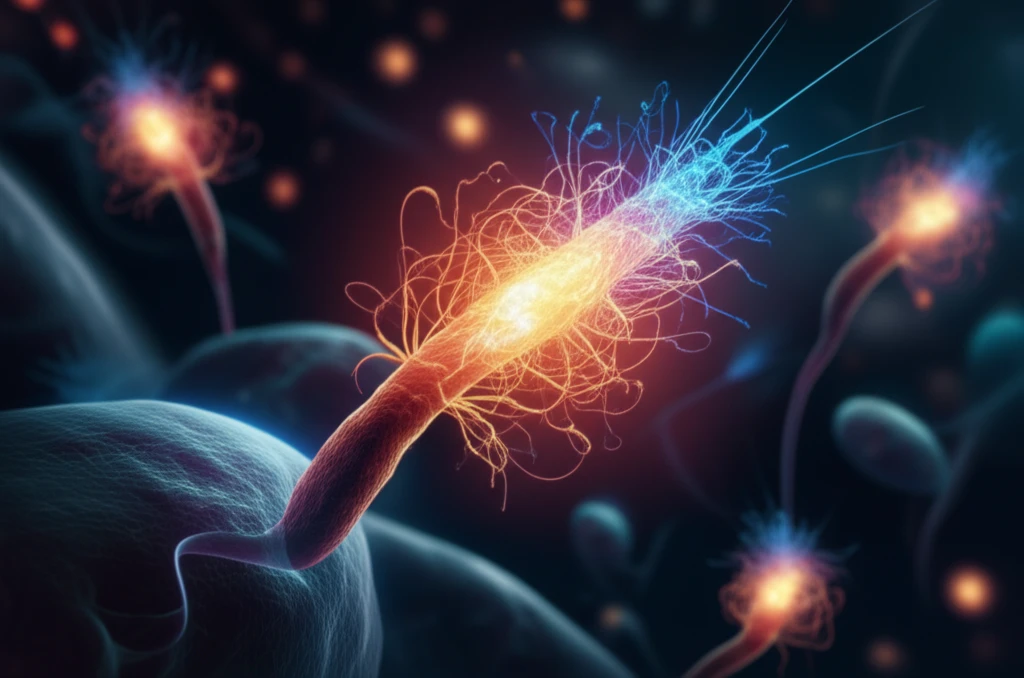
Illustration of a primary cilium with a focus on the LKB1 protein.

Decoding the Cilium: Unveiling a New Player in Cellular Health and Disease

"Exploring the Crucial Role of LKB1 in the Primary Cilium and Its Implications for Cancer and Beyond"


In the intricate world of cells, tiny, antenna-like structures called cilia play a surprisingly significant role. These hair-like projections, found on the surface of many cells, are far from mere ornaments; they act as crucial communication hubs, sensing and responding to the environment around them. Recent research has brought to light a new understanding of the primary cilium's function and the proteins that regulate it, with potential implications for understanding and treating diseases like cancer.

One of the key players in this cellular drama is LKB1, a protein known for its role as a tumor suppressor. Scientists have discovered that LKB1 has a significant function in the primary cilium, opening up new avenues for research into its role in cellular health. This discovery not only sheds light on the complex mechanisms within our cells but also offers hope for new therapeutic strategies.

This article will delve into the importance of LKB1 in the primary cilium, its connection to cancer, and the exciting possibilities this research unlocks. We'll explore the latest findings, providing a clear picture of how these cellular structures function and why they matter for overall health and well-being.

AI Search Multiple angles on this topic

Ciliary Control of Cell Size

Research published in Nature Cell Biology reports that primary cilia regulate mTOR signaling and cell size through the LKB1 pathway. Bending of the cilium by fluid flow activates LKB1 in the cilium-basal body compartment, which inhibits mTORC1 activity. LKB1 knockdown prevents normal cell-size regulation under flow conditions, while endogenous LKB1 has been observed in the primary cilium of polarized epithelial cells.

An Emerging Research Framework

Because this topic is still developing, no single standard clinical approach for evaluating LKB1 function in the primary cilium can be established from the available material. Current understanding is based largely on experimental observations of ciliary signaling, cell-size regulation, and protein localization. The limited evidence also means that proposed mechanisms should be interpreted cautiously rather than treated as settled diagnostic or therapeutic practice.

The 2010 Ciliary Signaling Milestone

Primary cilia were described as cell-surface organelles that act as sensory antennae for diverse signals. A 2010 study by Boehlke and colleagues showed that bending of primary cilia regulates cell size through a pathway involving the LKB1 and mTOR kinases. Later reporting noted that endogenous LKB1 is found in the cytosol, adherent junctions, and primary cilium of polarized epithelial cells, although its ciliary functions remain incompletely understood.

Unraveling the Mystery: LKB1 and the Primary Cilium

Illustration of a primary cilium with a focus on the LKB1 protein.

The primary cilium, often described as a 'cellular antenna,' is a non-motile structure found on the surface of most cells. It's responsible for sensing signals from the outside world, such as chemical gradients and mechanical forces. These signals are then relayed to the cell, influencing a wide range of processes, from cell growth and division to cell movement and differentiation.

LKB1, a serine/threonine kinase, has long been recognized for its tumor-suppressing properties. It acts as a master regulator, controlling various cellular processes. But its exact role within the primary cilium has remained a mystery, until recently. Research indicates that LKB1 plays a critical role in the proper function of cilia, suggesting that it is involved in regulating the cilia's structure and function.

  • Cellular Communication: Cilia are essential for sensing environmental signals and relaying them to the cell.
  • Tumor Suppression: LKB1 is a known tumor suppressor.
  • Regulation: LKB1 plays a key role in the proper function of cilia.
AI Search Multiple angles on this topic

From Hippocampal Studies to Ciliary Proteomics

A November 2024 study investigated how altered maternal conditions affect hippocampal autophagy and primary cilia in offspring rats, including possible changes in the LKB1/AMPK signaling pathway. A January 2026 report described a comprehensive, spatially resolved human primary-cilium protein atlas intended to improve understanding of ciliary function in health and disease. Together, these studies illustrate research moving from specific experimental models toward more detailed mapping of ciliary biology.

Consequences of LKB1 Loss in the Kidney

Evidence from kidney research indicates that LKB1 is required for normal renal morphology and function. Loss of LKB1 in the kidney was associated with altered tubular architecture, cyst formation, and chronic inflammation that progressed to scarring and renal failure. The resulting phenotype was described as resembling a renal ciliopathy, showing that disruption of LKB1-related ciliary signaling can have severe consequences rather than simply producing a change in cell regulation.

Multiple Ciliary Brakes on mTORC1

A 2020 review identified multiple mechanisms through which primary cilia inhibit mTORC1 signaling. These mechanisms involve tumor-suppressor proteins located within the ciliary compartment, including LKB1, AMPK, polycystin-1, and polycystin-2. This comparison places LKB1 within a broader network of ciliary regulators rather than treating it as the sole mediator of mTORC1 control.

The implications of this discovery are far-reaching. Scientists believe that understanding the function of LKB1 in cilia could lead to new ways to prevent and treat various diseases, including cancer.

Looking Ahead: The Future of Cilia Research

The discovery of LKB1's function in the primary cilium is a significant step forward in understanding how cells function and how diseases develop. This research opens up exciting possibilities for developing new therapies and improving our overall health. As scientists continue to unravel the complexities of cilia and their molecular partners, we can look forward to more breakthroughs in the years to come, offering hope for a healthier future.

AI Search Multiple angles on this topic

A Spatial Signaling Hub

The available evidence suggests that the primary cilium can function as a spatially restricted signaling compartment for LKB1 and mTORC1. However, the material also indicates that important aspects of LKB1 function in cilia remain poorly understood. Any broader interpretation should therefore distinguish established experimental observations from mechanisms that still require confirmation.

Mapping Ciliary Function

Future research may clarify how ciliary proteins are organized and how that organization changes across cell types and disease states. More detailed protein maps and studies connecting cilia with pathways such as LKB1/AMPK could help define these relationships. At present, the direction is promising, but the clinical significance of these discoveries remains to be established.

Connecting Cellular Signals to Disease

Primary-cilium research spans cell-size control, kidney structure, autophagy, and signaling pathways linked to health and disease. This breadth makes the field potentially important but also complicates interpretation, because ciliary functions may vary by tissue and biological context. Separating general ciliary principles from tissue-specific effects remains a central challenge.

Cancer and Disease Relevance

Research on breast cancer cell models examined ZEB1, CD44, and LKB1 colocalization in MCF-7 cells, representing an epithelial luminal A subtype, and MDA-MB-231 cells, representing a mesenchymal metastatic type. These models were selected to reflect different primary tumor characteristics in the patient cohort studied. Other reporting frames the primary cilium and LKB1 as relevant to diseases including cancer and Peutz-Jeghers syndrome, although the available material does not establish a direct clinical application.

What a cilia-specific mouse model can establish

Animal study (level 5 of 8)

The study used a knockout mouse model designed to remove LKB1 activity and function specifically in cilia. This can support a role for ciliary LKB1 in mice, but does not by itself establish the same effects in people or a clinical benefit.[1]

A cilia-specific LKB1 knockout mouse model

Study designAnimal study[1]
PopulationLKB1 in cilia in a knock out mouse model[1]
FundingARC association Projet ARC 2011; n: SFI20111203781[1]
Times cited1[1]

How later work places ciliary LKB1 in context

The same review attributes flow-induced LKB1 accumulation in primary cilia to folliculin, the BHD gene product, placing ciliary localization within a broader regulatory process.[2]

Other pancreatic mouse findings distinguish β-cell size control from cilia polarization: rapamycin restored normal cell size without correcting polarity defects. That comparison cautions against treating changes in cell size and ciliary organization as the same outcome.[3]

A review of renal-cell-carcinoma research links cilia with mTOR signaling and LKB1 as an upstream AMPK kinase, but does not establish a clinical application of this connection.[4]

What remains unresolved about ciliary LKB1

  • Which substrates are brought into proximity with LKB1 by its localization, and how does that vary across cellular compartments?[1]
  • How much of LKB1’s tumor-suppressor role depends specifically on its ciliary function, rather than its activity elsewhere in the cell?[1]
  • What ciliary processes explain the proposed connection between LKB1 and mTOR repression?[1]

Terms used in the study

Peutz-Jeghers syndrome
An inherited disorder characterized by melanocytic macules of the lips and multiple gastrointestinal hamartomatous polyps.[1]

About this Article -

Written with AI assistance from published research, and reviewed by the Mystum team. See our About page for more information.

This article is based on research published under:

DOI-LINK: 10.1186/2046-2530-4-s1-p71, Alternate LINK

Title: New Lkb1 Function In The Primary Cilium

Subject: Cell Biology

Journal: Cilia

Publisher: Springer Science and Business Media LLC

Authors: P Maurin, Mj Santoni, O Cabaud, S Marchetto, Jp Borg, M Sebbagh

Published: 2015-07-13

Everything You Need To Know

1

What exactly is a primary cilium, and why are scientists so interested in it?

A primary cilium is a non-motile, antenna-like structure present on the surface of most cells. It acts as a crucial communication hub, sensing and responding to environmental signals like chemical gradients and mechanical forces. These signals are then relayed to the cell, influencing cell growth, division, movement, and differentiation. Scientists are interested in the primary cilium because of its role in various cellular processes and potential implications for understanding and treating diseases, including cancer. Further research is needed to fully understand the breadth of the signaling pathways involved and how they interact with other cellular components.

2

How does LKB1, a known tumor suppressor, relate to the primary cilium?

LKB1, a serine/threonine kinase recognized for its tumor-suppressing properties, has been discovered to play a significant role in the proper function of the primary cilium. Research indicates that LKB1 is involved in regulating the cilia's structure and function. This suggests that LKB1's function in tumor suppression may be linked to its regulation of signaling pathways involving the primary cilium. Understanding this connection could lead to new therapeutic strategies for cancer. The exact mechanisms of this regulation, including which specific proteins LKB1 interacts with within the cilium, require further investigation.

3

What are the potential implications of LKB1's function in the primary cilium for treating diseases like cancer?

Understanding LKB1's function in the primary cilium could provide new ways to prevent and treat various diseases, including cancer. By clarifying how LKB1 regulates the structure and function of cilia, researchers may be able to develop targeted therapies that restore normal cellular communication and prevent uncontrolled cell growth. For example, drugs could be designed to enhance or mimic LKB1's activity within the cilium, or to correct defects in cilia signaling pathways. This research might also identify novel biomarkers for early cancer detection. The development of such therapies is still in its early stages and will require extensive preclinical and clinical testing.

4

Beyond cancer, what other diseases might be linked to the dysfunction of the primary cilium and LKB1?

Dysfunction of the primary cilium, particularly when coupled with LKB1 impairment, may contribute to a range of diseases beyond cancer. Given the cilium's role in sensing and responding to environmental cues, disruptions in its function could affect development, tissue homeostasis, and sensory perception. Potential links exist to conditions such as polycystic kidney disease (PKD), certain forms of blindness (related to photoreceptor cilia), and skeletal abnormalities. Furthermore, given LKB1's broad role in regulating cellular metabolism and energy balance, its dysfunction in the context of the cilium might have implications for metabolic disorders. Future research will need to explore these connections in greater detail.

5

How might future research into cilia and LKB1 change our understanding of cellular health and disease?

Future research into cilia and LKB1 promises to significantly enhance our understanding of cellular health and disease. By further unraveling the complexities of cilia and their molecular partners, including LKB1, scientists can gain deeper insights into the fundamental mechanisms governing cellular communication, growth, and differentiation. This knowledge could lead to the development of novel diagnostic tools, preventative strategies, and targeted therapies for a wide range of conditions, not only cancer but also genetic disorders, developmental abnormalities, and metabolic diseases. Additionally, advancements in imaging techniques and molecular biology are likely to accelerate these discoveries, paving the way for personalized medicine approaches that address the unique molecular profiles of individual patients. The interactions between the primary cilium and other cellular structures like the centrosome and the golgi also require further investigation.

Newsletter Subscribe

Subscribe to get the latest articles and insights directly in your inbox.