
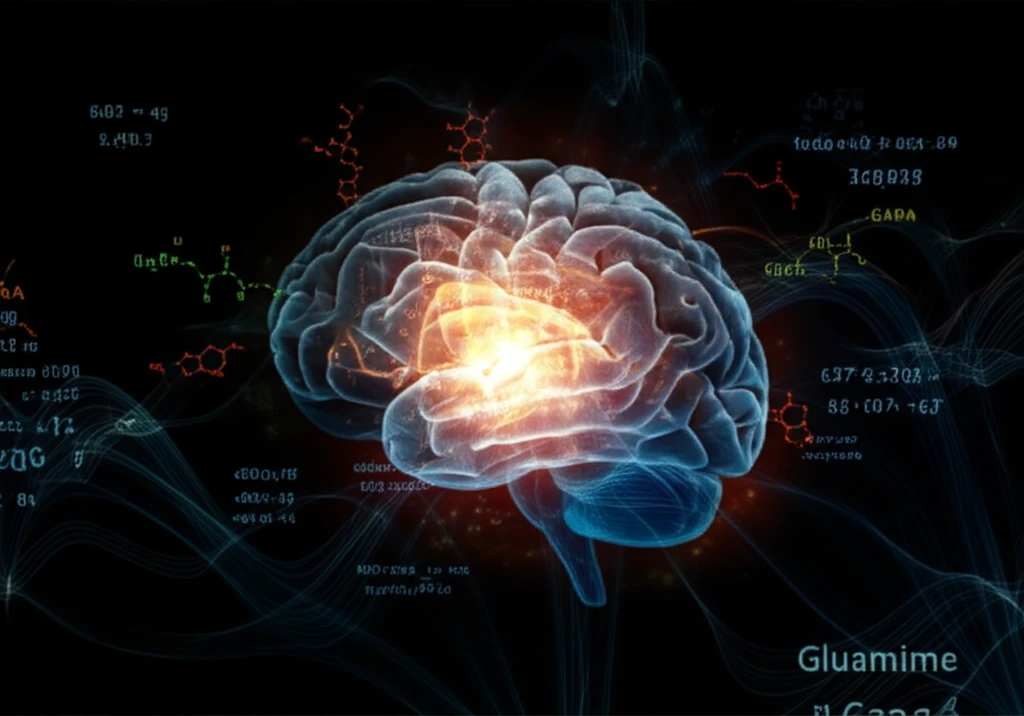
Surreal illustration of the brain's GPS, the hippocampus, with glutamate and GABA molecules forming a navigational pathway.

Decoding the Brain's GPS: How Your Inner Compass Uses Glutamate and GABA

"New research reveals the supramammillary nucleus's surprising role in spatial memory, offering insights into cognitive enhancement and potential treatments for memory disorders."


The hippocampus, a brain region crucial for learning and memory, relies on intricate neural circuits to process spatial information and emotional experiences. Among the various inputs it receives, the supramammillary nucleus (SuM) stands out as a key modulator. New research is shedding light on how the SuM influences the dentate gyrus (DG), a gateway to the hippocampus, using a fascinating interplay of glutamate and GABA.

Previous studies have hinted at the SuM's involvement in spatial learning, emotional behavior, sleep-wake cycles, and navigation. However, the precise functional connections and circuit mechanisms underlying its influence on the DG have remained elusive.

Now, researchers have uncovered how SuM neurons project to the DG, co-releasing glutamate and GABA, the brain's primary excitatory and inhibitory neurotransmitters. This unexpected combination allows the SuM to fine-tune granule cell (GC) activity, the principal neurons of the DG, and ultimately modulate outputs from this critical brain region.

SuM's Surprising Strategy: Co-Releasing Glutamate and GABA

Surreal illustration of the brain's GPS, the hippocampus, with glutamate and GABA molecules forming a navigational pathway.

The research team employed optogenetic and electrophysiological techniques to dissect the SuM-DG connection. By injecting a virus into the SuM, they could selectively activate SuM neurons using light and then record the resulting electrical activity in DG neurons. This precise control revealed that SuM neurons form direct connections with both GCs and GABAergic interneurons in the DG.

Intriguingly, these SuM neurons co-release glutamate and GABA onto their target neurons. This finding challenges the traditional view of neurons releasing only one type of neurotransmitter. The co-release of opposing neurotransmitters suggests a sophisticated mechanism for modulating neuronal activity.

  • Direct Connections: SuM neurons make monosynaptic connections to GCs and GABAergic interneurons in the DG.
  • Co-Release: SuM afferents co-release glutamate and GABA to both GCs and GABAergic interneurons.
  • Excitatory Effects: SuM inputs have net excitatory effects on GCs and modulate outputs from the DG.
While SuM inputs alone were not strong enough to trigger action potentials in GCs, they could enhance GC firing when paired with inputs from the perforant path (PP), another major pathway to the DG. This suggests that the SuM acts as a modulator, amplifying existing signals and influencing how the DG processes information.

Implications for Memory and Beyond

These findings provide valuable insights into the intricate circuitry of the hippocampus and the role of the SuM in spatial memory. By co-releasing glutamate and GABA, the SuM can precisely regulate GC activity and influence information flow through the DG.

Understanding the mechanisms by which the SuM modulates hippocampal function opens new avenues for cognitive enhancement strategies and potential treatments for memory disorders. Targeting the SuM-DG pathway could offer a way to improve spatial learning and memory in individuals with cognitive impairments.

Further research is needed to fully elucidate the role of the SuM in different behavioral tasks and its interactions with other brain regions. However, this study provides a crucial step towards unraveling the complexities of the brain's navigation system and its potential for therapeutic intervention.

About this Article -

This article was crafted using a human-AI hybrid and collaborative approach. AI assisted our team with initial drafting, research insights, identifying key questions, and image generation. Our human editors guided topic selection, defined the angle, structured the content, ensured factual accuracy and relevance, refined the tone, and conducted thorough editing to deliver helpful, high-quality information.See our About page for more information.

This article is based on research published under:

DOI-LINK: 10.1016/j.celrep.2018.11.016, Alternate LINK

Title: Supramammillary Nucleus Afferents To The Dentate Gyrus Co-Release Glutamate And Gaba And Potentiate Granule Cell Output

Subject: General Biochemistry, Genetics and Molecular Biology

Journal: Cell Reports

Publisher: Elsevier BV

Authors: Yuki Hashimotodani, Fuyuki Karube, Yuchio Yanagawa, Fumino Fujiyama, Masanobu Kano

Published: 2018-12-01

Everything You Need To Know

1

What role does the supramammillary nucleus play in spatial memory?

The supramammillary nucleus (SuM) plays a key role in spatial memory by influencing the dentate gyrus (DG), which is a gateway to the hippocampus. It uses a combination of glutamate and GABA, the brain's primary excitatory and inhibitory neurotransmitters, to modulate activity in the DG.

2

How does the supramammillary nucleus use glutamate and GABA to influence the dentate gyrus?

The supramammillary nucleus (SuM) neurons co-release glutamate and GABA onto granule cells (GCs) and GABAergic interneurons within the dentate gyrus (DG). While neither neurotransmitter alone is enough to cause action potentials in GCs, together they enhance GC firing when combined with inputs from the perforant path (PP). This modulation affects how the dentate gyrus (DG) processes spatial information.

3

What does the co-release of glutamate and GABA by the supramammillary nucleus suggest about brain function?

The co-release of glutamate and GABA by the supramammillary nucleus (SuM) represents a sophisticated mechanism for fine-tuning neuronal activity in the dentate gyrus (DG). This challenges the traditional view of neurons releasing only one type of neurotransmitter and allows for precise control over granule cell (GC) activity, impacting information flow within the hippocampus. This intricate balance is crucial for spatial memory and learning.

4

What connections does the supramammillary nucleus have to cells in the dentate gyrus, and what are the effects of its inputs?

Research has shown that the supramammillary nucleus (SuM) has direct connections to granule cells (GCs) and GABAergic interneurons in the dentate gyrus (DG). When the supramammillary nucleus (SuM) inputs are paired with inputs from the perforant path (PP), the result is enhanced granule cells (GCs) firing. This indicates that the supramammillary nucleus (SuM) works as a modulator that influences how the dentate gyrus (DG) processes information.

5

What are the broader implications of understanding the supramammillary nucleus's function for memory enhancement and treating memory disorders?

The findings suggest that by understanding how the supramammillary nucleus (SuM) modulates the dentate gyrus (DG) through the co-release of glutamate and GABA, we can gain insights into cognitive enhancement. Further research could explore how to target the supramammillary nucleus (SuM) to improve spatial memory and potentially develop treatments for memory disorders, especially those affecting the hippocampus.

Newsletter Subscribe

Subscribe to get the latest articles and insights directly in your inbox.