
Decoding the Amazon: How Scientists Use Satellite Data to Understand Our Planet's 'Lungs'

"Cutting-edge research harnesses the power of satellite technology to unlock the secrets of the Amazon rainforest, revealing insights into climate change, biodiversity, and the delicate balance of our planet's ecosystems."
The Amazon rainforest, often called the "lungs of the planet," plays a critical role in regulating Earth's climate and harboring an unparalleled diversity of life. Yet, this invaluable ecosystem faces increasing threats from deforestation, climate change, and other human activities. Understanding the intricate workings of the Amazon is more crucial than ever, and scientists are turning to innovative technologies to gain a comprehensive view of this vast and complex region.
Among the most promising tools in this endeavor is the use of satellite data. Satellites equipped with advanced sensors provide a unique perspective, allowing researchers to monitor the Amazon's health, track changes in vegetation, and assess its impact on the global climate. This approach offers a valuable complement to traditional ground-based studies, providing a broader, more detailed, and consistent understanding of the rainforest.
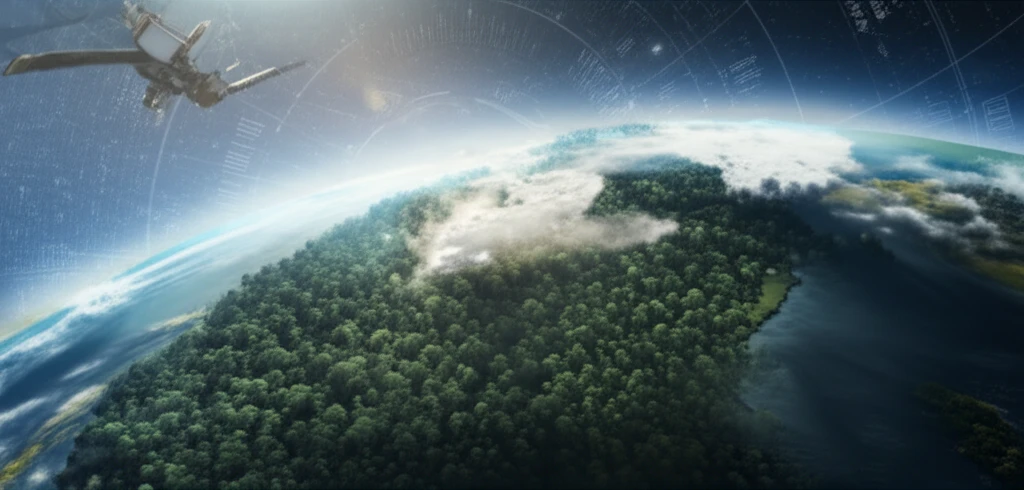
This article explores a fascinating study that uses data from the Moderate Resolution Imaging Spectroradiometer (MODIS) sensor, aboard the Terra satellite, to analyze the Amazon's radiation balance. By combining satellite data with ground measurements, scientists are gaining unprecedented insights into how the rainforest functions and the challenges it faces. This research exemplifies the power of technology in unraveling the mysteries of our planet's most precious ecosystems.
Unveiling the Amazon's Secrets: How Satellite Data Helps Scientists Study the Rainforest
The research focuses on understanding the components of the radiation balance in two specific areas of the Brazilian Amazon: pasture lands and forests. The study uses the Surface Energy Balance Algorithms for Land (SEBAL) model, which is a sophisticated tool that helps estimate how much energy is absorbed and released by the land surface. By comparing the results with measurements taken directly on the ground, scientists can validate the accuracy of the satellite data and gain a more complete understanding of the processes at work.
- Vegetation Indices: These are mathematical calculations that provide information about the health and density of the vegetation.
- Albedo: This measures the reflectivity of the surface. Darker surfaces absorb more sunlight, while lighter surfaces reflect more.
- Atmospheric Transmittance: This refers to the amount of sunlight that passes through the atmosphere.
Protecting the Amazon: The Future of Rainforest Research and Conservation
The research highlights the importance of continuous monitoring and innovative technologies in the fight to preserve the Amazon. By combining the power of satellite data with on-the-ground observations, scientists can generate a better understanding of the rainforest's condition and provide useful insights for conservation efforts. As climate change and deforestation continue to threaten this vital ecosystem, these scientific endeavors become increasingly critical for protecting the "lungs of the planet" for generations to come.