
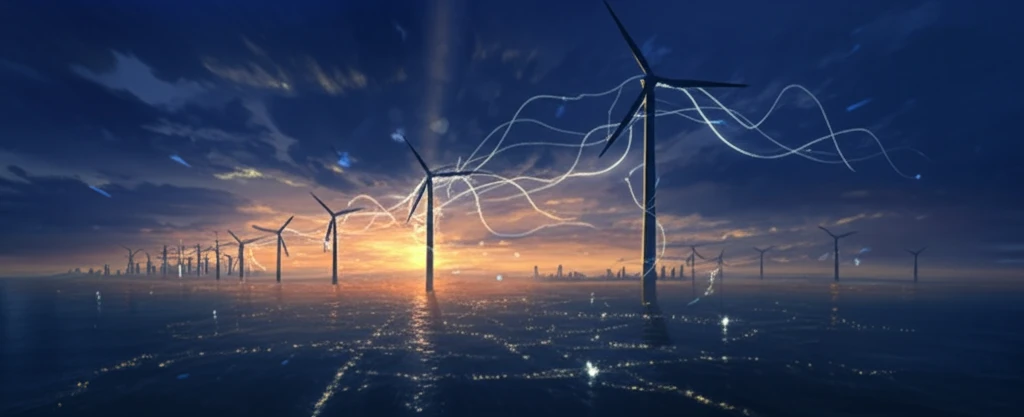
Offshore wind farm at sunset, energy flowing to city

Decoding Offshore Wind Farm Configurations: Which Design Maximizes Efficiency?

"A clear look at the various designs used in offshore wind farms and how they impact performance and cost, helping you understand the future of renewable energy."


Offshore wind energy is rapidly becoming a key player in the global shift towards renewable energy. Unlike their land-based counterparts, offshore wind farms face unique challenges due to their location, requiring specialized and robust designs. Understanding these designs is crucial for anyone interested in the future of sustainable energy.

The basic principle behind a wind farm is simple: wind turns turbine blades, generating electricity. However, the implementation of this principle in the open sea involves complex engineering and strategic planning. Key to this is deciding how to configure these wind farms, impacting everything from energy production to maintenance costs.

This article breaks down the different configuration options for offshore wind farms, examining the pros and cons of each. Whether you're an energy professional, an environmental advocate, or simply curious about how our energy future is being shaped, this guide provides a clear and accessible overview.

Understanding the Basic Configurations: HVAC vs. HVDC

Offshore wind farm at sunset, energy flowing to city

When setting up an offshore wind farm, one of the first big decisions is how to transmit the electricity generated back to shore. There are two main options: High Voltage Alternating Current (HVAC) and High Voltage Direct Current (HVDC). Each has its own strengths and is suited to different situations.

HVAC is generally the simpler and more cost-effective option for shorter distances—typically under 50 kilometers. It’s a well-established technology, making it a familiar choice for many projects. However, HVAC isn't without its limitations. Over longer distances, the energy loss becomes significant, reducing its efficiency.

  • HVAC (High Voltage Alternating Current): Best for shorter distances (less than 50 km). Lower initial cost and simpler technology. Suitable for smaller wind farms closer to shore.
  • HVDC (High Voltage Direct Current): Ideal for longer distances (over 50 km). More efficient over long distances with less energy loss. Preferred for large-scale wind farms far from shore.
For wind farms located further out at sea, HVDC is usually the better choice. Although it involves more complex and expensive equipment, HVDC is much more efficient at transmitting electricity over long distances. This efficiency is crucial for large wind farms that need to send power across many kilometers to reach consumers.

Choosing the Right Configuration: Balancing Cost and Efficiency

The configuration of an offshore wind farm is a complex decision, balancing initial costs with long-term efficiency and reliability. As technology advances, new configurations are emerging that promise to further optimize energy production and reduce costs. Staying informed about these developments is key to harnessing the full potential of offshore wind energy.

About this Article -

This article was crafted using a human-AI hybrid and collaborative approach. AI assisted our team with initial drafting, research insights, identifying key questions, and image generation. Our human editors guided topic selection, defined the angle, structured the content, ensured factual accuracy and relevance, refined the tone, and conducted thorough editing to deliver helpful, high-quality information.See our About page for more information.

Everything You Need To Know

1

What are the primary design considerations when setting up offshore wind farms?

The primary design considerations revolve around efficiently transmitting electricity generated by the wind turbines back to shore. The main choices are High Voltage Alternating Current (HVAC) and High Voltage Direct Current (HVDC) systems. The selection depends on factors like distance to shore, the scale of the wind farm, and balancing initial costs with long-term efficiency. Other considerations include the layout of the turbines, the type of foundation used, and strategies for maintenance and reliability in harsh marine environments. Choosing the right configuration impacts energy production, maintenance costs, and the overall economic viability of the project.

2

When is High Voltage Alternating Current (HVAC) the preferred choice for offshore wind farms, and what are its limitations?

High Voltage Alternating Current (HVAC) is generally preferred for offshore wind farms located shorter distances from the shore, typically under 50 kilometers. It's a well-established and simpler technology, which translates to lower initial costs and easier implementation. However, HVAC's main limitation is significant energy loss over longer distances, making it less efficient and unsuitable for large-scale wind farms located far from the coast. This energy loss is due to the inherent properties of AC transmission over long cable lengths, which increases reactive power losses.

3

Why is High Voltage Direct Current (HVDC) favored for large-scale offshore wind farms located far from shore, and what are the trade-offs?

High Voltage Direct Current (HVDC) is favored for large-scale offshore wind farms far from shore because it's much more efficient at transmitting electricity over long distances, significantly reducing energy loss compared to HVAC systems. This efficiency is crucial for projects where power needs to be sent across many kilometers to reach consumers. The main trade-off is the higher initial cost due to the more complex equipment required for HVDC transmission, including converter stations at both ends of the cable to convert AC to DC and back again. Despite the higher upfront investment, the long-term efficiency gains and reduced operational costs often make HVDC the more economical choice for large, distant offshore wind farms.

4

How does the configuration of an offshore wind farm impact its overall cost and efficiency?

The configuration profoundly impacts the cost and efficiency of an offshore wind farm. The choice between HVAC and HVDC transmission systems directly affects energy losses and infrastructure expenses. Turbine layout influences how effectively wind energy is captured, while the type of foundation (e.g., monopile, jacket, floating) depends on water depth and seabed conditions, affecting construction costs and stability. Maintenance strategies and accessibility also play a role, as downtime can significantly reduce energy production. Balancing these factors requires careful planning and optimization to maximize energy output while minimizing both initial and long-term operational costs.

5

What future advancements in offshore wind farm configurations can we expect to see, and how might they improve energy production and reduce costs?

Future advancements in offshore wind farm configurations are expected to focus on optimizing energy production and reducing costs through several key areas. Innovations in turbine technology, such as larger rotor diameters and higher hub heights, will capture more wind energy. Advanced grid integration technologies, including smart grids and energy storage solutions, will improve the reliability and stability of power delivery. Floating wind turbine technology will enable wind farms to be located in deeper waters, accessing stronger and more consistent winds. Additionally, improvements in materials, construction techniques, and automated maintenance systems will further drive down costs and increase the lifespan of offshore wind farms. These developments promise to make offshore wind energy an even more competitive and sustainable source of power.

Newsletter Subscribe

Subscribe to get the latest articles and insights directly in your inbox.