
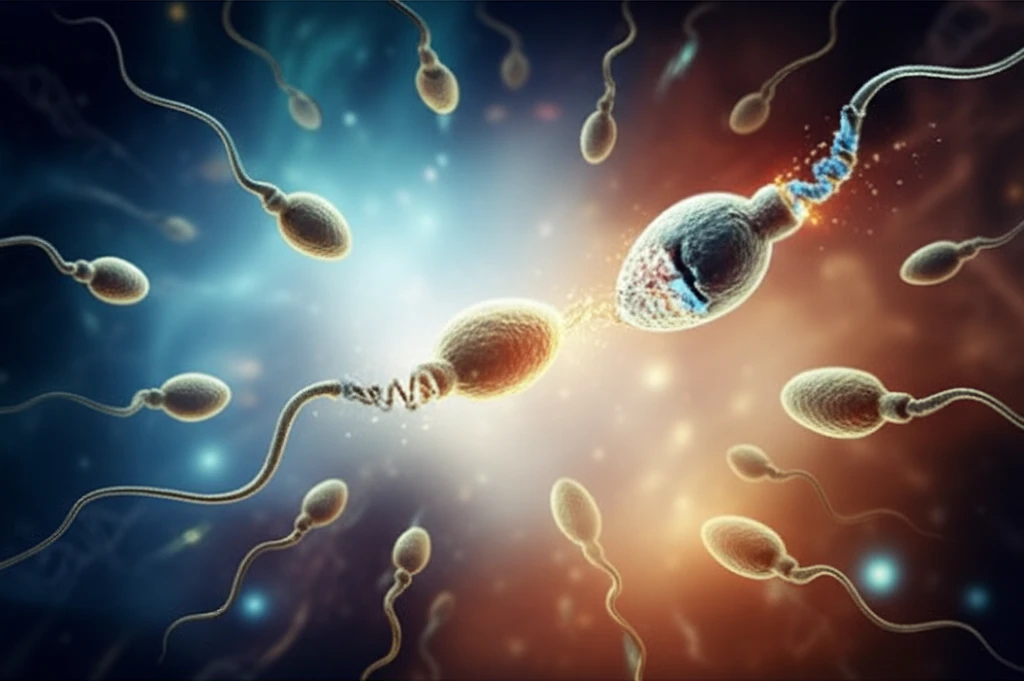
Sperm DNA fragmentation being repaired by antioxidants.

Decoding Male Fertility: What Sperm DNA Fragmentation Means for You

"Paternal age, obesity, and lifestyle factors can impact sperm health. Learn how to optimize your chances of conception."


In recent years, the understanding of male fertility has expanded beyond simple sperm counts. Sperm DNA fragmentation (SDF), or damage to the genetic material within sperm, has emerged as a significant factor affecting a couple's ability to conceive. While female age has long been recognized as a critical element in fertility, the impact of paternal factors, particularly sperm DNA integrity, is gaining increased attention.

Dr. Franco's commentary on Agarwal et al.'s practice recommendations sheds light on vital aspects of SDF, emphasizing the roles of paternal age, weight, and varicocele (enlarged veins in the scrotum). This article will delve into these risk factors and explore ways to mitigate their effects, offering guidance for men looking to improve their reproductive health.

While assisted reproductive technologies (ART) like intracytoplasmic sperm injection (ICSI) have helped overcome some forms of male infertility, the underlying quality of sperm DNA remains crucial for optimal pregnancy outcomes and the long-term health of offspring. Understanding and addressing SDF is therefore essential for couples striving to build a family.

The Paternal Age Factor: Is There a Biological Clock for Men?

Sperm DNA fragmentation being repaired by antioxidants.

Unlike the sharp decline in fertility associated with advancing female age, the impact of paternal age is more subtle but still significant. While men can father children later in life than women, sperm quality gradually declines with age, typically starting around age 35. Studies have shown a correlation between increased paternal age and higher SDF levels.

The "Groningen Expert Center for Kids with Obesity (GECKO) Drenthe" study highlighted a strong correlation between paternal age and time-to-pregnancy (TTP), a key indicator of fertility potential. Men over 45 also face a significantly higher risk of increased TTP, underscoring the importance of considering paternal age in fertility assessments.

  • Oxidative Stress: As men age, their bodies may produce more free radicals, leading to oxidative stress. This can damage sperm DNA and impair its function.
  • Mitochondrial Damage: The mitochondria, responsible for energy production in sperm, can become damaged with age, further contributing to oxidative stress and DNA fragmentation.
  • Apoptosis: Some research suggests that oxidative stress can trigger apoptosis (programmed cell death) in sperm, leading to a higher proportion of abnormal sperm.
While the exact mechanisms are complex, managing oxidative stress through lifestyle modifications and antioxidant supplementation may help mitigate the negative effects of aging on sperm DNA integrity. Consulting with a fertility specialist can provide personalized recommendations based on individual circumstances.

Taking Control of Your Fertility Journey

While SDF can be a concerning factor, it's important to remember that steps can be taken to improve sperm health and increase the chances of conception. Addressing modifiable risk factors like obesity, managing oxidative stress, and seeking appropriate medical intervention for conditions like varicocele can make a significant difference. Consulting with a fertility specialist for a comprehensive evaluation and personalized treatment plan is crucial for couples navigating fertility challenges.

About this Article -

This article was crafted using a human-AI hybrid and collaborative approach. AI assisted our team with initial drafting, research insights, identifying key questions, and image generation. Our human editors guided topic selection, defined the angle, structured the content, ensured factual accuracy and relevance, refined the tone, and conducted thorough editing to deliver helpful, high-quality information.See our About page for more information.

Everything You Need To Know

1

What is Sperm DNA Fragmentation (SDF) and why is it important for male fertility?

Sperm DNA Fragmentation (SDF) refers to damage to the genetic material within sperm cells. This damage is increasingly recognized as a significant factor in male fertility, affecting a couple's ability to conceive. It is crucial because the underlying quality of sperm DNA is essential for optimal pregnancy outcomes and the long-term health of offspring. High levels of SDF can hinder fertilization, leading to unsuccessful pregnancies or increasing the risk of miscarriage. Therefore, understanding and addressing SDF is vital for couples experiencing fertility challenges.

2

How does paternal age impact sperm health and increase Sperm DNA Fragmentation (SDF) levels?

Paternal age can significantly impact sperm health, particularly concerning Sperm DNA Fragmentation (SDF). While men can father children later in life compared to women, sperm quality declines gradually, typically starting around age 35. Studies show a correlation between increased paternal age and higher SDF levels. The impact manifests through several mechanisms. Oxidative stress, which increases with age, can damage sperm DNA. Mitochondrial damage, also associated with aging, contributes to oxidative stress and DNA fragmentation. Additionally, oxidative stress can trigger apoptosis (programmed cell death) in sperm. The "Groningen Expert Center for Kids with Obesity (GECKO) Drenthe" study highlights the link between paternal age and time-to-pregnancy (TTP), underscoring its importance in fertility assessments.

3

Besides paternal age, what other factors can contribute to Sperm DNA Fragmentation (SDF)?

Besides paternal age, several other factors can contribute to Sperm DNA Fragmentation (SDF). These include obesity, lifestyle factors, and conditions like varicocele (enlarged veins in the scrotum). Obesity can lead to increased oxidative stress, damaging sperm DNA. Lifestyle factors such as smoking, excessive alcohol consumption, and a poor diet can also negatively affect sperm health and increase SDF levels. Varicocele is another risk factor, as it can raise the temperature in the scrotum, which is detrimental to sperm production and DNA integrity. Managing these modifiable risk factors is essential for improving sperm health and increasing the chances of conception.

4

What steps can men take to improve their sperm health and potentially reduce Sperm DNA Fragmentation (SDF)?

Men can take several steps to improve sperm health and potentially reduce Sperm DNA Fragmentation (SDF). Addressing modifiable risk factors like obesity is crucial. This involves adopting a healthy diet and regular exercise. Managing oxidative stress is also essential, which can be achieved through lifestyle modifications and antioxidant supplementation. Seeking appropriate medical intervention for conditions like varicocele is another important step. Consulting with a fertility specialist is highly recommended for a comprehensive evaluation and personalized treatment plan. The specialist can assess SDF levels, identify underlying causes, and recommend tailored strategies, potentially including lifestyle changes, medication, or assisted reproductive technologies (ART) like intracytoplasmic sperm injection (ICSI).

5

How can assisted reproductive technologies (ART) like ICSI help when Sperm DNA Fragmentation (SDF) is a concern?

Assisted reproductive technologies (ART) like intracytoplasmic sperm injection (ICSI) can help overcome some forms of male infertility, particularly when Sperm DNA Fragmentation (SDF) is a concern. ICSI involves directly injecting a single sperm into an egg, bypassing some of the natural fertilization processes that might be hindered by damaged sperm DNA. While ICSI can improve the chances of fertilization, it doesn't fully eliminate the impact of SDF. The underlying quality of the sperm DNA still influences the success of the pregnancy and the long-term health of the offspring. Therefore, while ICSI can be a valuable tool, addressing the root causes of SDF through lifestyle changes, antioxidant supplementation, and other medical interventions remains crucial for optimizing outcomes and ensuring the best possible start for the child.

Newsletter Subscribe

Subscribe to get the latest articles and insights directly in your inbox.