
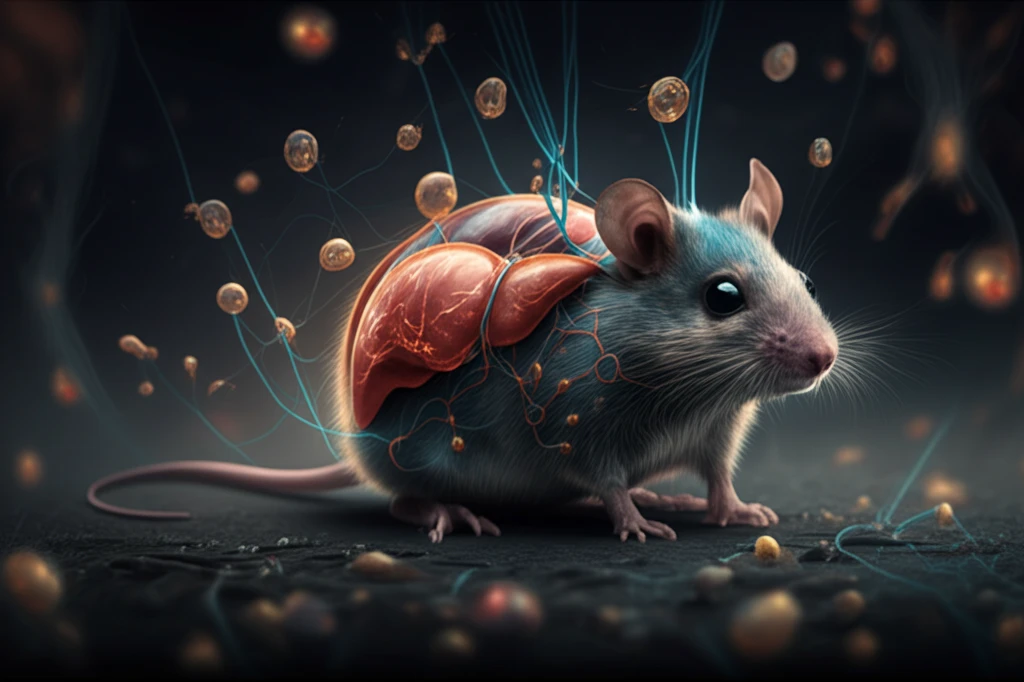
Decoding Liver Cancer: How Mouse Models are Revolutionizing Human Treatment

"Discover how C3HeB/FeJ mice are helping researchers unlock new insights into hepatocellular carcinoma and pave the way for better therapies."
Hepatocellular carcinoma (HCC), a prevalent form of liver cancer, poses a significant global health challenge. Its insidious nature and resistance to treatment underscore the urgent need for robust preclinical models that accurately reflect the complexities of human disease. Traditional models often fall short, failing to capture the heterogeneity and nuanced progression of HCC in patients.
Enter the C3HeB/FeJ mouse, an inbred strain exhibiting spontaneous HCC development. Researchers have found that these mice naturally develop liver tumors that share striking similarities with human HCC, making them an invaluable asset for unraveling the disease's underlying mechanisms and testing novel therapeutic strategies. The spontaneous nature of tumor development in these mice mimics the unpredictable onset of human liver cancer.
This article explores how the C3HeB/FeJ mouse model is revolutionizing our understanding of HCC. From genetic parallels to advanced imaging techniques and gene expression analysis, we delve into the multifaceted ways these mice are helping scientists bridge the gap between preclinical research and clinical success. Discover how these findings translate into better diagnostic tools and more effective, personalized treatments for those battling liver cancer.
The Burden of Liver Cancer
Liver cancer remains a serious health and wellness concern worldwide. Its impact varies across populations and is shaped by factors such as disease causes, access to care, and the stage at which cancer is identified. Mouse models are being studied to improve understanding of the disease and support the development of more effective human treatments.
Current Treatment Challenges
Clinical management of liver cancer generally depends on the tumor's characteristics, extent, and the patient's overall health. Available approaches can be effective for some patients but may be limited by late diagnosis, treatment resistance, recurrence, or differences between individuals. Preclinical models may help researchers investigate these challenges before potential therapies are evaluated in humans.
From Observation to Modeling
Research on liver cancer has progressed from describing disease patterns to investigating the biological mechanisms that drive tumor development. Advances in experimental biology have made it possible to study cancer in living models and test potential interventions in controlled settings. These foundations helped establish mouse models as an important part of modern cancer research, while also highlighting the need to interpret animal findings cautiously.
The C3HeB/FeJ Mouse Model: A Mirror for Human HCC
The C3HeB/FeJ mouse model stands out due to its ability to spontaneously develop HCC, mirroring the natural onset of human liver cancer. These mice exhibit tumors with histological features remarkably similar to those found in human patients, including hepatosteatosis, dysplasia progression, vascular invasion, and diverse cell variants. Such similarities are crucial for accurately studying disease progression and therapeutic responses.
- Tumors in C3HeB/FeJ mice exhibit hyperechogenicity with distinct borders, similar to human HCC.
- Ultrasound imaging accurately correlates with physical tumor volume, providing a reliable non-invasive measurement.
- Longitudinal monitoring allows researchers to observe diverse patterns of tumor response to therapy, including growth, regression, and delayed response.
Choosing the Right Mouse Model
A recent review emphasizes that researchers must carefully select or combine mouse models according to their specific hepatocellular carcinoma research objectives. The review highlights that currently used models have distinct strengths and limitations, making model choice important for improving the translational value of preclinical studies. Separately, ScienceDirect Topics describes findings involving C3HeB/FeJ mice, which develop well-defined lung granulomas with central caseous necrosis after a low-dose aerogenic Mtb challenge, more closely resembling granulomas seen in humans or non-human primates; this example also illustrates why model characteristics must be matched to the research question.
Limits of Translation
Mouse models cannot reproduce every biological, genetic, or clinical feature of human liver cancer. A result observed in mice may therefore fail to predict how a treatment will perform in patients. These limitations make careful model selection, transparent reporting, and subsequent human testing essential.
Models Serve Different Purposes
No single mouse model is likely to represent every aspect of human liver cancer. Different models can vary in how tumors arise, how disease progresses, and how closely their biology reflects human disease. Comparisons are therefore most useful when researchers evaluate models against a clearly defined experimental objective rather than treating one model as universally superior.
Future Directions: Bridging the Gap to Human Therapies
The C3HeB/FeJ mouse model offers a powerful platform for preclinical research, accelerating the development of more effective therapies for human HCC. By closely mimicking the genetic, histological, and diagnostic features of human liver cancer, these mice enable researchers to identify novel drug targets, test therapeutic interventions, and refine treatment strategies. Future studies focused on personalized medicine approaches, leveraging the heterogeneity of C3HeB/FeJ tumors, promise to bring us closer to conquering this deadly disease.
C3HeB/FeJ and Human HCC
Researchers established eigengenes that distinguish hepatocellular carcinoma from normal liver in the C3HeB/FeJ mouse model and in a subset of human HCC. According to the reported findings, these shared features extend the relevance and improve the utility of the C3HeB/FeJ line for HCC studies. The evidence supports using this model as a tool for investigating selected biological features of human liver cancer, rather than assuming it captures every patient experience.
Metabolic Vulnerabilities
Recent research reported by Nature identifies a metabolic vulnerability in mouse hepatocellular carcinoma. In these mice, HCC predominantly originates from zone 3 hepatocytes, where GSTM2 and GSTM3 drive tumor initiation by inhibiting ferroptosis. This finding points toward further investigation of ferroptosis and zone-specific liver biology in future liver-cancer research.
Genetic Protection and Tumor Development
A PNAS study reported that spontaneous hepatocellular carcinoma was substantially less prevalent in male C3HeB/FeJ transgenic mice overexpressing hMGMT in the liver. Tumors that did arise in these hMGMT transgenic mice were largely deficient in hMGMT protein, based on immunohistochemistry. The findings illustrate how gene expression in a mouse model can influence both tumor prevalence and the characteristics of tumors that eventually develop.
From Models to Patients
The ultimate value of liver-cancer mouse models lies in whether they help produce safer and more effective options for patients. Their findings must be interpreted alongside the diversity of human disease and the practical realities of diagnosis and treatment. Progress is therefore likely to depend on combining model-based discoveries with well-designed clinical research and patient-centered evaluation.