
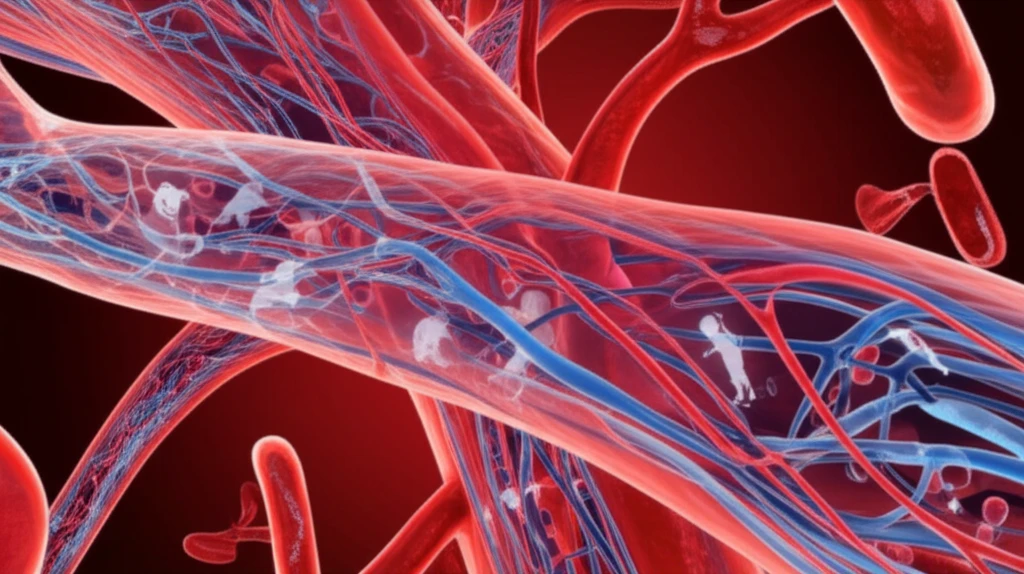
Decoding Leukemia: How Endothelial Function Can Predict Treatment Success in Children

"New research reveals how monitoring blood vessel health in children with acute lymphoblastic leukemia (ALL) can offer vital clues about their response to treatment."
For families navigating a childhood cancer diagnosis, every piece of information is crucial. While treatments for acute lymphoblastic leukemia (ALL) have improved, predicting how each child will respond remains a challenge. Now, a new study is shedding light on a surprising factor: the health of the inner lining of blood vessels, known as endothelial function.
Endothelial dysfunction (ED) occurs when the delicate balance within blood vessels is disrupted, impacting their ability to regulate blood flow and prevent clotting. This dysfunction is already known to be linked to various complications in cancer therapy. However, this research dives deeper, exploring whether it can also serve as an early indicator of treatment success in children with ALL.
This article will break down the key findings of this study, explaining how specific markers of endothelial function can provide valuable insights for doctors and families. We'll explore what these markers are, how they change during treatment, and what they might reveal about a child's prognosis, empowering you with a better understanding of this complex disease.
Endothelial Changes and Cardiovascular Risk
A 2018 study reported that proinflammatory and proaggregatory endothelial activation was common among children with acute lymphoblastic leukemia (ALL). Another study examined vascular endothelial growth factor (VEGF), an angiogenesis promoter, in bone marrow samples taken at diagnosis and remission to assess its possible prognostic value in childhood acute leukemia. Among childhood ALL survivors treated with anthracyclines, a study enrolling 54 survivors and 37 healthy controls evaluated cardiac chamber performance and vascular endothelial function in light of their increased cardiovascular risk. Survivors of childhood brain cancer may also experience endothelial damage among the long-term health problems associated with treatment.
Assessing Endothelial Function
One study assessed endothelial function at ALL diagnosis and during initial treatment, and examined its relationship with early clinical outcome; it recruited 28 children with ALL and 18 age-matched healthy controls. Research on childhood ALL has used several methods to assess endothelial dysfunction, while a review describes invasive and non-invasive vascular-function techniques and their advantages and disadvantages. The review also discusses potential new biomarkers of endothelial damage. The provided sources describe a range of approaches but do not identify one method as a definitive standard.
Endothelial Function: A Window into Leukemia Treatment Response?
The study, published in BioMed Research International, involved 28 children with ALL and 18 healthy children. Researchers measured several key markers of endothelial function in the ALL group at the time of diagnosis and then again at two points during their initial treatment (days 33 and 78). These markers included:
- sP-selectin (CD62-P): A marker of platelet activation and inflammation.
- PAI-1 (serpinE1): A protein that inhibits the breakdown of blood clots.
- sE-selectin (CD62E): Another marker of endothelial activation and inflammation.
- sICAM-1 (sCD54) and sVCAM-1 (sCD106): Molecules that help immune cells stick to blood vessel walls.
- VEGF: A protein that stimulates the growth of new blood vessels.
Markers Across Treatment Stages
A study of endothelial dysfunction markers in children with ALL measured nitric oxide at different stages: 49 children were examined at leukemia presentation, and 36 of them were re-examined during the first course of treatment, induction of remission. A separate bibliometric analysis examined 3,430 publications indexed in Web of Science and Scopus from 1994 to 2024 to map research trends in chemotherapy-induced endothelial dysfunction. Another study assessed cardiac autonomic tests, endothelial markers sVCAM-1 and sICAM-1, and the inflammatory marker hsCRP immediately after chemotherapy and again at three months.
Markers Are Not Standalone Predictors
A study of children with ALL concluded that serum sICAM-1 and sVCAM-1 might provide additional disease-associated markers for clinical management, but probably not independent ones. This limits how strongly those markers alone can be interpreted as predictors of clinical outcome. Separately, a study of childhood ALL survivors treated with anthracyclines evaluated cardiac performance and vascular endothelial function in 54 survivors and 37 healthy controls in the context of increased cardiovascular risk. The supplied material describes the study’s aim and risk context, but does not provide results establishing the predictive performance of endothelial measures.
Different Cancer and Selectin Studies
The supplied comparison sources examine selectins in conditions other than childhood leukemia. One study measured LFA-1 and L-selectin expression on peripheral-blood polymorphonuclear neutrophils, along with soluble sE-selectin and sL-selectin, in 16 patients with small cell lung cancer before treatment. Another investigated E-selectin gene polymorphisms and soluble E-selectin levels in visceral leishmaniasis, reporting that the polymorphisms explained 14.4% of variation in patients, 7.2% in seropositive healthy individuals, and 8.7% in seronegative healthy individuals. These sources do not provide a direct comparison with endothelial-function measures in children with leukemia.
Hope for the Future: Endothelial Function as a Predictive Tool
This study provides compelling evidence that endothelial function is closely linked to the outcome of ALL treatment in children. The researchers found that children with higher levels of sICAM-1 and sVCAM-1 at diagnosis, along with lower levels of sP-selectin and VEGF, tended to have poorer outcomes.
Bone Marrow Endothelium as a Research Frontier
A 2024 review describes the central role of the endothelial microenvironment in maintaining bone marrow homeostasis and supporting hematopoiesis across developmental stages and in adult life. It also notes that bone marrow vasculature mediates communication between the marrow parenchyma and circulating blood. These observations identify the bone marrow endothelial environment as a relevant area for further research, although the supplied source does not specify a leukemia treatment-prediction method.
Long-Term Cardiovascular Health
Children who survive acute lymphoblastic leukemia after anthracycline chemotherapy have increased cardiovascular risk, according to a study that evaluated cardiac chamber performance and vascular endothelial function. That study enrolled 54 ALL survivors and 37 healthy controls. Its focus on survivors highlights the importance of assessing cardiovascular function beyond the period of leukemia treatment.
Importantly, the study also showed that changes in these markers during treatment could be indicative of a child's response. For instance, a decrease in sE-selectin and PAI-1 levels at day 78 was associated with better outcomes. These findings suggest that monitoring endothelial function could help doctors personalize treatment plans and identify children who may need more aggressive therapy.
While further research is needed to validate these findings in larger groups of children, this study offers a promising new avenue for improving the care of children with ALL. By understanding the role of endothelial function, we can move closer to a future where treatment is tailored to each child's unique needs, maximizing their chances of survival and long-term health.