
Unlocking Infant Health: How Arginine and Blood Vessel Function Can Prevent Long-Term Cardiovascular Issues

"New research explores the critical role of arginine bioavailability in newborns, offering hope for preventing cardiovascular diseases later in life."
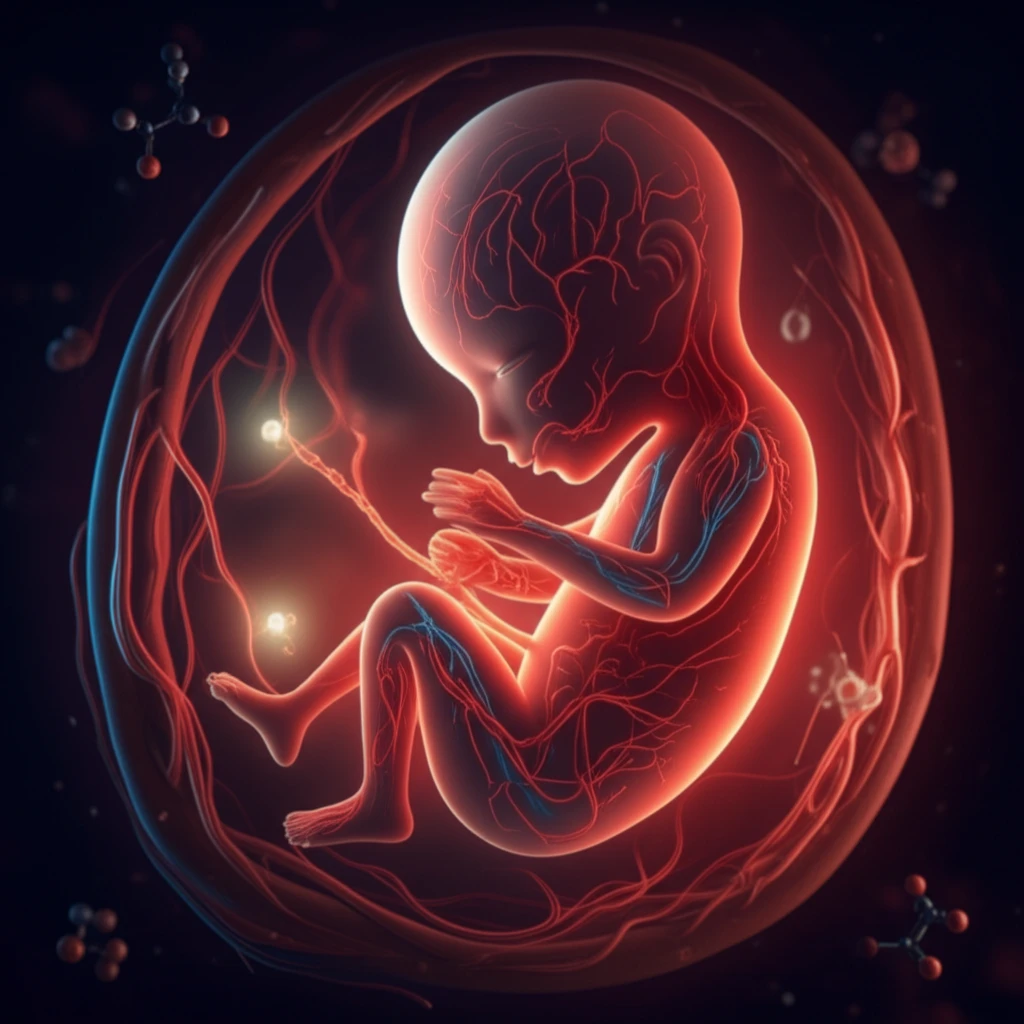
Intrauterine growth restriction (IUGR), where a fetus doesn't grow at the expected rate inside the womb, is a significant concern. It increases the risk of stillbirth and various health problems in newborns. Beyond the initial risks, IUGR can also set the stage for cardiovascular diseases (CVDs) much later in life. This connection highlights how crucial early development is for long-term health.
The inner lining of our blood vessels, known as the endothelium, plays a vital role in keeping our circulatory system healthy. It helps regulate blood flow, prevents blood clotting, and reduces inflammation. However, in cases of IUGR, this endothelial function can be impaired. This impairment involves reduced vasodilation (the widening of blood vessels), structural changes in blood vessels, and increased thickness of arterial walls. Understanding why this happens is crucial for developing preventive strategies.
Recent studies have focused on the L-arginine/nitric oxide (NO) pathway and its potential role in IUGR-related vascular issues. Nitric oxide is a key molecule that helps blood vessels relax and maintain healthy blood flow. The new study delves deeper into how the imbalance of related factors impacts vascular endothelial function, potentially shedding light on new therapeutic targets.
Current Understanding of Fetal Growth Restriction
Intrauterine growth restriction (IUGR) is a fetal pathology in which growth does not match genetic potential and is associated with increased neonatal complications. Uteroplacental vascular problems are identified as one major cause, while newer evidence indicates that maternal cardiovascular maladaptation also contributes to disease expression and clinical heterogeneity. IUGR is multifactorial, affects an estimated 5–15% of pregnancies in the USA and Europe, and is associated with health problems across the lifespan.
The Arginine-Endothelin Connection: What It Means for Infant Vascular Health
The study extracted human umbilical vein endothelial cells (HUVECs) from both IUGR and healthy newborns. Researchers then observed how these cells behaved, specifically looking at their ability to grow and express genes related to important vascular functions like vasomotion (blood vessel movement), oxidative stress, and angiogenesis (new blood vessel formation).
- Reduced Nitric Oxide (NO) Production: Nitric oxide is essential for blood vessel relaxation, and IUGR-derived cells produced less of it.
- Imbalance of eNOS and Arginase-2: eNOS is an enzyme that helps produce NO, while Arginase-2 can reduce NO availability. IUGR cells showed an imbalance, with less eNOS and more Arginase-2.
- Increased ADMA Levels: ADMA is a molecule that inhibits NO production, and its levels were higher in IUGR cells.
- Changes in Endothelin-1 (ET-1) System: ET-1 is a potent vasoconstrictor. IUGR cells showed increased ET-1 and reduced ETBR, a receptor that helps regulate ET-1's effects.
Emerging Vascular Research
Recent studies are examining vascular mechanisms in fetal growth restriction, including increased angiogenesis through the Notch1 signaling pathway in IUGR neonates. A prospective case–control study evaluating Caveolin-1 included 37 pregnant women diagnosed with fetal growth restriction and 33 gestational-age-matched healthy controls. Other research has assessed fetoplacental arteriolar function in placentas from HIV-exposed and unexposed small-for-gestational-age neonates, while reviews continue to link fetal growth restriction with later cardiovascular disease.
Limits of the Long-Term Evidence
Evidence consistently associates low birthweight or fetal growth restriction with higher cardiovascular mortality and cardiovascular disease risk in adulthood. Experimental and clinical findings indicate that sustained restriction of nutrients and oxygen can influence cardiovascular development and produce lasting changes. However, fetal growth restriction is also associated with type 2 diabetes, kidney problems, reduced lung function, and neurodevelopmental difficulties, so later outcomes are not limited to cardiovascular disease.
A Path to Prevention: Targeting Vascular Health Early On
This study provides critical insights into how IUGR affects vascular health at a cellular level. By understanding the specific mechanisms involved, such as the imbalance of arginine bioavailability and the disruption of the endothelin-1 system, researchers can explore potential therapies to prevent long-term cardiovascular consequences in individuals affected by IUGR. This research could pave the way for early interventions that promote healthy vascular function and reduce the risk of heart disease later in life.
From Fetal Adaptation to Adult Risk
Intrauterine growth restriction affects an estimated 7–10% of fetuses and exposes them to an adverse environment during a critical period of development. The cited review reports that affected fetuses may face lifelong consequences, including increased cardiovascular risk in adulthood. It also notes that cardiovascular differences can already be observed in utero, supporting the view that later risk may begin with fetal developmental adaptations rather than appearing only after birth.