
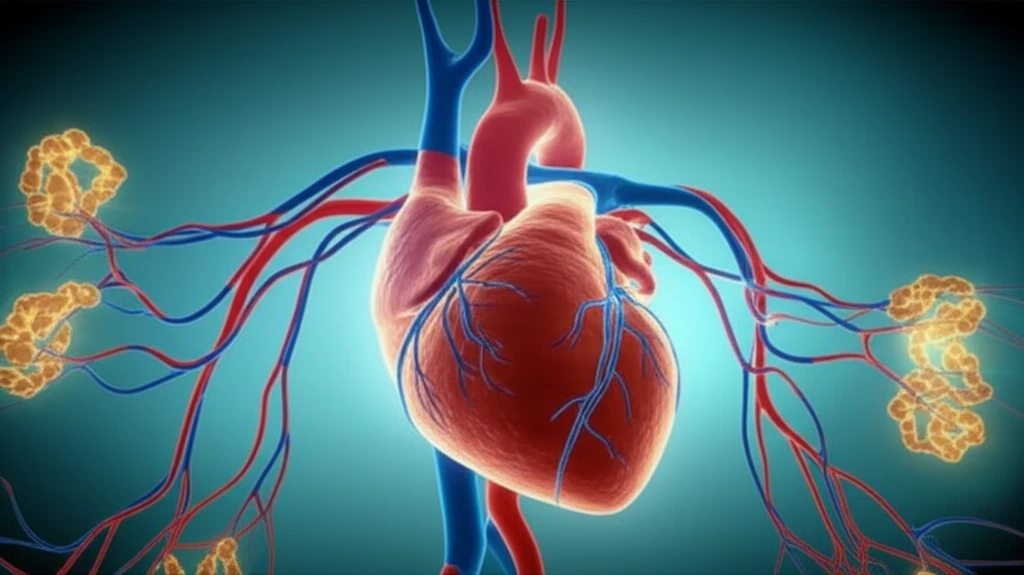
Unlocking the Secrets of APOL3: How This Protein Could Revolutionize Heart Health

"Discover how Apolipoprotein L3 (APOL3) influences endothelial function and its potential impact on preventing cardiovascular diseases."
Cardiovascular diseases (CVDs) remain a leading cause of mortality worldwide, underscoring the urgent need for innovative strategies to improve heart health. At the heart of vascular well-being lies the endothelium, the inner lining of blood vessels that regulates blood pressure, permeability, and overall vessel function. Endothelial dysfunction, characterized by impaired regulation, is a critical factor in the development of atherosclerosis and related conditions.
Emerging research has spotlighted the Apolipoprotein L (APOL) family, a group of proteins with poorly understood functions but suggested involvement in inflammatory processes and cell death mechanisms. Among these, Apolipoprotein L3 (APOL3) has garnered attention for its potential role in endothelial cells and its response to factors known to contribute to atherogenesis. Understanding APOL3's function could unlock new therapeutic avenues for combating endothelial dysfunction and, consequently, cardiovascular diseases.
This article delves into the groundbreaking findings of a recent study that investigated the role of APOL3 in endothelial cells, particularly its influence on angiogenesis, the formation of new blood vessels. By exploring how APOL3 interacts with key signaling pathways, this research provides valuable insights into its potential as a therapeutic target for preventing and treating heart disease.
Tracking Cardiovascular Burden
The CDC’s Surveillance and Evaluation Data Resource Guide compiles data sources for heart disease and stroke prevention programs conducting policy, surveillance, and evaluation activities. The American Heart Association compiles its Heart Disease and Stroke Statistical Update annually with the CDC, NIH, and other government agencies. The 2026 update, dated January 21, 2026, includes key statistics on heart disease, stroke, cardiovascular diseases, risk factors, and the American Heart Association’s research program.
Modern Cardiovascular Risk Assessment
A 2024 review describes emerging tools for cardiovascular risk stratification, including biomarkers, genetics, imaging techniques, and artificial intelligence. These approaches are intended to support personalized intervention strategies and improve primary cardiovascular risk assessment in apparently healthy people. A 2025 American Heart Association statement reports that expanding genomic and precision medicine is increasing the role of genetic testing in cardiovascular diagnosis, risk stratification, and management, while also requiring attention to equitable access and regulatory oversight.
From Milestones to APOL3
Historical reviews describe cardiovascular medicine as a field shaped by milestones that changed clinical practice and redirected research. A separate review traces the development of coronary revascularization and optimal medical therapy over five decades, emphasizing improvements studied in clinical trials. In APOL3 research, OMIM reports that Page et al. identified ubiquitous APOL3 expression in 2001, with highest levels in the spinal cord, placenta, and adrenal gland and lowest levels in the brain, heart, and pancreas; Monajemi et al. reported in 2002 that the protein lacks a consensus signal peptide.
How Does APOL3 Influence Blood Vessel Formation?
The study employed a CRISPR/Cas9 technique to analyze the effects of APOL3 gene knockout in human microvascular endothelial cells (HMEC-1). Scientists examined various aspects of endothelial cell function, including cell migration, tubulogenesis (the formation of tube-like structures), endothelial permeability, and intracellular signal transduction. Kinase phosphorylation and angiogenesis gene expression were also assessed to provide a comprehensive understanding of APOL3's role.
- APOL3 Induction: Among the APOL family members, APOL3 was the only one induced by myeloperoxidase, oxidized LDL, VEGF, and FGF treatments.
- Increased Endothelial Permeability: Invalidation of APOL3 increased endothelial permeability, suggesting a compromised barrier function.
- Reduced Wound Repair and Tubule Formation: APOL3 knockout reduced wound repair and tubule formation in vitro, particularly under MPO and VEGF-induced conditions.
- Inhibition of Pro-Angiogenic Signaling: Some pro-angiogenic signaling pathways (ERK1/2 and FAK) and genes were partially inhibited in APOL3 knockout cells.
APOL3 in Emerging Research
A study of circulating placental alkaline phosphatase-expressing exosomes in maternal blood reported that APOL3 expression was significantly lower at time points T2–T4 than at T1. The finding was part of a broader temporal analysis of placental genes in ExoPLAP. In a separate colorectal cancer study, low intratumor APOL3 expression was associated with poor prognosis and inferior responsiveness to 5-fluorouracil-based adjuvant chemotherapy and targeted therapy.
Evidence Still Requires Scrutiny
A comprehensive review describes cardiovascular diseases as a major global health concern and a leading cause of morbidity and mortality. It also frames cardiovascular disease management as involving pathophysiology, diagnosis, and treatment, underscoring the complexity of translating biological findings into clinical care. Claims that APOL3 has a pivotal role in angiogenesis, endothelial function, and potential heart-disease therapies therefore remain a proposed therapeutic interpretation rather than established clinical evidence.
The Future of APOL3 Research: New Hope for Heart Health
The study highlights the significance of APOL3 in regulating angiogenesis and endothelial function, marking it as a potential therapeutic target for cardiovascular diseases. By understanding its specific roles in these processes, future research can focus on developing targeted therapies that modulate APOL3 activity to promote vascular health. As research continues to unravel the complexities of APOL3, the potential for innovative treatments and preventive strategies for heart disease grows ever closer. Stay informed and proactive about your heart health, as new discoveries like these may shape the future of cardiovascular care.
Connected Cardiovascular Monitoring
A 2025 review summarizes advances in wearable physical sensors, imaging technologies, and biochemical devices designed for cardiovascular health monitoring. The review emphasizes developments in early monitoring. Medicine 2032 projects that smart wearable technology could allow clinicians to track heart rate and rhythm, physical activity, blood pressure, sleep, glucose, and other biometrics, using machine-learning models to generate individual- and population-level insights.
Oral Health and Cardiovascular Disease
Two narrative reviews examine the systemic relationship between oral health and cardiovascular disease. They describe links involving periodontal disease, oral microbiota imbalance, and systemic inflammation. The 2025 review also notes oral side effects associated with cardiovascular pharmacotherapy, showing that cardiovascular health is connected to conditions and treatments beyond the heart itself.
From Mechanism to Patient Evidence
Research on human brain microvascular endothelial cells describes hypoxia-induced angiogenesis involving the miR-485/SOX7 axis. The study identifies ERK1/2 activation as necessary for tube formation and Akt signaling as regulating cellular events required for new blood-vessel formation. These findings illustrate why endothelial mechanisms must be connected to carefully designed human and real-world evidence studies before they can inform patient care.