
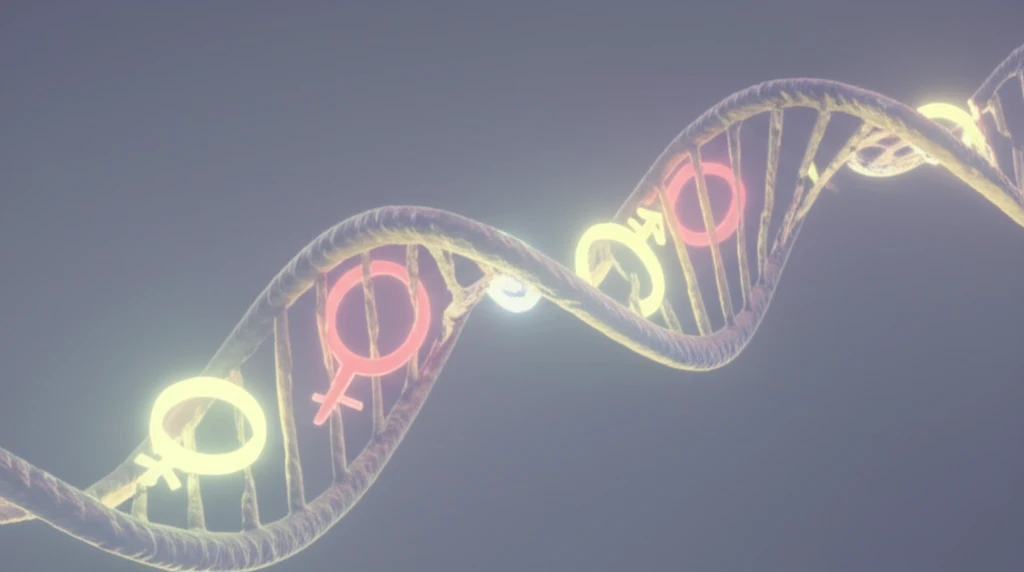
Surreal illustration of genomic imprinting with intertwined DNA strands and parental symbols.

Decoding Imprinting Disorders: What They Are, How They Happen, and What's Next

"A deep dive into the principles, practices, and future directions of research on human imprinting disorders, empowering you with essential knowledge."


Imagine a world where genes remember which parent they came from, and that memory affects how they work. That's the reality within our cells, thanks to a process called genomic imprinting. This intricate system ensures that certain genes are expressed based on their parental origin, playing a vital role in our growth, development, and metabolism.

However, when this imprinting process goes awry, it can lead to imprinting disorders (IDs). These rare, congenital conditions arise from errors in gene dosage, disrupting the delicate balance of imprinted genes and resulting in a range of clinical features that impact development, behavior, and overall health.

This article unpacks the complexities of imprinting disorders. We'll explore the underlying principles, how they're diagnosed, the challenges they present, and the exciting progress being made in understanding and potentially treating these conditions. Whether you're a healthcare professional, a student, or simply curious about the intricacies of genetics, this guide provides a comprehensive overview of human imprinting disorders.

The ABCs of Genomic Imprinting: How Genes Remember

Surreal illustration of genomic imprinting with intertwined DNA strands and parental symbols.

At its core, genomic imprinting is an epigenetic phenomenon. Epigenetics refers to modifications to our DNA that don't change the underlying genetic code but do affect how genes are expressed. Think of it as a set of instructions that tells our cells which genes to turn on or off, and how strongly to express them.

Here’s how imprinting works:

  • Epigenetic Marks: During the formation of sperm and egg cells, specific regions of DNA acquire epigenetic marks, primarily DNA methylation. These marks act as a signal, indicating the gene's parental origin.
  • Monoallelic Expression: In most cases, imprinted genes are expressed from only one allele – either the one inherited from the mother or the one from the father. The other allele is effectively silenced.
  • Developmental Regulation: Many imprinted genes play critical roles in regulating growth, development, and metabolism. Their precise, parent-of-origin-dependent expression is essential for normal development.
Over 40 genomic regions in humans are known to exhibit imprinting, each controlled by imprinting control regions (ICRs) with differentially methylated regions (DMRs). These ICRs ensure that genes are expressed according to their parental origin, a process that remains stable throughout a person's life.

The Future of Imprinting Disorder Research

Research into imprinting disorders is rapidly evolving, driven by advances in molecular genetics, epigenomics, and our understanding of early embryonic development. As we refine our diagnostic capabilities and unravel the complex interplay of genes and epigenetic marks, we move closer to tailored treatments and improved outcomes for individuals with IDs.

Key areas of future focus include:

<ul><li><b>Epigenomic analysis:</b> Using advanced techniques to identify novel imprinted genes and understand their role in development and disease.</li><li><b>Animal models:</b> Integrating insights from animal studies to elucidate the function of imprinted genes and test potential therapeutic interventions.</li><li><b>Long-term studies:</b> Investigating the impact of imprinting effects on lifespan, overall health, and the potential for population-level effects.</li></ul>

About this Article -

This article was crafted using a human-AI hybrid and collaborative approach. AI assisted our team with initial drafting, research insights, identifying key questions, and image generation. Our human editors guided topic selection, defined the angle, structured the content, ensured factual accuracy and relevance, refined the tone, and conducted thorough editing to deliver helpful, high-quality information.See our About page for more information.

This article is based on research published under:

DOI-LINK: 10.1016/j.ejmg.2017.08.014, Alternate LINK

Title: Human Imprinting Disorders: Principles, Practice, Problems And Progress

Subject: Genetics (clinical)

Journal: European Journal of Medical Genetics

Publisher: Elsevier BV

Authors: Deborah J.G. Mackay, I. Karen Temple

Published: 2017-11-01

Everything You Need To Know

1

How does genomic imprinting actually work at the molecular level to 'remember' a gene's parental origin?

Genomic imprinting relies on epigenetic marks, primarily DNA methylation, added during sperm and egg cell formation. These marks signal a gene's parental origin, leading to monoallelic expression, where only one allele (from either the mother or father) is expressed while the other is silenced. This parent-of-origin-dependent expression regulates crucial aspects of development, growth and metabolism. Imprinting control regions (ICRs) with differentially methylated regions (DMRs) ensure accurate gene expression throughout life.

2

What exactly are imprinting disorders, and how do they arise from problems with genomic imprinting?

Imprinting disorders (IDs) are rare, congenital conditions caused by errors in gene dosage that disrupt the normal function of imprinted genes. This disruption can lead to a variety of clinical features that affect development, behavior, and overall health. There are over 40 genomic regions that are know to exhibit imprinting.

3

Can you simply explain what genomic imprinting is and why it's so important for our health and development?

Genomic imprinting is an epigenetic phenomenon where specific genes are expressed based on their parental origin. This means that some genes are only active when inherited from the mother, while others are only active when inherited from the father. This process is crucial for regulating growth, development, and metabolism. When genomic imprinting goes wrong, it leads to imprinting disorders. The process ensures that genes are expressed according to their parental origin and remains stable throughout a person's life.

4

What does the future hold for research into imprinting disorders, and what advancements are on the horizon?

Research on imprinting disorders is advancing rapidly through molecular genetics, epigenomics, and studies of early embryonic development. The refinement of diagnostic capabilities and unraveling of the complex interplay of genes and epigenetic marks are leading to tailored treatments and improved outcomes for individuals with IDs.

5

In the context of imprinting disorders, what does 'epigenetics' mean, and how is it related to genomic imprinting?

Epigenetics refers to modifications to DNA that do not alter the underlying genetic code but affect how genes are expressed. Epigenetic marks, primarily DNA methylation, act as instructions telling cells which genes to turn on or off, and how strongly to express them. Genomic imprinting is an epigenetic phenomenon where certain genes are expressed based on their parental origin due to these epigenetic modifications.

Newsletter Subscribe

Subscribe to get the latest articles and insights directly in your inbox.