
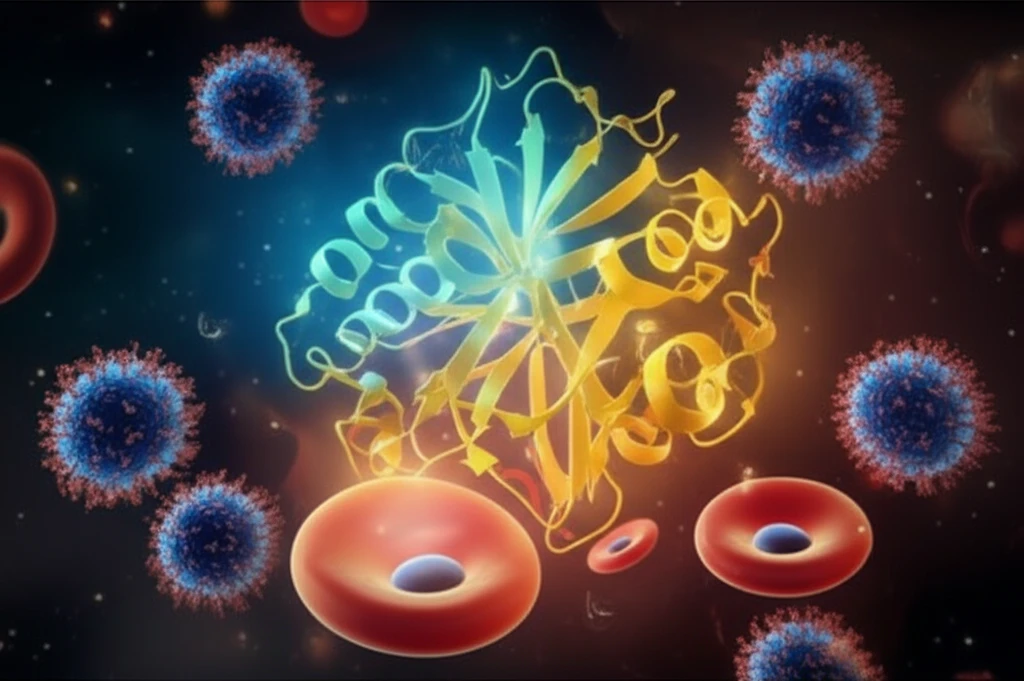
MBL protein protecting cells from HIV-1

Decoding HIV-1: How Genetic Variations Impact Infection

"Unlocking the Secrets of Mannose-Binding Lectin (MBL) and its Role in HIV-1 Susceptibility"


HIV-1, the virus that causes AIDS, remains a global health challenge. While treatments have improved, understanding the factors that influence susceptibility and disease progression is crucial. One area of research focuses on the role of mannose-binding lectin (MBL), a key player in the innate immune system.

MBL acts as a first line of defense, recognizing and binding to specific sugar patterns found on the surfaces of viruses, bacteria, and fungi. This binding triggers a cascade of immune responses, helping the body to clear the infection. However, variations in the MBL gene can lead to differences in MBL protein levels and function, potentially affecting an individual's vulnerability to infections.

This article delves into a study conducted in Belém, Brazil, investigating the link between MBL gene polymorphisms (genetic variations), MBL serum levels, and HIV-1 infection. By examining the genetic makeup and immune markers of HIV-1-infected individuals, the research sheds light on the complex interplay between MBL and the body's response to HIV-1.

MBL: Your Body's First Line of Defense Against HIV-1

MBL protein protecting cells from HIV-1

Mannose-binding lectin (MBL) is a crucial component of the innate immune system, acting as a front-line defense against invading pathogens. Produced in the liver, this protein patrols the bloodstream, on the lookout for microorganisms that could pose a threat. Its primary function is to identify and bind to specific sugar molecules, like mannose, found on the surfaces of bacteria, viruses, and fungi.

When MBL encounters these sugar patterns, it latches on, initiating a process called complement activation. This activation triggers a series of immune responses that help the body neutralize and eliminate the invaders. Essentially, MBL acts as a signal, alerting the immune system to the presence of a threat and kickstarting the necessary defense mechanisms.

The study focused on specific mutations in the MBL gene, known as MBLD, MBLB, and MBLC, collectively represented as MBLO. These mutations have been linked to lower MBL serum levels and potentially, an increased susceptibility to infections:
  • Genetic Variations: The researchers examined the distribution of MBL gene variants in HIV-1-infected individuals and a control group.
  • MBL Levels: They measured MBL plasma concentrations in participants to see how genetic variations correlated with protein levels.
  • Immune Markers: CD4+ T-lymphocyte counts and plasma viral load were quantified to assess the impact of MBL variations on HIV-1 disease progression.
The study revealed that while the MBLO variant was present in both HIV-1-infected individuals and the control group, there was no significant difference in its frequency between the two groups. This suggests that, in this specific population, the presence of the MBLO variant alone does not directly increase susceptibility to HIV-1 infection. However, the research did uncover a correlation between MBL genotype and plasma levels. Individuals with the wild-type AA genotype had significantly higher MBL levels compared to those with the AO genotype. This finding highlights the influence of genetic variations on the production of this crucial immune protein.

The Future of HIV-1 Research: Unlocking the Power of MBL

While this study didn't establish a direct link between MBL gene polymorphism and increased HIV-1 susceptibility in the studied population, it underscores the complex interplay between genetics, immune function, and viral infections. The findings highlight the importance of considering individual genetic variations when assessing immune responses and potential disease risks.

Further research is needed to fully elucidate the role of MBL in HIV-1 infection and disease progression. Larger studies, encompassing diverse populations, are crucial to confirm these findings and explore the potential impact of MBL variations on viral load and disease outcomes. A deeper understanding of the interplay between MBL and HIV-1 could pave the way for novel therapeutic strategies aimed at boosting the innate immune response and improving patient outcomes.

Ultimately, unraveling the complexities of the immune system, including the role of proteins like MBL, is essential for developing effective strategies to combat HIV-1 and other infectious diseases. By continuing to investigate these intricate mechanisms, we can move closer to a future where viral infections pose less of a threat to global health.

About this Article -

This article was crafted using a human-AI hybrid and collaborative approach. AI assisted our team with initial drafting, research insights, identifying key questions, and image generation. Our human editors guided topic selection, defined the angle, structured the content, ensured factual accuracy and relevance, refined the tone, and conducted thorough editing to deliver helpful, high-quality information.See our About page for more information.

This article is based on research published under:

DOI-LINK: 10.1590/s0037-86822011000100001, Alternate LINK

Title: Characterization Of Mannose-Binding Lectin Plasma Levels And Genetic Polymorphisms In Hiv-1-Infected Individuals

Subject: Infectious Diseases

Journal: Revista da Sociedade Brasileira de Medicina Tropical

Publisher: FapUNIFESP (SciELO)

Authors: Antonio Carlos Rosário Vallinoto, Felipe Bonfim Freitas, Isabella Guirelli, Luiz Fernando Almeida Machado, Vânia Nakauth Azevedo, Izaura Cayres-Vallinoto, Marluísa Oliveira Guimarães Ishak, Ricardo Ishak

Published: 2011-02-01

Everything You Need To Know

1

What is Mannose-binding lectin (MBL), and what role does it play in the body's defense against infection?

Mannose-binding lectin (MBL) is a protein produced in the liver and is part of the innate immune system. It acts as a first line of defense by recognizing and binding to specific sugar patterns found on viruses, bacteria, and fungi. This binding triggers immune responses to help the body clear the infection. Its significance lies in its role in initiating the complement activation, a crucial process in the immune system's response to pathogens. The implications of MBL function are the initiation of immune responses to neutralize and eliminate pathogens, highlighting its importance in preventing and controlling infections. The study investigates its specific impact on HIV-1 infections.

2

How do genetic variations affect Mannose-binding lectin (MBL), and what are the implications?

Genetic variations, specifically in the MBL gene, can lead to differences in MBL protein levels and function. These variations, such as MBL*D, MBL*B, and MBL*C, are collectively represented as MBL*O. These mutations can influence an individual's vulnerability to infections. The significance of these variations lies in their potential to affect the amount of MBL produced and how effectively it functions. The implications include the possibility that certain genetic variations might make individuals more or less susceptible to infections like HIV-1. The study examined the distribution of MBL gene variants in HIV-1-infected individuals and a control group to establish connections with protein levels and disease progression.

3

What specific measures were used in the study to investigate the relationship between Mannose-binding lectin (MBL) and HIV-1 infection?

The study examined the distribution of MBL gene variants, MBL plasma concentrations, CD4+ T-lymphocyte counts, and plasma viral load. These measures were used to understand the interplay between MBL, genetics, and HIV-1 infection. The importance of these measures lies in providing insights into how MBL variations affect the body's ability to fight off HIV-1 and how the disease progresses. The implications of these measures help assess the relationship between MBL, genetics, and the immune response to HIV-1 infection. The study focused on correlating these aspects to determine if specific MBL gene variations increased susceptibility to HIV-1 infection in the studied population.

4

What did the study reveal about the correlation between MBL genotype and MBL levels?

In the study, individuals with the wild-type AA genotype had significantly higher MBL levels compared to those with the AO genotype. This finding highlights how genetic variations in the MBL gene influence the production of this immune protein. The significance here is that genetic variations directly affect MBL levels, which can impact immune function. The implications of this finding are the potential for personalized medicine approaches, where genetic information could be used to assess an individual's risk of infection and tailor treatments accordingly. The specific genotypes were compared to reveal how they affect the production of MBL, which is critical for immune response.

5

What is the overall significance of the study's findings concerning MBL and HIV-1 infection?

While this study did not establish a direct link between MBL gene polymorphism and increased HIV-1 susceptibility, it underscored the complex relationship between genetics, immune function, and viral infections. The significance of this lies in the understanding that immune responses are complex and influenced by multiple factors. The implications are the need for continued research to understand individual genetic variations when assessing immune responses and potential disease risks. Understanding the interplay between genetics, immune function, and HIV-1 is critical, even if no direct link was found in the population studied, the study highlights the complexity and the need for ongoing investigation into immune responses.

Newsletter Subscribe

Subscribe to get the latest articles and insights directly in your inbox.