
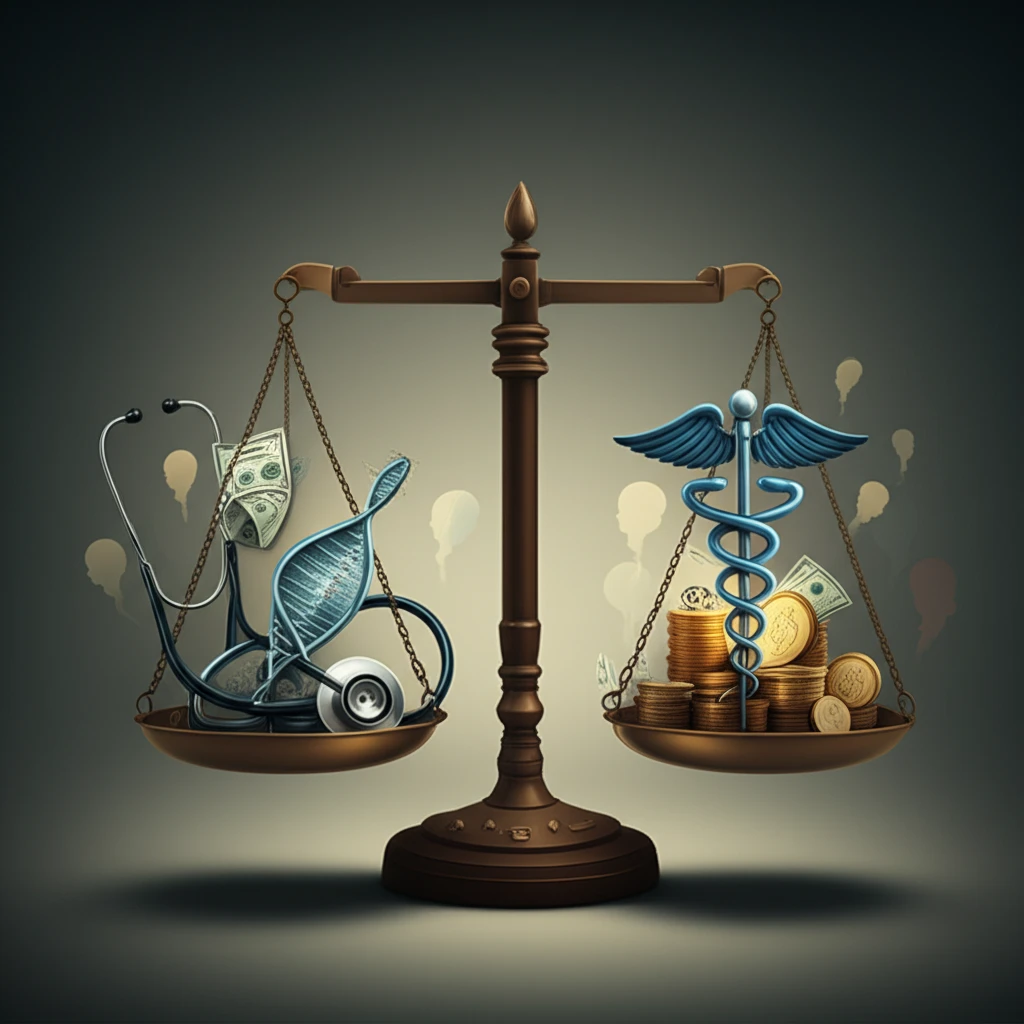
Decoding Healthcare Priorities: Is NICE a Model for Fair Decisions?

"Exploring how the UK's National Institute for Health and Care Excellence (NICE) balances cost, ethics, and public input in healthcare resource allocation."
Deciding which healthcare treatments to fund is a challenge every country faces. With budgets always limited, and new, often expensive, technologies emerging, how do governments ensure fair access to care? The UK's National Institute for Health and Care Excellence (NICE) is one such organization that tackles this issue head-on.
NICE's job is to assess the value of new treatments and provide guidance to the National Health Service (NHS) on whether to fund them. This involves considering not only how effective a treatment is, but also how much it costs, and what impact it will have on society. Unsurprisingly, this often leads to difficult choices and public debate.
But how does NICE actually make these decisions? And are its processes fair and justifiable? This article explores NICE's approach to healthcare prioritization, examining how it balances cost-effectiveness with ethical considerations and public values, offering insights into whether NICE's model could serve as an example for other healthcare systems grappling with similar dilemmas.
NICE's Balancing Act: Cost, Ethics, and Public Input
At the heart of NICE's process is a careful evaluation of the evidence. When a new treatment comes along, NICE assesses how well it works compared to existing options. This involves looking at clinical trial data, considering the benefits for patients, and weighing up any potential side effects. They then calculate a cost-effectiveness ratio, which helps them understand the 'value for money' the new treatment offers.
- Cost-Effectiveness as a Starting Point: NICE uses cost-effectiveness data as a primary filter, but it's not the only factor. A treatment must demonstrate sufficient value to be considered further.
- Social Values as Modifiers: NICE considers a range of social values, like fairness and the needs of disabled people, to adjust its decisions.
- The Citizen's Council: NICE incorporates public input through its Citizen's Council, ensuring diverse perspectives are considered.
Is NICE Nice? Strengths, Weaknesses, and Lessons Learned
NICE has become an influential model for healthcare decision-making, but it's not without its critics. Some argue that NICE's focus on cost-effectiveness can lead to the undervaluing of treatments for rare diseases or those that benefit only a small number of people. Others question whether NICE's social values are truly representative of public opinion.
Despite these criticisms, NICE offers a valuable framework for making difficult decisions about healthcare resource allocation. By combining evidence-based assessments with ethical considerations and public input, NICE strives to ensure that healthcare resources are used fairly and effectively. Other countries can learn from NICE's experiences, adapting its model to fit their own unique circumstances and values.
Ultimately, the question of how to prioritize healthcare resources is a complex and ongoing one. There's no easy answer, and any approach will inevitably involve trade-offs. But by embracing transparency, engaging with the public, and striving for fairness, we can move closer to a healthcare system that meets the needs of all.