
Smart Hospitals: How Automated Medication Systems are Boosting Safety and Efficiency

"Discover how Danish hospitals are leading the way with automated medication systems, reducing errors and improving patient outcomes."
In the fast-paced world of healthcare, ensuring patient safety while managing costs is a constant challenge. Medication errors, a significant concern in hospitals, can lead to prolonged stays, adverse effects, and increased financial burdens on the healthcare system. Recent studies highlight the potential of automated medication systems to revolutionize how hospitals manage medications, offering a promising solution to enhance both safety and efficiency.
Automated medication systems integrate several key components, including electronic prescribing, automated dispensing, and barcode-controlled administration. These systems aim to minimize human error, streamline workflows, and improve overall medication management. While the initial investment may seem substantial, the long-term benefits, such as reduced errors and improved resource allocation, can make these systems a worthwhile investment for hospitals looking to enhance patient care.
This article explores the findings of a compelling study conducted in a Danish hospital, which examined the cost-effectiveness of implementing an automated medication system. By delving into the details of the study, we can gain valuable insights into how these systems work, the benefits they offer, and the potential impact on healthcare facilities worldwide.
Automation Quietly Reshaping Hospital Medication Flow
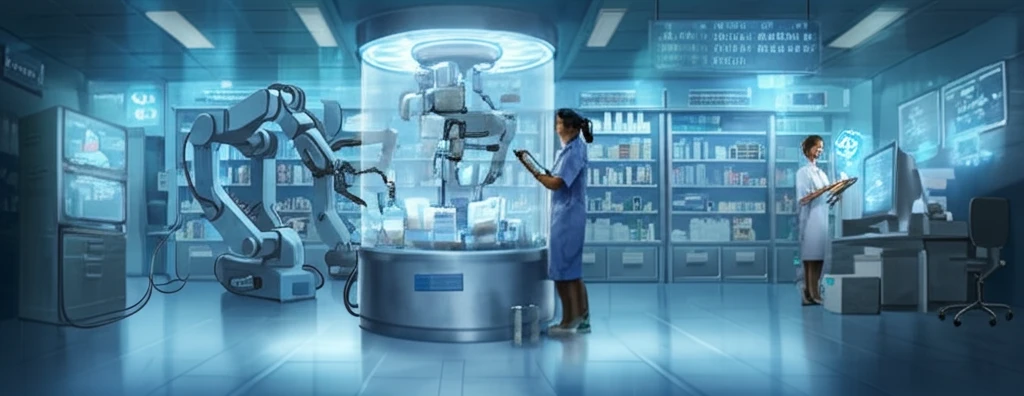
Smart hospitals across China are deploying automated medication distribution systems that support efficient hospital management and patient care efficiency. These technologies are part of a broader wave of healthcare technology innovations, including automated dispensing machines designed to speed and simplify medication handling. In parallel, smart hospitals are adopting automated systems to track inventory of pharmaceuticals and medical equipment, cutting costly manual work from daily operations.
Manual Delivery Bottlenecks and Error Risks
Traditional medication delivery relies heavily on manual input, which increases the chances of medication delivery bottlenecks and medication administration errors. Hand-processed stock control in hospital pharmacies and patient care settings demands significant costly labor. These limitations are the core challenges that automated systems are designed to address.
From Pyxis to the Modern Automated Pharmacy
Established automated medication dispensing systems such as Pyxis and Omnicell became foundational tools for hospital medication management and stock control. These systems marked a shift from manual counting and cart-filling toward machine-driven dispensing in hospital pharmacy and patient care workflows. Their widespread adoption set the stage for the newer, more connected automation seen in today's smart hospitals.
The Danish Study: A Closer Look
A team of researchers led by Risør et al. conducted a prospective, controlled before-and-after study to evaluate the impact of an automated medication system in a Danish university hospital. The study focused on two hematological stations, one serving as the intervention station and the other as the control station. Data on resource utilization and costs were collected at baseline and after four months to assess the system's effects.
- Electronic Prescribing: Doctors entered medication orders electronically, reducing the risk of transcription errors.
- Pharmacist Verification: A pharmacist reviewed each prescription to ensure accuracy and appropriateness.
- Automated Dispensing: Medications were automatically dispensed and packaged for individual patients every 24 hours.
- Barcode Control: Nurses used barcode scanning to verify medication packaging and patient identity at the bedside, ensuring the right medication was administered to the right patient.
AI-Guided Delivery Robots on Ceiling Tracks
In smart hospitals across China, automated medicine delivery systems are quietly transforming healthcare, with silent machines gliding along ceiling tracks and through corridors with precision to deliver medications. These systems combine automated medication distribution with efficient hospital management to move drugs quickly and predictably. The approach illustrates how healthcare technology innovations are integrating robotics directly into daily clinical workflows.
When Automation Is Absent, Errors Persist
Where automated systems are not in place, medication delivery remains vulnerable to bottlenecks and administration errors, compounded by large amounts of costly manual input. These recurring failures highlight that the benefits of automation depend on consistent system reliability rather than occasional intervention. Organizations that underinvest in these systems continue to carry the safety and cost burden of manual handling.
Hospital Dispensing Machines vs. Home Dispensers
Hospital-side automated dispensing systems like Pyxis and Omnicell focus on medication stock control and pharmacy workflows within patient care settings, where speed and inventory accuracy are critical. By contrast, consumer automatic dispensers such as the MedReady are marketed for home use, supporting strict medication adherence for seniors and individuals with chronic conditions. Both categories share the goal of reducing human error, but they operate at very different scales and levels of integration.
The Bottom Line: Is Automation Worth It?
The Danish study provides compelling evidence that automated medication systems can significantly improve medication safety and reduce errors in hospitals. While the initial investment may be substantial, the long-term benefits, including reduced adverse drug events and improved resource allocation, can make these systems a worthwhile investment for healthcare facilities. As healthcare continues to evolve, embracing innovative technologies like automated medication systems will be crucial for enhancing patient care and creating a safer, more efficient environment for both patients and healthcare providers.
One Connected, Data-Driven Medication Environment
A smart hospital integrates IoT devices, artificial intelligence, and data analytics into its infrastructure, creating a highly connected and automated environment. These technologies enable real-time monitoring and the smooth coordination of medication delivery, dispensing, and inventory across departments. The result is a hospital where medication workflows are continuously informed by data rather than isolated manual steps.
Robots on Tracks, Inventories That Restock Themselves
The next frontier for smart hospitals pairs robotic delivery along ceiling tracks and corridors with self-managing inventory systems that track usage patterns and automatically reorder medical supplies and pharmaceuticals. As these systems mature, they promise to further reduce bottlenecks and manual handling. Together, delivery robotics and automated replenishment point toward a largely touchless medication supply chain.
The Cost of Manual Input Across the Supply Chain
Beyond the pharmacy counter, smart hospitals apply automated systems to manage inventory levels of medical supplies, pharmaceuticals, and equipment across the entire operation. When these systems are absent, the need for lots of costly manual input ripples through the supply chain, creating bottlenecks that delay care. Automating replenishment is therefore as much a systemic efficiency strategy as it is a medication safety measure.
Independence and Peace of Mind for Patients
Automatic medication dispensers can promote independence, especially for seniors or individuals with health conditions that require strict medication adherence, acting as a consistent, trustworthy system that supports daily routines. For families and caregivers, this reliability translates into real peace of mind about missed doses. While the technology is impersonal, its effect is deeply personal: safer, more confident medication management at home.