
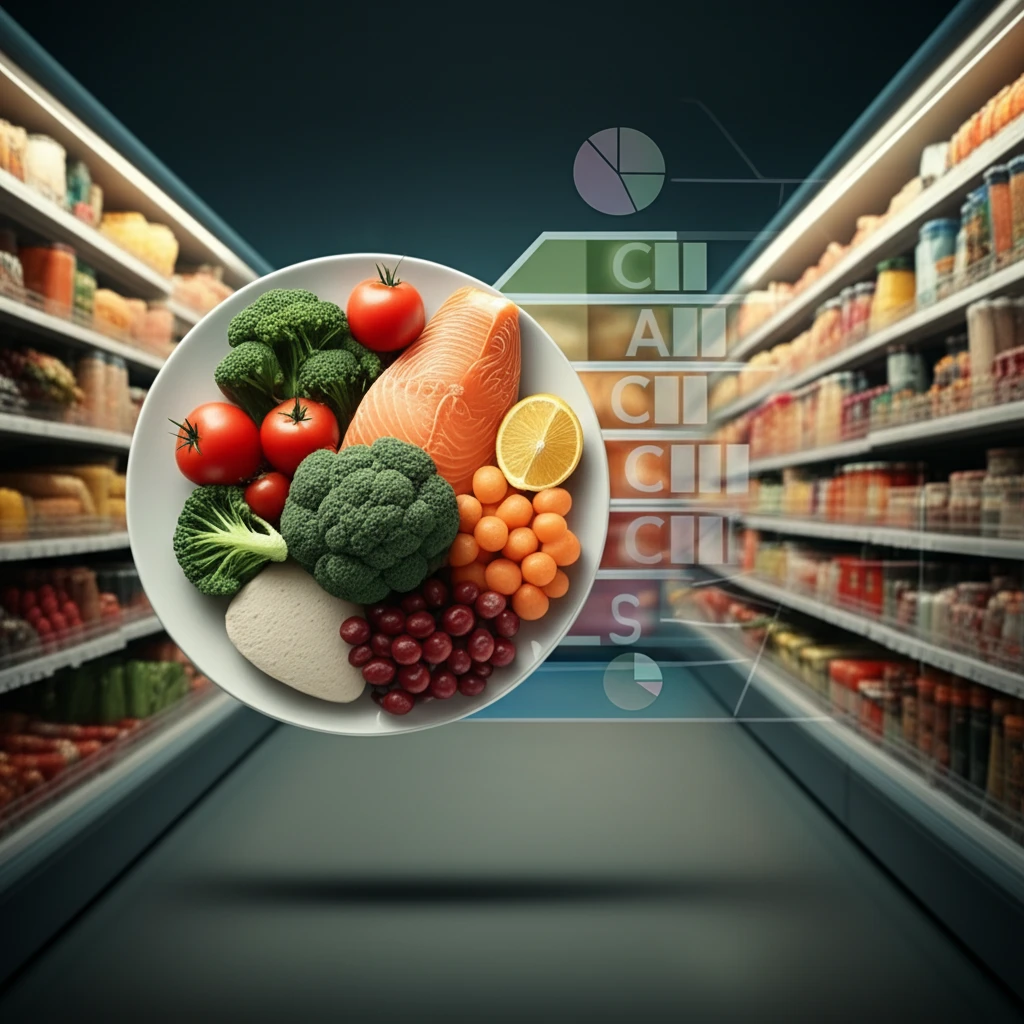
Decoding Food Shelf Nutrition: Are We Really Eating Healthier?

"A deep dive into how nutrition standards impact food choices at food shelves and what it means for community health."
In the realm of public health, ensuring access to nutritious food is a critical mission, especially for vulnerable populations relying on food shelves. The Healthy Eating Index (HEI), a tool designed to measure adherence to the Dietary Guidelines for Americans (DGAs), plays a vital role in evaluating the healthfulness of food environments. As the DGAs evolve every five years to reflect the latest scientific understanding, so too does the HEI, leading to important questions about the comparability of different HEI versions and their impact on nutritional assessments.
A recent study published in the Journal of Hunger & Environmental Nutrition delves into these complexities by comparing the application of the HEI-2005 and HEI-2010 in the context of food shelves. Conducted by Katherine Y. Grannon and colleagues, the research examines how changes in the HEI methodology affect the evaluation of foods distributed through food banks, providing crucial insights for hunger relief agencies and policymakers.
This article unpacks the study's findings, exploring the implications of using different HEI versions to assess the nutritional quality of food shelf offerings. By understanding these nuances, we can better address food insecurity and promote healthier eating habits within our communities. Are we truly eating healthier, or are we just measuring it differently?
What's the Healthy Eating Index (HEI) and Why Does It Matter?
The Healthy Eating Index (HEI) serves as a benchmark for aligning dietary intake with national nutritional guidelines. It's a scoring system that evaluates how well a set of foods—whether an individual’s diet or the collective offerings of a food environment—adheres to the Dietary Guidelines for Americans (DGAs). Updated every five years, the DGAs incorporate the most current nutritional science, which in turn influences the HEI's structure and scoring.
- HEI-2005: Focused on total fruit, whole fruit, total vegetable, dark green and orange vegetables, total grains, whole grains, milk, meat and beans, oils, saturated fat, sodium, and calories from solid fat, alcohol, and added sugar.
- HEI-2010: Shifted emphasis to total fruit, whole fruit, total vegetable, greens and beans, total grains, whole grains, dairy, total protein foods, seafood and plant protein, fatty acids, refined grains, sodium, and empty calories.
- Key Changes: The 2010 version included more specific categories like greens and beans and refined grains, reflecting updated dietary recommendations.
Making Sense of the Numbers: What’s the Real Impact?
The study underscores the importance of carefully selecting the appropriate HEI edition for nutritional assessments, particularly in longitudinal studies. While the HEI is a flexible and adaptable tool, direct comparisons between different versions can lead to misleading conclusions due to changes in scoring and component definitions. Researchers and practitioners should consider the specific research question and the need for consistency when choosing between HEI editions.