
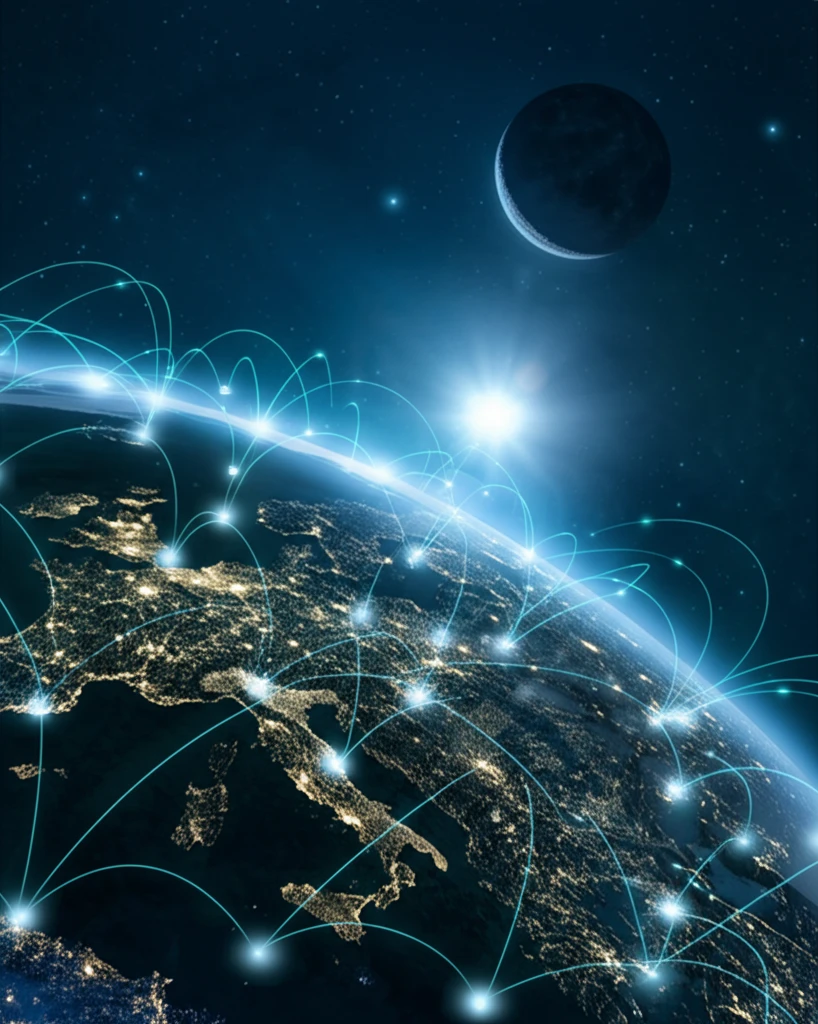
Decoding Energy: How Strategic Flows and Temporal Multilayer Networks Can Power a Sustainable Future

"Dive into the complex world of energy flows, multilayer networks, and embodied energy to uncover strategies for a resilient and sustainable energy transition."
In an era defined by climate concerns and the urgent need for sustainable practices, understanding energy systems has never been more critical. From the energy powering our homes to the fuel driving global trade, energy is intertwined with every facet of modern life. As we strive for a greener future, it's essential to explore the complexities of energy consumption, international resource transfer, and the shift towards renewable sources.
Traditional methods often focus on direct energy consumption, overlooking the significant role of indirect, or embodied, energy. This embodied energy is the total energy required to produce goods and services, encompassing everything from raw material extraction to manufacturing and distribution. A comprehensive approach to understanding energy systems requires considering both direct and indirect energy flows, offering a more complete picture of how energy is used and transferred across economies.
New research leverages temporal multilayer networks to map and analyze these intricate energy relationships. These models provide a dynamic view of energy flows, considering different energy sources and the evolving interactions between sectors and countries. By understanding these networks, we can identify critical vulnerabilities, enhance system resilience, and pave the way for a sustainable energy transition.
Unveiling Temporal Multilayer Networks: A New Lens on Energy Systems
Temporal multilayer networks offer a sophisticated approach to analyzing energy systems, moving beyond traditional methods that often simplify complex interactions. These networks capture the dynamic nature of energy flows, considering various energy sources, economic sectors, and geographical regions as interconnected layers. By mapping these relationships over time, we gain valuable insights into the resilience and vulnerabilities of energy systems.
- Nodes: Represent economic sectors or industries, such as agriculture, manufacturing, or services.
- Layers: Represent countries or economies, providing a geographical dimension to the network.
- Arcs: Illustrate the flow of embodied energy between sectors and countries, indicating the transfer of resources required for production and consumption.
- Temporal Dimension: Captures how these relationships evolve over time, reflecting changes in energy sources, trade patterns, and economic structures.
Powering the Future: Strategic Insights for a Sustainable World
As the world transitions towards a sustainable energy future, understanding the complex dynamics of energy systems is paramount. Temporal multilayer networks provide a powerful tool for analyzing these dynamics, offering insights into energy flows, system resilience, and strategic interventions. By embracing these advanced models, policymakers and businesses can navigate the energy transition with greater confidence, paving the way for a greener, more sustainable world.