
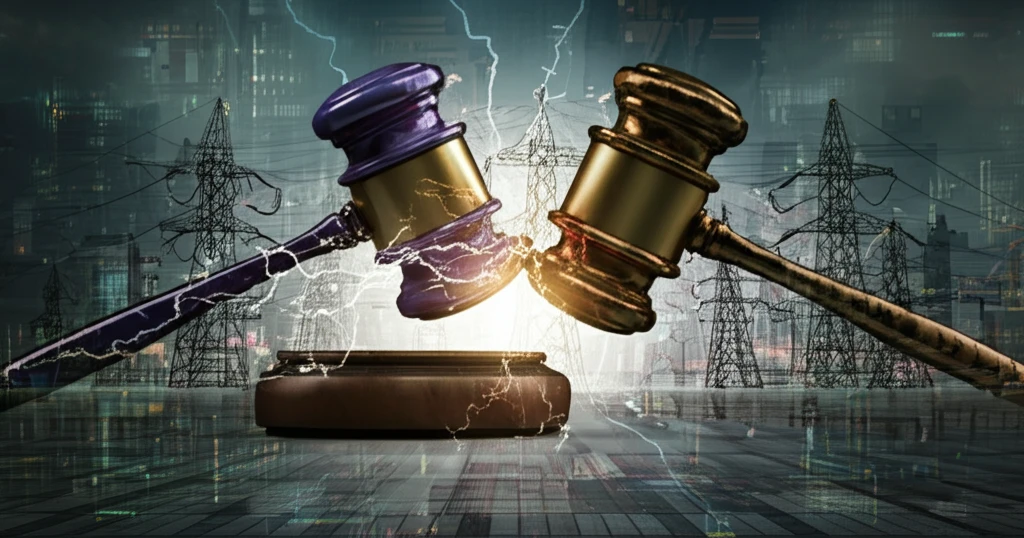
Stylized power grid with auction hammer impact.

Decoding Electricity Markets: Can Smarter Auction Designs Lower Your Energy Bill?

"Explore how reshaping electricity market auctions with techniques like convex hull pricing can reduce self-scheduling, boost efficiency, and potentially lower costs for consumers."


The price of electricity is a constant concern for households and businesses alike. The complexities of electricity markets, often hidden from the average consumer, play a significant role in determining those prices. One key challenge lies in the way these markets are designed and how they incentivize power generators to participate.

At the heart of the issue is a problem known as 'self-scheduling,' where power generators strategically game the system to maximize their profits, sometimes at the expense of overall market efficiency. This often occurs because of the non-convex nature of the unit commitment problem, the complex scheduling puzzle that system operators must solve.

Fortunately, researchers are exploring innovative auction designs to address these problems. One promising solution is 'convex hull pricing,' a method that aims to reduce the incentives for self-scheduling and promote a more competitive and efficient market. Let's dive into how these concepts work and how they could impact your energy bill.

Understanding Self-Scheduling: How Power Generators Game the System

Stylized power grid with auction hammer impact.

To grasp the potential of new auction designs, it's important to understand the current challenges. Electricity markets operate through a complex auction process where power generators submit bids to supply electricity, and the system operator selects the most cost-effective resources to meet demand. However, the nature of power generation, with its startup costs, operating constraints, and other complexities, creates opportunities for strategic behavior.

Self-scheduling occurs when generators offer power at prices below their actual costs to ensure they are dispatched. This can distort market prices, leading to inefficiencies and potentially higher costs for consumers. Here’s how it works:

  • Zero-Cost Offers: Generators might submit offers with zero fixed operating costs or even zero total costs to guarantee they are selected by the system operator.
  • Market Power: By self-committing or self-scheduling, generators can exert market power, influencing prices to their advantage.
  • Reinforcement Learning: Generators can even use algorithms to learn how to increase profits through self-scheduling without fully understanding the market dynamics.
The traditional method of marginal pricing, which sets the market price based on the cost of the last unit dispatched, often fails to address these strategic behaviors effectively. This is where alternative pricing models like convex hull pricing come into play.

A Brighter, More Affordable Energy Future?

The research into auction designs like convex hull pricing offers a glimmer of hope for a more efficient, cost-effective, and fair electricity market. By reducing the incentives for strategic self-scheduling and promoting competition, these innovations have the potential to put downward pressure on energy prices and create a more sustainable energy future for all. While challenges remain in implementation and ensuring fairness across different types of power generators, the ongoing exploration of these solutions is a crucial step towards a brighter energy future.

About this Article -

This article was crafted using a human-AI hybrid and collaborative approach. AI assisted our team with initial drafting, research insights, identifying key questions, and image generation. Our human editors guided topic selection, defined the angle, structured the content, ensured factual accuracy and relevance, refined the tone, and conducted thorough editing to deliver helpful, high-quality information.See our About page for more information.

This article is based on research published under:

DOI-LINK: https://doi.org/10.48550/arXiv.2212.10234,

Title: Auction Designs To Increase Incentive Compatibility And Reduce Self-Scheduling In Electricity Markets

Subject: econ.gn cs.sy eess.sy q-fin.ec

Authors: Conleigh Byers, Brent Eldridge

Published: 20-12-2022

Everything You Need To Know

1

What is self-scheduling in electricity markets and why is it a problem?

Self-scheduling is when power generators strategically offer power at prices below their actual costs to ensure they are dispatched. This behavior aims to manipulate the market to maximize the generator's profits, often leading to inefficiencies. It involves strategies such as submitting zero-cost offers or leveraging algorithms to understand market dynamics. These actions can distort market prices and potentially increase costs for consumers. The non-convex nature of the unit commitment problem exacerbates the issue, making it challenging for system operators to prevent such strategic behaviors.

2

How do electricity markets work, and what role do auctions play in determining electricity prices?

Electricity markets function through an auction process. Power generators submit bids to supply electricity, and the system operator selects the most cost-effective resources to meet demand. These auctions are crucial because they determine which generators are dispatched and, consequently, the market prices. The traditional method of marginal pricing, based on the cost of the last unit dispatched, sets the market price. However, this method can fail to address strategic behaviors like self-scheduling, highlighting the need for innovative auction designs to foster fairness and efficiency.

3

What is convex hull pricing, and how might it improve electricity market efficiency?

Convex hull pricing is an innovative auction design aimed at reducing the incentives for self-scheduling and promoting a more competitive market. By implementing this method, the goal is to minimize strategic behaviors from power generators. This approach can potentially decrease market inefficiencies and lower costs for consumers. The concept is still under research, with the promise of creating a more sustainable energy future by encouraging fairer competition.

4

What are the implications of self-scheduling on the final cost of electricity for consumers?

Self-scheduling can lead to higher electricity costs for consumers. When power generators engage in strategic behaviors, it can distort market prices and reduce overall efficiency. The objective is to maximize profits, potentially at the expense of a fair market. Self-scheduling allows generators to influence prices to their advantage, leading to increased expenses. Therefore, the reduction of self-scheduling, as proposed by methods like convex hull pricing, could put downward pressure on energy prices, ultimately benefiting consumers.

5

Besides convex hull pricing, what other challenges and innovations are being explored to improve electricity markets?

While convex hull pricing is a promising solution, challenges remain in implementation, particularly in ensuring fairness across different types of power generators. The ongoing research includes exploring various auction designs and methods to mitigate strategic behaviors. The complexity arises from the non-convex nature of the unit commitment problem and the need for market operators to address it. These innovations are essential steps toward creating a more efficient, cost-effective, and equitable electricity market. Further research is needed to refine these solutions and ensure they are effective in the long run.

Newsletter Subscribe

Subscribe to get the latest articles and insights directly in your inbox.