
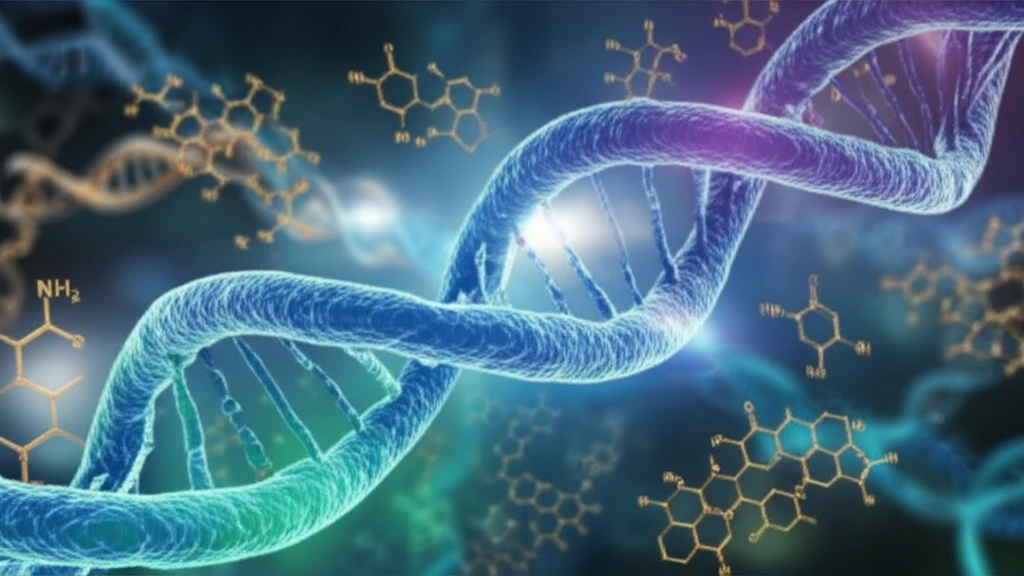
Intertwined DNA and chemical structures symbolizing drug discovery

Decoding Drug Discovery: How Biology is Rewriting the Rules

"Explore how breakthroughs in biological science are transforming medicinal chemistry, offering new avenues for drug design and development."


For decades, medicinal chemistry was largely defined by the study and synthesis of small organic compounds. However, we're now in a post-genomic era, where the rapid advancement of biological sciences is reshaping the field. Scientists in medicinal chemistry face the challenge of leveraging significant biological discoveries to fuel the development of novel therapeutics.

This transformation involves integrating diverse scientific disciplines, including molecular biology, biochemistry, structural biology, bioinformatics, toxicology, pharmacology, theoretical chemistry, and even microbiology. The goal is to harness the complex information these fields provide to create more effective and targeted treatments.

This article explores key areas where biological science is currently impacting medicinal chemistry, highlighting how these interdisciplinary approaches are leading to new strategies in drug discovery and personalized medicine.

Revolutionizing Drug Design: Key Biological Insights

Intertwined DNA and chemical structures symbolizing drug discovery

Several biological advancements are significantly impacting medicinal chemistry. One notable example is the use of pseudo amino acid composition (PseACC) and pseudo nucleotide composition (PseKNC). These computational methods help manage the vast amounts of protein, peptide, and DNA/RNA sequence data generated in the post-genomic age, enabling researchers to extract valuable information for drug development.

Another critical area is the study of post-translational modifications (PTMs), which affect protein function and are implicated in various diseases. Scientists are increasingly using bioinformatics tools to predict PTM sites, aiding in the design and discovery of drugs that target these modifications.

  • PseACC and PseKNC: Analyzing complex biological sequences to identify drug targets.
  • PTM Prediction: Pinpointing modification sites on proteins to develop targeted therapies.
  • GPCR Dynamics: Understanding receptor behavior to design more effective drugs.
  • Enzyme Biochemistry: Applying knowledge of enzyme function to predict functional sites for drug intervention.
Enzyme biochemistry offers another crucial avenue. By understanding how enzymes orchestrate cellular processes, researchers can predict functional sites and design drugs that modulate enzyme activity. This approach combines experimental and computational techniques to unravel complex biological mechanisms.

The Future of Medicine: An Integrated Approach

Medicinal chemistry is evolving into a highly interdisciplinary field. By integrating biological insights, computational tools, and traditional chemical techniques, scientists are developing more targeted and effective therapies.

The study of protein post-translational modifications, enzyme mechanisms, and biological sequence analysis is paving the way for personalized medicine, where treatments are tailored to an individual's unique biological profile.

As technology continues to advance, the collaboration between biological science and medicinal chemistry promises to unlock new frontiers in drug discovery, offering hope for addressing some of the most challenging diseases.

About this Article -

This article was crafted using a human-AI hybrid and collaborative approach. AI assisted our team with initial drafting, research insights, identifying key questions, and image generation. Our human editors guided topic selection, defined the angle, structured the content, ensured factual accuracy and relevance, refined the tone, and conducted thorough editing to deliver helpful, high-quality information.See our About page for more information.

Everything You Need To Know

1

What are PseACC and PseKNC, and how are they utilized in drug discovery?

In the context of drug discovery, PseACC and PseKNC are computational methods used to analyze protein, peptide, and DNA/RNA sequence data, respectively. In the post-genomic era, these tools are essential for managing vast amounts of biological data. They help researchers identify potential drug targets by extracting meaningful information from complex biological sequences. This avoids sifting through data manually and accelerates the process of identifying where a drug could have a therapeutic effect. The analysis is critical because it helps to pinpoint specific sequences that are most likely to interact with potential drug candidates.

2

What are post-translational modifications (PTMs), and how does predicting them aid in drug design?

Post-translational modifications (PTMs) are chemical changes that occur on proteins after they are synthesized, significantly affecting their function and involvement in diseases. Bioinformatics tools are used to predict where these modifications occur on proteins. This prediction enables the design of drugs that specifically target these modified sites, offering a more precise therapeutic approach. By targeting PTMs, drugs can modulate protein activity in a highly specific manner, potentially reducing side effects and improving efficacy.

3

How does enzyme biochemistry contribute to the drug discovery process, and why is it important?

Enzyme biochemistry informs drug discovery by elucidating how enzymes function within cellular processes. Understanding these functions enables researchers to predict functional sites on enzymes and design drugs that can modulate their activity. This involves a combination of experimental and computational techniques to understand the complex biological mechanisms. Drugs can then be designed to either inhibit or enhance enzyme activity, depending on the therapeutic goal. It is an important strategy for developing drugs that can specifically target and modulate enzyme function.

4

Why is understanding GPCR dynamics crucial for the development of new drugs?

GPCRs, or G protein-coupled receptors, are a large family of cell surface receptors that play a vital role in many physiological processes, making them important drug targets. Understanding the dynamics of GPCRs, how they change shape and interact with other molecules, is essential for designing more effective drugs. By studying receptor behavior, researchers can develop drugs that bind more selectively and modulate receptor activity more precisely, ultimately leading to improved therapeutic outcomes. Understanding the behavior allows creation of a drug that interacts correctly.

5

What does the integration of biology into medicinal chemistry mean for the future of drug development and personalized medicine?

The integration of biology into medicinal chemistry signifies a shift toward a highly interdisciplinary approach in drug discovery. By combining biological insights with computational tools and traditional chemical techniques, scientists can develop more targeted and effective therapies. This approach allows for a deeper understanding of disease mechanisms at the molecular level, leading to the design of drugs that precisely address the underlying causes of illness. Furthermore, this interdisciplinary strategy supports the development of personalized medicine, where treatments are tailored to an individual's unique biological characteristics.

Newsletter Subscribe

Subscribe to get the latest articles and insights directly in your inbox.