
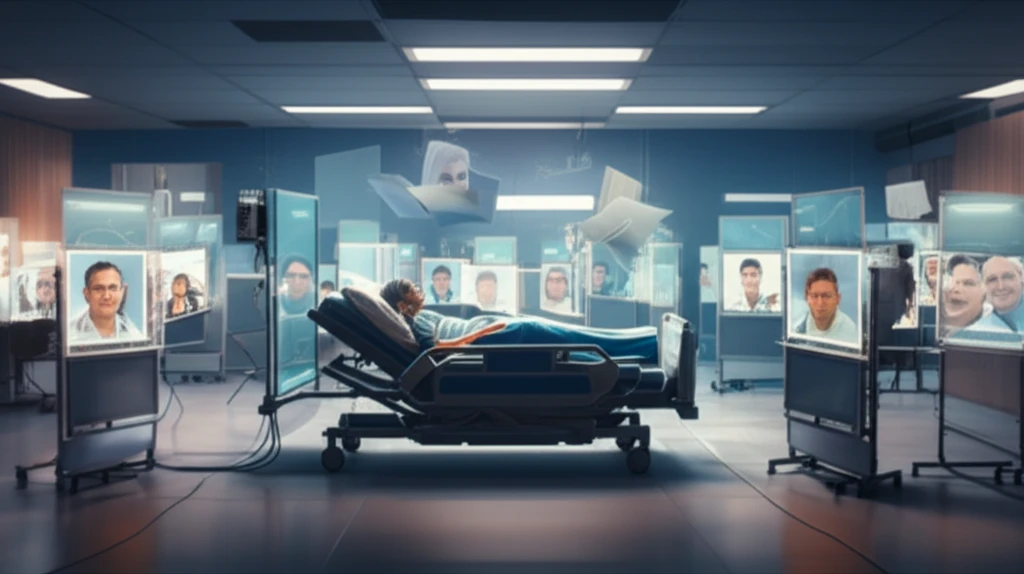
Hospital room with protective barriers symbolizing education and care

Decoding Contact Precautions: How Hospitals Can Improve Patient Experiences

"Simple strategies to reduce patient anxiety and improve understanding of infection control measures in healthcare settings."


In healthcare settings, contact precautions (CPs) are essential for preventing the spread of infections. These measures, which include the use of personal protective equipment (PPE) and specific signage, help protect both patients and healthcare staff. However, these precautions can sometimes lead to negative perceptions among patients, increasing feelings of anxiety and isolation. It’s crucial to understand how patients perceive these measures to improve their overall experience.

A recent study delved into patient perceptions of contact precautions, examining both the practical and emotional impacts of these protocols. The study, conducted at a large university hospital, involved interviewing patients in rooms with and without a specific intervention known as the PPE Free Zone—a taped-off area near the doorway intended to reduce the strictness of the precautions. The goal was to uncover common themes and feelings associated with being under contact precautions.

By understanding these perceptions, healthcare facilities can implement strategies to alleviate patient concerns and improve satisfaction. This article will explore the findings of the study and offer actionable insights for hospitals looking to enhance their approach to infection control while maintaining a patient-centered focus.

Understanding Patient Perceptions of Contact Precautions

Hospital room with protective barriers symbolizing education and care

The study involved in-depth interviews with 20 patients, split into two groups: one group whose rooms had a PPE Free Zone and a control group without this feature. The interviews were semi-structured, allowing researchers to gather both quantitative data through Likert scale questions and qualitative data through open-ended questions. This approach provided a comprehensive view of patient experiences and attitudes toward contact precautions. The interviews covered several key areas, including psychological well-being, interaction with healthcare providers, patient satisfaction, and perceived safety.

Several common themes emerged from the interviews, shedding light on how patients feel about being under contact precautions:

  • Protective Role Acknowledged: A significant majority (70%) of patients recognized that gowns and other PPE played a crucial role in preventing the spread of infection. Many felt a sense of responsibility in protecting others from acquiring their infection.
  • Negative Attitudes: Conversely, about 30% of patients expressed negative feelings toward gowns and signs. Some viewed these measures as a waste of time and resources, while others felt that gowns made interactions with healthcare staff impersonal, concealing name tags and making everyone look the same.
  • Privacy Concerns: One patient voiced concerns about the signage used for contact precautions, feeling it was impersonal and exposed their personal health information, leading to a sense of privacy invasion.
  • Emotional Impact: A range of negative emotions were reported, including feelings of stigmatization, distress, and confusion. Some patients felt self-conscious, dirty, diseased, or like a burden to the healthcare staff.
  • Lack of Understanding: A notable finding was that several patients (four in the study) did not fully understand the purpose of PPE. Some questioned whether the gowns were for their protection or the staff's, highlighting a gap in patient education.
These findings underscore the importance of addressing patient perceptions to ensure that contact precautions are not only effective but also contribute positively to the patient experience. Understanding these viewpoints allows hospitals to tailor their approach and provide better support and education.

Improving Patient Education and Support

Based on the study’s findings, it’s clear that patient education plays a vital role in shaping perceptions of contact precautions. Hospitals should prioritize clear, accessible education to help patients understand the purpose and benefits of these measures. This education should address common misconceptions, alleviate anxiety, and empower patients to participate in their care actively. This also involves training healthcare providers to communicate effectively and empathetically with patients about isolation protocols.

About this Article -

This article was crafted using a human-AI hybrid and collaborative approach. AI assisted our team with initial drafting, research insights, identifying key questions, and image generation. Our human editors guided topic selection, defined the angle, structured the content, ensured factual accuracy and relevance, refined the tone, and conducted thorough editing to deliver helpful, high-quality information.See our About page for more information.

This article is based on research published under:

DOI-LINK: 10.1016/j.ajic.2018.09.017, Alternate LINK

Title: Exploring Patient Perceptions Of Contact Precautions

Subject: Infectious Diseases

Journal: American Journal of Infection Control

Publisher: Elsevier BV

Authors: Kelsey Baubie, Catherine Shaughnessy, Nasia Safdar

Published: 2019-02-01

Everything You Need To Know

1

What are contact precautions (CPs), and why are they essential in healthcare settings?

Contact precautions (CPs) are crucial measures implemented in healthcare settings to prevent the spread of infections. These precautions typically involve the use of personal protective equipment (PPE), such as gowns, and specific signage to alert staff and visitors. The primary goal of CPs is to protect both patients and healthcare staff from the transmission of infectious agents, ensuring a safer environment for everyone involved. Their importance lies in controlling the spread of infections, which helps to reduce healthcare-associated infections and promote better patient outcomes.

2

How can hospitals improve patient understanding and reduce anxiety related to contact precautions?

Hospitals can significantly improve patient understanding and reduce anxiety by focusing on patient education and communication. The study highlights that many patients don't fully understand the purpose of PPE. Hospitals should provide clear, accessible education that explains the 'why' and 'how' of contact precautions, addressing common misconceptions and emphasizing the benefits. Training healthcare providers to communicate empathetically about isolation protocols, using simple language and addressing patient concerns, can further alleviate anxiety. The aim is to ensure that patients feel informed, supported, and actively involved in their care.

3

What were the key findings from the study on patient perceptions of contact precautions?

The study revealed several key themes in patient perceptions. A significant majority, about 70% of patients, acknowledged the protective role of PPE, understanding that gowns and other equipment helped prevent the spread of infection. However, around 30% expressed negative feelings, such as perceiving the measures as a waste of time or causing impersonal interactions. Privacy concerns were also raised due to signage, along with emotional impacts like stigmatization and distress. A notable finding was that some patients lacked a complete understanding of why PPE was being used, highlighting the need for better education. These findings collectively emphasize that hospitals need to address these perceptions to improve the patient experience.

4

How does a PPE Free Zone impact patient perceptions of contact precautions, and what is its purpose?

The article mentions a PPE Free Zone, a taped-off area near the doorway, designed to reduce the strictness of the precautions. While the direct impact of the PPE Free Zone on patient perceptions isn't explicitly detailed in the provided text, the existence of such a zone indicates an effort to make the contact precautions less overwhelming. The purpose of the PPE Free Zone is to mitigate some of the negative perceptions, such as the feelings of isolation or the impersonal nature of interactions, that the standard contact precautions might create. It's a practical step toward balancing the need for infection control with patient comfort and a more positive hospital experience. A control group was compared with a group that had a PPE Free Zone.

5

Besides PPE, what other factors contribute to negative patient perceptions of contact precautions, and how can these be addressed?

Apart from the use of personal protective equipment (PPE), other factors, such as signage and communication, contribute to negative patient perceptions. Some patients feel that the signage is impersonal and violates their privacy. The lack of clear communication about the purpose and benefits of contact precautions also leads to confusion and anxiety. These can be addressed by providing clear and empathetic explanations, ensuring that patients understand the 'why' behind the precautions. Training healthcare providers to communicate effectively can also help alleviate feelings of isolation and stigmatization. Hospitals can also revise signage to be more patient-friendly and less intrusive, focusing on providing information without compromising privacy.

Newsletter Subscribe

Subscribe to get the latest articles and insights directly in your inbox.