
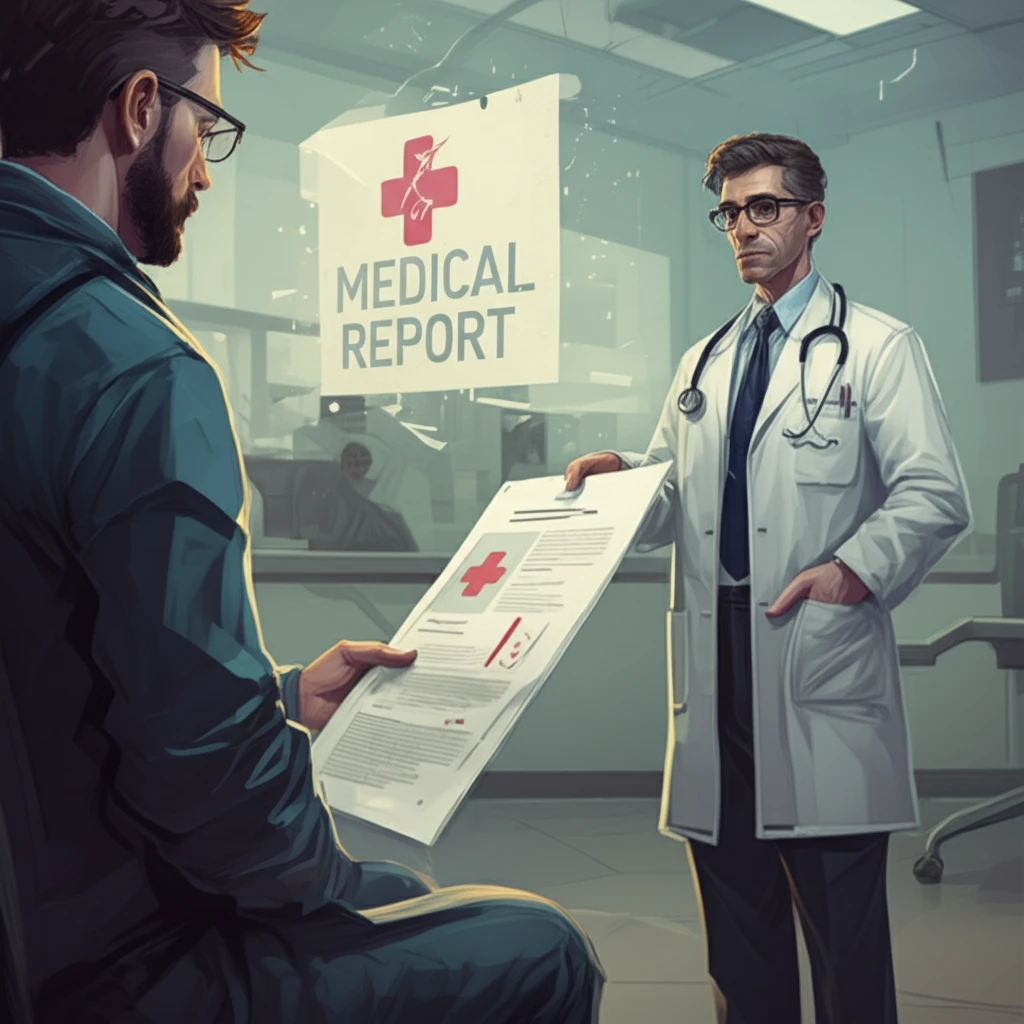
Decoding Your Doctor's Notes: How 'Was hab' ich?' Is Revolutionizing Patient Understanding

"From Confusing Medical Jargon to Clear Explanations: Meet the German Startup Empowering Patients Through Simplified Health Information."
Imagine leaving a doctor's appointment feeling more confused than when you arrived. Complex medical terms, indecipherable reports, and a sense of being left in the dark – this is a common experience for many patients. But what if there was a way to bridge the communication gap between doctors and patients, empowering individuals to truly understand their health?
Enter 'Was hab' ich?' (What do I have?), a groundbreaking German startup that's revolutionizing healthcare by translating complex medical findings into plain, easy-to-understand language. Founded by Ansgar Jonietz, 'Was hab' ich?' is more than just a translation service; it's a movement towards greater patient empowerment and improved doctor-patient communication.
This innovative non-profit utilizes a network of volunteer medical students and doctors to translate medical reports, lab results, and other technical documents into clear, concise explanations that patients can easily grasp. By breaking down the barriers of medical jargon, 'Was hab' ich?' is helping patients become active participants in their own healthcare journey.
Defining the Patient
A patient is defined as someone receiving medical care and treatment, whether currently waiting for, receiving, or having already received care. There is considerable disagreement about the precise meaning of the term 'patient' across medical and legal contexts. Broadly, the term refers to any person who is cared for by a particular doctor or dentist. This definitional ambiguity itself highlights why tools like 'Was hab' ich?' that help patients understand their own health information are valuable.
Patient Engagement Gaps
A common linguistic confusion exists between 'patients' (plural of patient, referring to people receiving care) and 'patience' (the quality of calm perseverance). This subtle distinction mirrors a larger gap in healthcare: patients often lack the patience—or the tools—to decode complex medical terminology. Traditional approaches to patient education rely on static pamphlets and post-visit summaries that rarely bridge the jargon divide. These accepted methods frequently leave patients more confused than empowered.
Historical Context of Patient Empowerment
Efforts to make medical information accessible to patients have evolved alongside the broader patient rights movement, which gained momentum in the latter half of the twentieth century. Early patient-education materials were often simplified leaflets that glossed over nuance rather than translating it. The digital era opened new possibilities for real-time, personalized health communication, though adoption has been uneven. Historical milestones in this space suggest that tools like 'Was hab' ich?' build on decades of incremental progress in patient advocacy.
The Problem: Medical Jargon and Patient Confusion
For many, receiving a medical diagnosis or test results can feel like entering a foreign country. The language used by healthcare professionals is often highly technical, filled with complex terms and abbreviations that can be difficult for the average person to understand. This lack of understanding can lead to anxiety, confusion, and a feeling of being disconnected from one's own health.
- Reduced adherence to treatment plans.
- Increased anxiety and stress.
- Difficulty asking informed questions.
- Poorer health outcomes.
- Increased strain on healthcare resources.
Emerging Evidence on Patient Understanding
Research into patient comprehension of medical notes is a growing but still relatively early field. Early-stage studies suggest that digital tools capable of translating clinical language into plain speech can measurably improve patient recall and satisfaction. However, rigorous longitudinal data on outcomes such as treatment adherence or health metrics remain limited. Reviews in this area generally call for larger, more controlled trials to validate initial promising findings.
Skepticism and Limitations
Critics of patient-facing translation tools raise legitimate concerns about oversimplification and the risk of removing critical clinical nuance. There are also worries that such tools could increase patient anxiety by exposing them to alarming terminology without adequate context. Past digital health initiatives have sometimes failed to achieve widespread adoption due to poor usability or lack of clinician buy-in. These counterarguments underscore the importance of thoughtful design and physician oversight in any new patient-understanding platform.
Comparing Patient-Engagement Tools
Several digital health tools now compete in the patient-education space, ranging from generic symptom checkers to AI-driven chatbots and structured portal messages. What distinguishes tools like 'Was hab' ich?' is the specific focus on decoding existing physician notes rather than generating new health content from scratch. This note-centric approach may offer higher fidelity to the actual clinical encounter. However, comparative effectiveness studies between these different modalities are still sparse, making definitive rankings difficult at this stage.
A Future of Empowered Patients
The story of 'Was hab' ich?' is a testament to the power of innovation and social entrepreneurship in addressing critical healthcare challenges. By empowering patients with clear and accessible information, this German startup is not only improving individual health outcomes but also fostering a more collaborative and patient-centered healthcare system. As the movement grows, it paves the way for a future where every patient feels confident, informed, and actively involved in their own healthcare journey.
Expert Perspectives
Health informatics experts broadly agree that closing the communication gap between clinicians and patients is a critical unsolved problem in modern healthcare. Some commentators have praised note-translation tools as a pragmatic step forward, while others caution that technology alone cannot fix systemic communication failures. The consensus appears to be that tools like 'Was hab' ich?' are most effective when integrated into a broader patient-engagement strategy rather than deployed in isolation. Ongoing dialogue between developers, clinicians, and patients will likely shape the next iteration of these platforms.
What Comes Next
The next frontier for patient-understanding tools likely involves deeper integration with electronic health records and real-time translation during or immediately after clinical visits. Advances in natural language processing may soon allow these tools to handle highly specialized medical jargon with greater accuracy. Regulatory frameworks around patient data and AI-assisted health communication are also expected to evolve rapidly. If current trajectories hold, tools similar to 'Was hab' ich?' could become standard features of the patient experience within the next several years.
Systemic Barriers to Patient Understanding
Even the most sophisticated translation tool cannot fully overcome systemic barriers such as health literacy disparities, language diversity, and unequal access to digital technology. Rural and underserved populations may benefit least from app-based solutions if internet access and device availability remain unequal. Additionally, the pace of regulatory change often lags behind technological innovation, creating gaps in consumer protection. Addressing these broader challenges will require coordinated effort from policymakers, healthcare systems, and technology developers alike.
Real-World Patient Experience
Anecdotal reports from early users of note-translation tools suggest that simply being able to read and understand one's own medical chart can be an emotionally significant experience. Patients frequently report feeling more confident in asking follow-up questions and more engaged in shared decision-making. While these self-reported outcomes are encouraging, they highlight the deeply personal nature of health communication. Ultimately, the success of tools like 'Was hab' ich?' will be measured not just in accuracy metrics but in the quality of the patient-doctor relationship they help foster.