
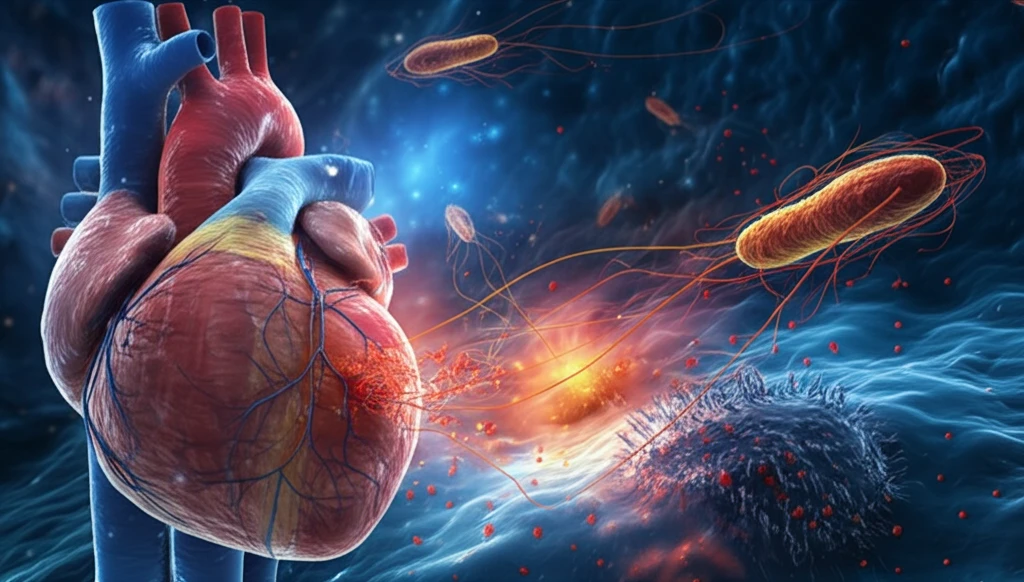
Decoding Chagas Disease: A Deep Dive into the Microscopic Battleground

"Unraveling the Intricate World of Trypanosoma cruzi and Its Interactions with Host Cells"
Chagas disease, a neglected tropical illness, affects millions worldwide, primarily in Latin America. Caused by the parasite Trypanosoma cruzi (T. cruzi), the disease progresses through acute and chronic phases, often leading to severe cardiac or gastrointestinal complications. Understanding the intricate mechanisms of how T. cruzi interacts with its host at the cellular level is crucial for developing effective diagnostic and therapeutic strategies.
This article delves into the ultrastructure of T. cruzi, examining its key organelles and their roles in the parasite's life cycle and pathogenesis. We will explore the parasite's internal organization and how it manipulates host cell processes to ensure its survival and replication.
By deciphering the molecular and cellular events that govern the T. cruzi-host cell interaction, we can pave the way for innovative approaches to combat this devastating disease. This microscopic journey offers insights into potential drug targets and strategies to disrupt the parasite's lifecycle, ultimately improving the lives of those affected by Chagas disease.
Global Prevalence and Mortality
Approximately 6 to 8 million people worldwide are estimated to be infected with Trypanosoma cruzi, the parasite responsible for Chagas disease. The infection leads to more than 10,000 deaths annually according to the World Health Organization. In the United States, a systematic literature review identified 29 confirmed and 47 suspected cases of locally acquired Chagas disease during 2000–2018, indicating it is not limited to Latin America.
Diagnosis and Classification Challenges
Chagas disease is diagnosed through parasitological, molecular, and serological methods, with molecular techniques based on DNA amplification providing greater sensitivity. For chronic Chagas disease, diagnosis relies on serology performed with at least two different serologic tests to confirm infection. However, the taxonomy of Trypanosoma cruzi remains a subject of ongoing debate, with increasing genomic and molecular evidence challenging traditional classifications.
Ancient Origins and Early Observations
The ancestor of Trypanosoma cruzi was probably introduced to South America via bats approximately 7 to 10 million years ago, making this a very ancient pathogen. Charles Darwin observed people being bitten by vinchucas (kissing bugs) in Latin America in 1835, after which he fell ill—though a definitive link to Chagas disease was not established at the time. These early observations laid groundwork for understanding the vector-borne transmission of the disease.
What Key Structures Define Trypanosoma cruzi?
T. cruzi, like other members of the Trypanosomatidae family, possesses unique structural features essential for its survival and infection process. These specialized organelles and structures enable the parasite to thrive within its diverse hosts.
- Kinetoplast: A unique DNA-containing structure within the mitochondrion, essential for energy production and parasite survival.
- Glycosome: A specialized peroxisome-like organelle housing glycolytic enzymes, crucial for energy metabolism.
- Paraflagellar Rod: A structure associated with the flagellum, providing support and influencing motility.
- Flagellar Pocket: An invagination of the plasma membrane where the flagellum emerges, serving as a site for endocytosis and secretion.
- Subpellicular Microtubules: A network of microtubules beneath the plasma membrane, providing structural support and maintaining cell shape.
Advances in Understanding T. cruzi
Chagas disease, or American Trypanosomiasis, is a potentially life-threatening zoonotic illness caused by the parasite Trypanosoma cruzi. Studies reveal that T. cruzi strains sourced from both triatomine vectors and vertebrate hosts are multiclonal, adding complexity to treatment approaches. Research continues to advance our understanding of the parasite's biology and its interactions with human hosts during chronic infection.
Treatment Challenges and Failed Therapeutics
Chagas disease is a progressively debilitating illness that poses significant treatment challenges due to the persistent and genetically diverse nature of Trypanosoma cruzi. Several therapeutics have failed before reaching regulatory approval, highlighting the difficulties in developing effective treatments. Current therapeutic options remain limited, necessitating new treatment strategies to address this ongoing health crisis.
Vector Biology and Parasite Forms
In the United States, Chagas disease risk is higher in southern states where there are more kissing bugs, the primary vectors for Trypanosoma cruzi transmission. The parasite exists in two distinct forms—trypomastigote and amastigote—which impact how it interacts with host cells and influences disease progression. Understanding these vector and parasite characteristics is essential for developing targeted prevention and treatment strategies.
Future Directions: Targeting the Microscopic for Macroscopic Impact
Continued research into the ultrastructure and molecular mechanisms of T. cruzi is crucial for developing new diagnostic tools, treatments, and prevention strategies for Chagas disease. By targeting specific organelles and processes, scientists can disrupt the parasite's lifecycle and reduce the burden of this neglected tropical disease. A deeper understanding of the microscopic battleground between Trypanosoma cruzi and its host promises a brighter future for millions at risk.
Clinical Variability and Host Response
Research has demonstrated greater variability in clinical outcomes and host responses to Trypanosoma cruzi infection than previously recognized. Chagas disease remains a significant public health challenge, particularly in Latin America where it is one of the most important parasitic diseases. The disease affects millions of people and continues to require comprehensive approaches from discovery through vaccine development.
Epidemiological and Technical Prospects
Future prospects for Chagas disease control can be divided into epidemiological, technical, and political categories. Climate and environmental changes may cause shifts in vector distribution, with predictions of a potential northern shift for certain triatomine species. The market for Chagas disease treatments is expected to strengthen as awareness increases and more effective interventions are developed.
Treatment Gaps and Chronic Consequences
Untreated, up to 30% of infected individuals may develop life-threatening cardiac and/or chronic digestive diseases. Alarmingly, only 3% of T. cruzi carriers currently receive treatment, representing a major gap in disease management. Although mortality has significantly declined, the disease can cause irreversible and chronic consequences on the heart, digestive system, and nervous system.
Economic Burden of Chagas Disease
The global economic burden of Chagas disease is substantial, estimated to be at $7.19 billion per year and $188.80 billion over a lifetime for affected populations. This economic impact is similar to or higher than that of other neglected tropical diseases, underscoring the need for increased investment in prevention and treatment programs. The financial costs extend beyond healthcare to include lost productivity and quality of life impacts.