
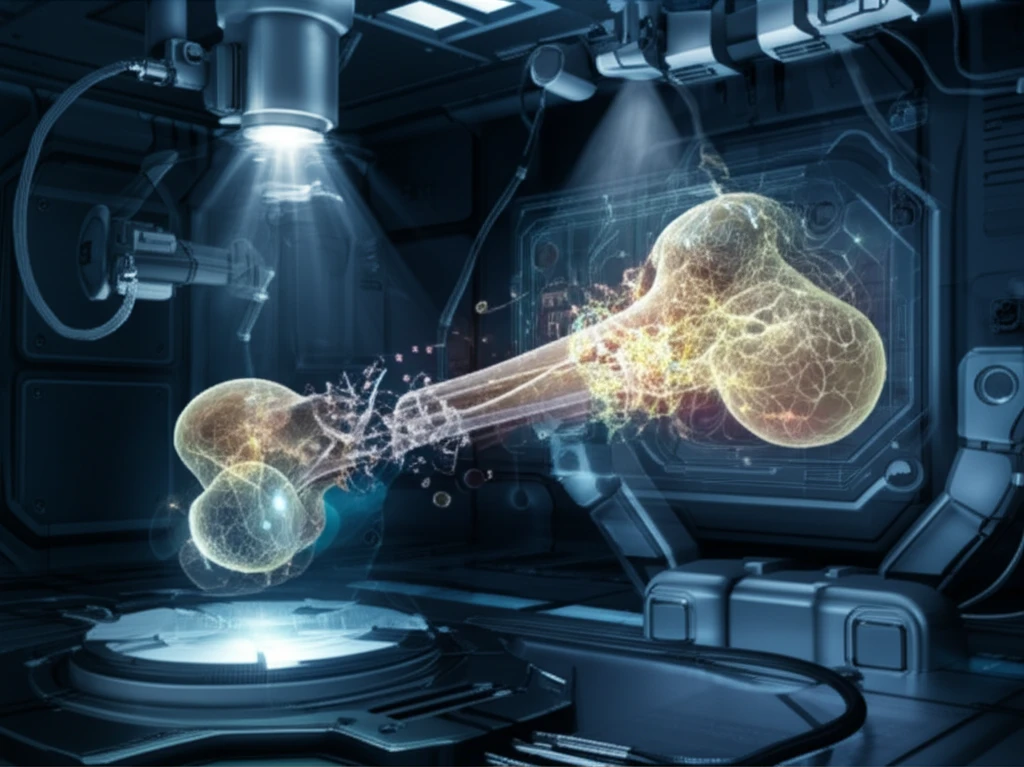
Advanced bone scan revealing detailed bone structure.

Decoding Bone Density: How Advanced Scans Can Help Predict Fracture Risk

"A closer look at how HR-pQCT and synchrotron radiation micro-CT are changing the game in osteoporosis assessment."


Osteoporosis, characterized by reduced bone density and increased fracture risk, affects millions worldwide. Traditional methods of assessing bone health, while helpful, sometimes fall short in providing a comprehensive picture. Recent advances in imaging technologies are offering new hope for more accurate and personalized bone health assessments.

One of the key challenges in managing osteoporosis is accurately assessing cortical porosity—tiny holes in the outer layer of bone that significantly weaken its structure. While trabecular bone (the spongy tissue inside bones) has long been a focus, the role of cortical porosity is now recognized as equally important in determining bone strength and fragility.

This article explores the cutting-edge techniques of high-resolution peripheral quantitative computed tomography (HR-pQCT) and synchrotron radiation micro-CT (SR-µCT) and their potential to transform how we understand and manage bone health. We'll break down the science, discuss the benefits, and consider what these advancements mean for you and your bone health.

HR-pQCT vs. SR-µCT: What’s the Difference?

Advanced bone scan revealing detailed bone structure.

Both HR-pQCT and SR-µCT offer detailed views of bone microarchitecture, but they operate differently and provide unique insights. HR-pQCT is a non-invasive technique used in clinical settings, while SR-µCT, offering even higher resolution, is typically used in research environments.

HR-pQCT (high-resolution peripheral quantitative computed tomography) offers a detailed, non-invasive method for assessing bone structure at the wrist and ankle. It's like having a magnifying glass for your bones! Think of it as a specialized X-ray that provides a 3D image of your bone's density and structure. But with more benefits:

  • Accessibility: HR-pQCT is available in many clinics and hospitals, making it more accessible for routine bone health assessments.
  • Non-invasive: The scan is performed on the peripheral bones (usually the radius at the wrist) and involves a low dose of radiation, similar to a standard X-ray.
  • Detailed Insights: Provides information on bone density, cortical and trabecular structure, and porosity, which are all important for determining bone strength.
Synchrotron radiation micro-CT (SR-µCT) uses extremely powerful X-rays generated by a synchrotron, providing incredibly high-resolution images of bone samples. Imagine seeing your bones at a microscopic level. SR-µCT takes bone imaging to a whole new level. While not typically used for routine clinical exams, it offers invaluable details:

The Future of Bone Health is Clearer Than Ever

Advancements in bone imaging technologies like HR-pQCT and SR-µCT hold great promise for improving the assessment and management of osteoporosis. By providing detailed insights into bone microarchitecture and porosity, these techniques allow for more accurate risk prediction, personalized treatment strategies, and ultimately, better bone health for everyone. Stay informed, stay proactive, and work with your healthcare provider to leverage these innovative tools for a stronger, healthier future.

About this Article -

This article was crafted using a human-AI hybrid and collaborative approach. AI assisted our team with initial drafting, research insights, identifying key questions, and image generation. Our human editors guided topic selection, defined the angle, structured the content, ensured factual accuracy and relevance, refined the tone, and conducted thorough editing to deliver helpful, high-quality information.See our About page for more information.

Everything You Need To Know

1

What is osteoporosis and why is it important to understand bone density?

Osteoporosis is a condition characterized by reduced bone density and increased fracture risk. Understanding bone density is crucial because it directly impacts bone strength. Lower bone density means bones are more fragile and prone to fractures. Assessing bone density helps in predicting fracture risk, allowing for timely interventions and management strategies to improve bone health and quality of life. The accurate assessment of bone density is key to managing osteoporosis effectively.

2

How does HR-pQCT differ from SR-µCT in assessing bone health, and what are the benefits of each technique?

HR-pQCT (high-resolution peripheral quantitative computed tomography) is a non-invasive technique primarily used in clinical settings to assess bone structure at the wrist and ankle. Its benefits include accessibility, non-invasiveness, and detailed insights into bone density, cortical and trabecular structure, and porosity. SR-µCT (synchrotron radiation micro-CT), on the other hand, uses powerful X-rays generated by a synchrotron, offering incredibly high-resolution images. While SR-µCT is typically used in research, it provides invaluable details at a microscopic level, which is not available in HR-pQCT.

3

What is cortical porosity and why is it important in assessing bone strength?

Cortical porosity refers to the presence of tiny holes in the outer layer of bone. These holes significantly weaken the bone's structure. While trabecular bone (spongy tissue inside bones) has long been a focus, cortical porosity is now recognized as equally important in determining bone strength and the risk of fractures. Accurately assessing cortical porosity helps in a more complete understanding of bone health and fracture risk.

4

Can you explain how HR-pQCT works and what kind of insights it provides for bone health?

HR-pQCT is a specialized X-ray technique that provides a 3D image of your bone's density and structure, specifically focusing on peripheral bones like the wrist. It offers detailed insights into bone density, cortical and trabecular structure, and porosity. These measurements allow for a comprehensive assessment of bone health, helping to predict fracture risk and guide treatment decisions. The non-invasive nature and accessibility of HR-pQCT make it a valuable tool for routine bone health assessments in clinical settings.

5

How are advancements in bone imaging technologies, like HR-pQCT and SR-µCT, changing the approach to managing osteoporosis?

Advancements in bone imaging technologies, such as HR-pQCT and SR-µCT, are revolutionizing the management of osteoporosis by providing detailed insights into bone microarchitecture and porosity. HR-pQCT allows for non-invasive and detailed assessments in clinical settings, while SR-µCT offers extremely high-resolution imaging for research. These techniques enable more accurate risk prediction, personalized treatment strategies, and, ultimately, better bone health. They help healthcare providers move beyond traditional methods to a more precise understanding of bone health, leading to improved patient outcomes and quality of life.

Newsletter Subscribe

Subscribe to get the latest articles and insights directly in your inbox.