
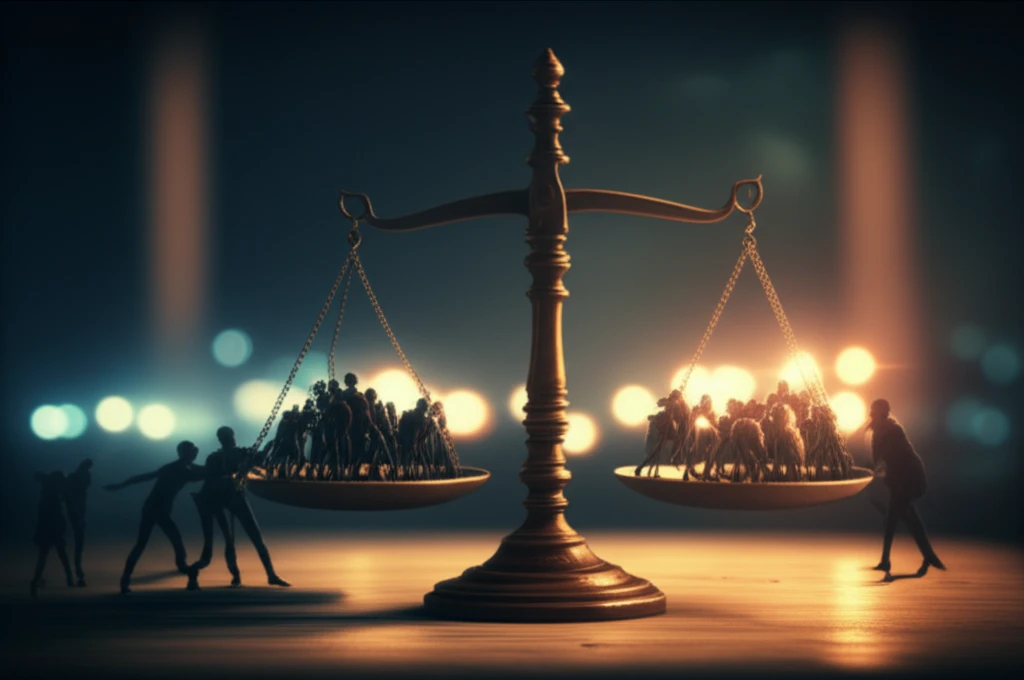
Digital illustration of a scale balancing data sets, symbolizing algorithm bias.

Decoding Algorithm Bias: Are AI's Decisions Really Fair?

"Uncover the hidden biases in AI algorithms, how they impact society, and what's being done to ensure fair and accountable artificial intelligence."


Artificial intelligence (AI) is no longer a futuristic fantasy; it's a present-day reality woven into the fabric of our daily lives. From the algorithms that curate our social media feeds to the systems that make critical decisions in healthcare and criminal justice, AI is playing an ever-increasing role.

However, as AI's influence grows, so do concerns about its potential for bias. If the data used to train these systems reflects existing societal prejudices, the algorithms can perpetuate and even amplify those biases, leading to unfair or discriminatory outcomes.

This article delves into the complex issue of algorithm bias, exploring how it arises, the ways it impacts various sectors, and the ongoing efforts to promote fairness and accountability in AI.

The Roots of Algorithm Bias: How Does It Creep In?

Digital illustration of a scale balancing data sets, symbolizing algorithm bias.

Bias in AI algorithms doesn't typically stem from malicious intent. Instead, it often arises from the data used to train the systems. Machine learning algorithms learn by identifying patterns in large datasets. If these datasets contain skewed or unrepresentative information, the algorithm will inevitably learn and replicate those biases.

One common source of bias is historical data that reflects existing inequalities. For example, if a hiring algorithm is trained on historical hiring data that underrepresents women in certain roles, it may learn to discriminate against female applicants, even if gender is not explicitly included as a factor.

  • Data Imbalance: Insufficient representation of certain groups in the training data.
  • Historical Bias: Existing societal biases present in the data.
  • Algorithmic Design: Choices made in the algorithm's design that inadvertently introduce bias.
  • Lack of Transparency: Difficulty in understanding how an algorithm arrives at its decisions, making it hard to detect and correct bias.
It's important to note that algorithms can also exacerbate existing biases, even if the initial data is relatively unbiased. This can happen when an algorithm reinforces stereotypes or makes decisions that disproportionately affect certain groups.

Towards Fairer AI: What Can Be Done?

Addressing algorithm bias is a multifaceted challenge that requires a collaborative effort from researchers, policymakers, and the tech industry. One crucial step is to increase transparency in AI systems. Understanding how algorithms make decisions is essential for identifying and mitigating bias.

Another important approach is to diversify the datasets used to train algorithms. Ensuring that the data is representative of the population as a whole can help to reduce the risk of perpetuating existing inequalities. Rhema Vaithianathan highlights the importance of transparency and community involvement in developing fair algorithms, advocating for open dialogue and scrutiny.

Ultimately, creating truly fair and equitable AI systems requires a commitment to ongoing monitoring, evaluation, and improvement. As Solon Barocas points out, recognizing that there is no neutral way to learn from historical data is the first step towards building more responsible AI.

About this Article -

This article was crafted using a human-AI hybrid and collaborative approach. AI assisted our team with initial drafting, research insights, identifying key questions, and image generation. Our human editors guided topic selection, defined the angle, structured the content, ensured factual accuracy and relevance, refined the tone, and conducted thorough editing to deliver helpful, high-quality information.See our About page for more information.

Everything You Need To Know

1

What are the primary sources of algorithm bias and how do they creep into AI systems?

Algorithm bias often arises from the data used to train systems. Machine learning algorithms identify patterns in datasets, so skewed or unrepresentative information leads to the replication of biases. Common sources include 'Data Imbalance' where certain groups lack sufficient representation, 'Historical Bias' reflecting existing societal inequalities, 'Algorithmic Design' where choices inadvertently introduce bias, and a 'Lack of Transparency' making it difficult to detect and correct bias.

2

Can you explain what 'Data Imbalance' is in the context of algorithm bias, and how it leads to unfair outcomes?

Data Imbalance refers to the insufficient representation of certain groups within the training data used to develop AI algorithms. This skewed representation can lead the algorithm to make biased decisions that disproportionately affect the underrepresented group. Addressing Data Imbalance often requires techniques such as data augmentation, re-sampling, or the collection of more representative data to ensure a fairer training dataset.

3

What does 'Historical Bias' mean in the context of AI, and can you give an example of how it manifests in algorithms?

Historical Bias refers to existing societal prejudices that are present in the data used to train AI algorithms. If historical data reflects inequalities, the algorithm can learn and perpetuate those biases. For example, if a hiring algorithm is trained on historical hiring data that underrepresents women in certain roles, it may learn to discriminate against female applicants. Mitigating Historical Bias requires careful examination and correction of the historical data.

4

What steps can be taken to promote fairer AI, and what aspects of transparency are important to consider?

To promote fairer AI, increasing transparency in AI systems is crucial. Understanding how algorithms make decisions is essential for identifying and mitigating bias. However, the text does not provide specific strategies for increasing transparency, such as explainable AI (XAI) techniques or model documentation standards. Furthermore, the text highlights the need for a collaborative effort from researchers, policymakers, and the tech industry, but does not delve into the specific roles and responsibilities of each stakeholder in addressing algorithm bias.

5

Besides the sources mentioned what other factors might contribute to biases in AI algorithms, and what approaches are available to address them?

While the text identifies 'Data Imbalance', 'Historical Bias', 'Algorithmic Design', and 'Lack of Transparency' as key factors contributing to algorithm bias, it doesn't explore specific techniques for mitigating these issues. The text doesn't delve into the use of adversarial training, fairness metrics, or bias detection tools. Moreover, it does not address the ethical considerations and trade-offs involved in implementing fairness-enhancing interventions, such as the potential impact on accuracy or efficiency.

Newsletter Subscribe

Subscribe to get the latest articles and insights directly in your inbox.