
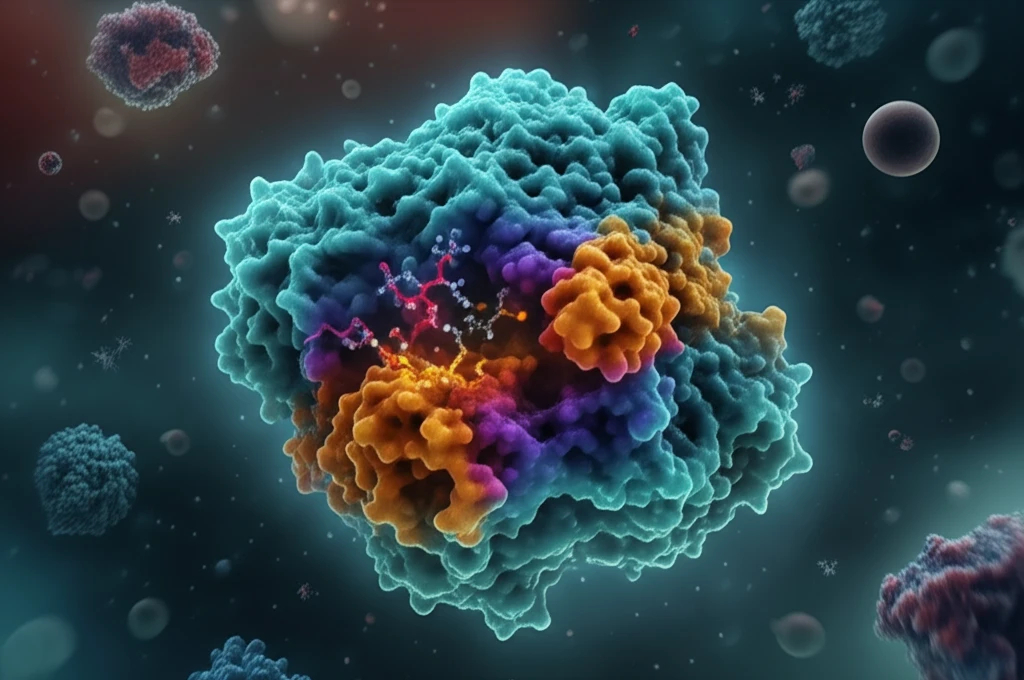
Covalent Kinase Inhibitors: A Promising Frontier in Cancer Treatment

"Unlock the potential of covalent kinase inhibitors in cancer therapy: Discover how these innovative drugs are revolutionizing treatment approaches and offering new hope."
For decades, scientists have recognized kinases, which regulate cell functions, as crucial targets for pharmacological intervention. This realization has fueled significant advancements in developing kinase inhibitors for cancer treatment. The journey began with early successes like Gleevec® and has expanded to include over 28 FDA-approved kinase inhibitors as of January 2016. These drugs have revolutionized cancer therapy, enhancing patient outcomes across various malignancies.
Despite the progress, drug developers still face two major challenges: minimizing activity against other human kinases (of which there are over 500) and achieving sufficient systemic exposure to ensure 24-hour kinase inhibition with convenient dosing schedules. One innovative approach to tackling these challenges is through designing covalent inhibitors, which selectively target kinases.
Covalent inhibitors offer heightened selectivity by targeting nonconserved cysteine residues, which are less common among kinases. Furthermore, covalent binding ensures prolonged target coverage, reducing the need for high systemic exposure. In this article, we'll explore the concepts driving this approach, assess protein-specific factors, and evaluate the potential for mutations and off-target effects.
The Burden of Cancer and the Need for Targeted Therapies
Cancer remains a leading cause of mortality worldwide, with kinase dysregulation implicated in numerous malignancies. Traditional chemotherapy often lacks specificity, leading to significant off-target effects and limited efficacy in advanced cases. The pursuit of more precise therapeutic strategies has driven research into covalent kinase inhibitors as a promising alternative approach.
Conventional Kinase Inhibitors and Their Challenges
Standard kinase inhibitors typically function through reversible binding to the ATP pocket, which can limit potency and selectivity. These agents frequently face resistance mechanisms, including gatekeeper mutations and pathway redundancy, reducing their long-term clinical utility. The reversible nature of their interaction necessitates continuous high dosing, often exacerbating toxicity profiles.
Evolution of Covalent Drug Design
The concept of covalent inhibition has roots in early enzyme-targeting strategies, though initial applications were limited by concerns over non-specific reactivity. A pivotal shift occurred with the development of targeted covalent inhibitors designed to engage specific residues, such as cysteine, within the kinase active site. This approach has since evolved, leveraging structural insights to enhance selectivity and therapeutic potential.
Why Covalent Kinase Inhibitors (CKIs) are the Future of Cancer Therapy
Covalent kinase inhibitors (CKIs) offer several advantages over traditional, non-covalent inhibitors, positioning them as a crucial component in the future of cancer treatment. These benefits include achieving highly selective kinase inhibition and prolonged residence time via covalent binding. The unique mechanism of action and targeted approach enhance their therapeutic potential, reducing side effects and improving patient outcomes.
- High Selectivity: Covalent inhibitors can selectively target specific kinases, reducing off-target effects and improving efficacy.
- Prolonged Target Coverage: Covalent binding ensures lasting inhibition, even after the drug has cleared from systemic circulation.
- Overcoming ATP Competition: By binding covalently, these inhibitors bypass competition with high ATP concentrations in cells, enhancing their effectiveness.
- Lower Systemic Exposure: The prolonged binding reduces the need for high drug concentrations, minimizing potential toxicities.
Advances in Covalent Kinase Inhibitor Development
Recent studies highlight the emergence of next-generation covalent inhibitors targeting mutant kinases and overcoming resistance. Investigations focus on optimizing warhead chemistry to balance reactivity and selectivity, minimizing off-target effects. Early clinical data suggest promising efficacy in特定 cancer subsets, warranting further exploration.
Safety and Selectivity Concerns
Critics raise concerns about the potential for idiosyncratic toxicity due to irreversible binding, despite advances in warhead design. Some trials have encountered dose-limiting toxicities attributed to off-target covalent modifications, underscoring the need for rigorous safety profiling. The long-term consequences of permanent kinase inhibition remain under investigation.
Covalent vs. Reversible Inhibitors
Covalent inhibitors offer potential advantages in potency and duration of effect compared to their reversible counterparts. However, their irreversible nature may limit dosing flexibility and increase risk of cumulative toxicity. Comparative clinical studies are needed to fully delineate their therapeutic benefits relative to established reversible agents.
Looking Ahead: The Future of Covalent Kinase Inhibitors
The field of covalent kinase inhibitors is rapidly evolving, offering new hope for cancer treatment. As researchers continue to identify and develop new CKIs, we can anticipate more selective, effective, and personalized therapies. The potential for these inhibitors to transform cancer care is immense, making it a vibrant and critical area of ongoing research and development.
Integrating Covalent Strategies into Clinical Practice
Experts emphasize the importance of biomarker-driven patient selection to maximize the benefits of covalent kinase inhibitors. While challenges persist, the field is advancing toward more personalized applications. Continued collaboration between medicinal chemists and clinicians will be crucial for optimizing these therapies.
Emerging Opportunities and Research Directions
Future research aims to expand the repertoire of targetable kinases and explore combination regimens to enhance efficacy. Innovations in warhead design and delivery systems may further improve safety profiles. The integration of computational modeling is expected to accelerate the discovery of novel covalent candidates.
Healthcare Access and Implementation Barriers
The high cost of novel targeted therapies, including covalent inhibitors, poses significant barriers to widespread adoption, particularly in resource-limited settings. Regulatory pathways for these agents are still evolving, requiring careful navigation. Addressing these systemic challenges will be essential to ensure equitable patient access.
Patient Perspectives and Quality of Life
For patients, covalent kinase inhibitors represent hope for more effective and tolerable treatment options. Real-world evidence suggests potential improvements in quality of life when toxicity profiles are manageable. Ongoing monitoring and supportive care remain critical to maximizing patient outcomes.