
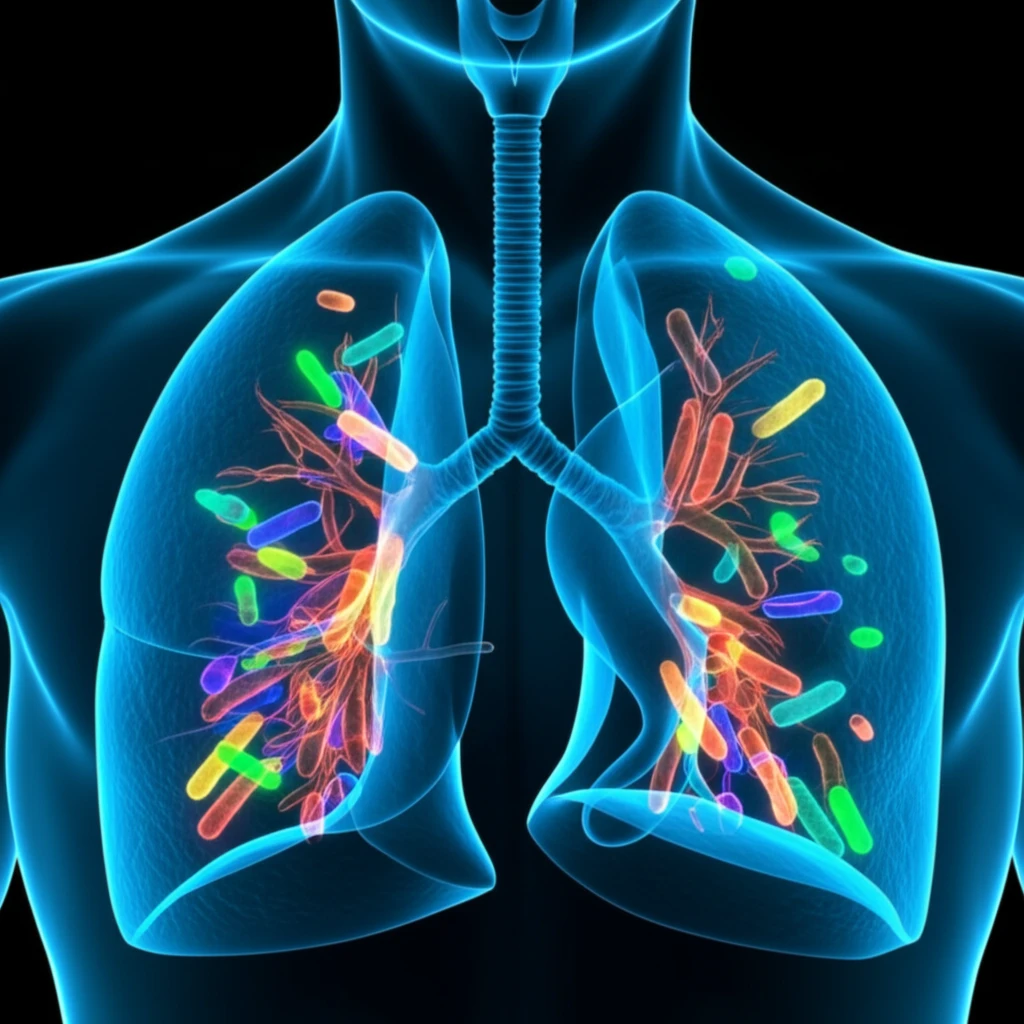
Could This New Imaging Agent Revolutionize Infection Detection?

"Scientists develop a novel method using Ga-68 labelled pyoverdine for enhanced Pseudomonas aeruginosa infection imaging."
In the relentless battle against life-threatening infections, early and accurate diagnosis is paramount. Pseudomonas aeruginosa, a formidable opportunistic pathogen, poses a significant threat, especially in hospital settings. Traditional diagnostic methods often fall short, struggling with speed, invasiveness, and the ability to pinpoint the exact location of the infection. The need for more effective tools is undeniable.
Now, a beacon of hope shines from a recent study that explores the use of siderophores—small molecules produced by microbes to scavenge iron—as a means of targeted infection imaging. By replacing iron with a suitable radiometal, such as Gallium-68 (Ga-68), scientists have opened new avenues for visualizing these infections using positron emission tomography (PET).
This innovative approach leverages Ga-68 labelled pyoverdine PAO1 (PVD-PAO1), a siderophore produced by P. aeruginosa, for specific imaging of Pseudomonas infections. The study highlights the potential of this agent to not only detect but also accurately locate these infections, surpassing the capabilities of existing clinical methods.
How Does Ga-68 Labelled Pyoverdine Enhance Infection Imaging?
The core of this breakthrough lies in the unique characteristics of siderophores. These low-molecular-weight molecules are naturally produced by bacteria to capture iron, an element vital for their survival. When an infection occurs, bacteria release siderophores to steal iron from the host's proteins. Scientists have cleverly exploited this mechanism by substituting iron with Ga-68, a radioactive isotope detectable by PET scans.
- High Radiochemical Purity: Ensures accurate and reliable imaging.
- Hydrophilic Properties: Facilitates easy distribution in the body.
- Low Protein Binding: Reduces interference and non-specific accumulation.
- High Stability in Human Serum: Maintains its integrity for effective targeting.
A Promising Future for Infection Diagnosis
This research paves the way for more precise and timely diagnosis of P. aeruginosa infections. The successful application of Ga-68 labelled PVD-PAO1 in animal models underscores its potential for clinical translation. By enabling clinicians to visualize the exact location and extent of the infection, this novel imaging agent promises to enhance treatment strategies, improve patient outcomes, and combat the growing threat of antibiotic resistance. Continued research and clinical trials will be crucial to realizing the full potential of this groundbreaking technology.