
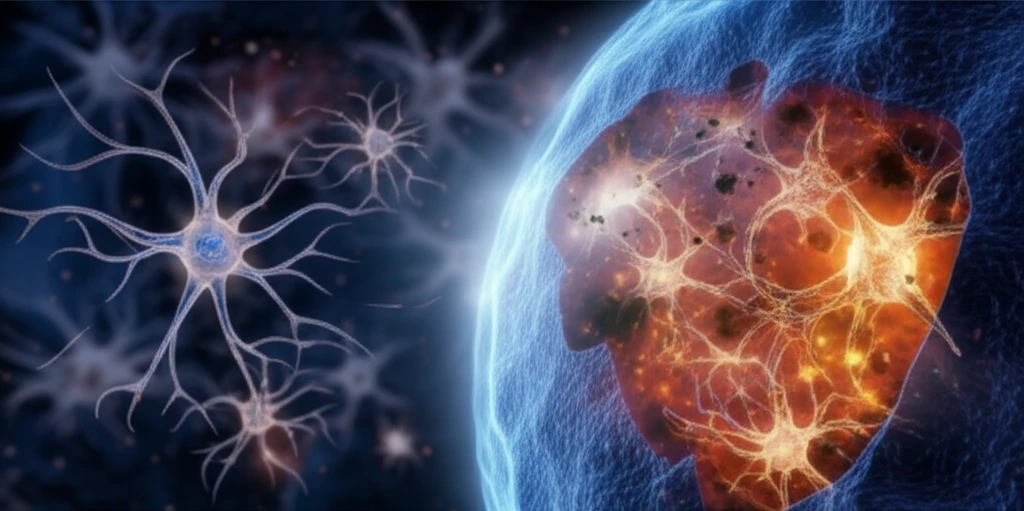
Genistein protecting brain cells

Could Genistein Be a Key to Managing Alzheimer's?

"New research explores how genistein can combat brain inflammation and protect against Alzheimer's-related damage."


Alzheimer's disease (AD) is a devastating condition, and at the heart of its progression lies a complex interplay of factors, notably the role of astrocytes. These star-shaped cells, crucial for maintaining a healthy brain environment, can turn problematic when inflammation kicks in. This inflammatory response, termed reactive astrogliosis, involves the over-activation and growth of astrocytes, contributing to the disease's development.

New research published in PLOS ONE investigates how genistein, a naturally occurring compound found in plants, can mitigate the harmful effects of reactive astrogliosis. The study dives into the effects of amyloid-beta (Aβ1-40), a protein fragment closely linked to Alzheimer's, and examines how genistein interacts with astrocytes to counter the damage.

Using 3D confocal microscopy and mass spectrometry, scientists have gained valuable insights into the morphological and proteomic changes in the brains of rats treated with Aβ1-40 and genistein. This article breaks down these findings, exploring genistein’s potential as a therapeutic agent in managing Alzheimer's disease and offering hope for future treatments.

Genistein: A Natural Shield Against Brain Inflammation?

Genistein protecting brain cells

The study reveals that Aβ1-40 triggers a significant inflammatory response in the brain, leading to astrogliosis. This is characterized by an increase in the size and activity of astrocytes, which, while initially protective, can exacerbate neuronal damage over time. Researchers observed increases in key parameters such as astrocyte volume, surface area, and GFAP (glial fibrillary acidic protein) intensity, a marker for astrocyte activation.

Interestingly, when rats were pretreated with genistein, the intensity of GFAP was reduced, indicating that genistein can suppress Aβ1-40-induced astrogliosis. This suggests that genistein may help modulate the inflammatory response in the brain, preventing the over-activation of astrocytes and subsequent damage to neurons.

  • Reduced GFAP Intensity: Genistein lowers the activation of astrocytes, reducing inflammation.
  • Maintained Astrocyte Size: The compound helps prevent excessive enlargement of astrocytes, which can lead to further brain damage.
  • Protected Neurons: By mitigating inflammation and astrogliosis, genistein indirectly supports neuronal health.
Further analysis using mass spectrometry showed that Aβ1-40 injection led to decreased amounts of tubulins, enolases, and myelin basic protein – all vital for neuronal function and structure. This decrease indicates neuronal damage. However, genistein pretreatment appeared to protect against these losses, further supporting its neuroprotective potential. The study also noted increased levels of dihydropyrimidinase-related protein 2, which genistein helped to modulate, suggesting a broader impact on protein expression related to brain health.

Hope on the Horizon: The Future of Genistein in Alzheimer's Treatment

While these findings are promising, it’s important to remember that this research was conducted on rats. More studies are needed to determine whether genistein has the same effects in humans. However, the results provide a solid foundation for further investigation into genistein as a potential therapeutic agent for Alzheimer's disease.

The study sheds light on the intricate relationship between amyloid beta, astrocytes, and brain inflammation, and underscores the potential of natural compounds like genistein in modulating these processes. As we continue to seek effective treatments for Alzheimer's, exploring the neuroprotective properties of genistein and other similar compounds could pave the way for new therapeutic strategies.

Future research should focus on clinical trials to assess the efficacy and safety of genistein in humans, as well as further investigation into the mechanisms by which genistein interacts with astrocytes and other brain cells. Understanding these interactions more fully will help optimize treatment strategies and maximize the potential benefits of this natural compound.

About this Article -

This article was crafted using a human-AI hybrid and collaborative approach. AI assisted our team with initial drafting, research insights, identifying key questions, and image generation. Our human editors guided topic selection, defined the angle, structured the content, ensured factual accuracy and relevance, refined the tone, and conducted thorough editing to deliver helpful, high-quality information.See our About page for more information.

This article is based on research published under:

DOI-LINK: 10.1371/journal.pone.0076526, Alternate LINK

Title: Amyloid Beta1-40-Induced Astrogliosis And The Effect Of Genistein Treatment In Rat: A Three-Dimensional Confocal Morphometric And Proteomic Study

Subject: Multidisciplinary

Journal: PLoS ONE

Publisher: Public Library of Science (PLoS)

Authors: Maryam Bagheri, Arjang Rezakhani, Sofie Nyström, Maria V. Turkina, Mehrdad Roghani, Per Hammarström, Simin Mohseni

Published: 2013-10-09

Everything You Need To Know

1

How might genistein help in managing Alzheimer's disease?

Genistein is being explored for its potential to counteract the damaging effects of reactive astrogliosis, an inflammatory response involving the over-activation of astrocytes in the brain. Research indicates genistein can mitigate inflammation caused by amyloid-beta (Aβ1-40) by reducing GFAP intensity, a marker for astrocyte activation, and helping maintain normal astrocyte size. By modulating inflammation, genistein indirectly supports neuronal health.

2

How does amyloid-beta (Aβ1-40) contribute to brain inflammation and damage in Alzheimer's?

Amyloid-beta (Aβ1-40) triggers an inflammatory response in the brain leading to astrogliosis, increasing the size and activity of astrocytes. While these astrocytes initially try to protect the brain, their over-activation can lead to neuronal damage. Mass spectrometry analysis reveals that Aβ1-40 injection leads to decreased amounts of tubulins, enolases, and myelin basic protein, which are vital for neuronal function and structure.

3

What specific neuronal proteins are affected by amyloid-beta, and how does genistein influence their levels?

Mass spectrometry revealed that rats treated with Aβ1-40 experienced decreased levels of tubulins, enolases, and myelin basic protein. These proteins are crucial for maintaining neuronal structure and function. However, when rats were pretreated with genistein, the levels of these proteins were better maintained, indicating a protective effect against neuronal damage.

4

Besides astrocytes and amyloid-beta, what other protein changes did scientists observe, and what do they suggest about genistein's broader impact on brain health?

The research indicated that genistein helped modulate the levels of dihydropyrimidinase-related protein 2. This suggests that genistein's impact extends beyond just astrocytes and amyloid-beta, influencing a broader range of protein expression related to overall brain health. Further study of these broader impacts could reveal additional mechanisms by which genistein supports brain health in the context of Alzheimer's disease.

5

What are the next steps in researching genistein as a potential treatment for Alzheimer's, and what limitations exist currently?

This research was conducted on rats, so it’s uncertain whether genistein will have the same effects in humans. Future studies are needed to determine the appropriate dosage, delivery method, and long-term effects of genistein in human subjects with Alzheimer's disease. Human clinical trials are necessary to confirm the therapeutic potential observed in this preliminary research. Additionally, understanding potential side effects and interactions with other medications is critical before genistein can be considered a viable treatment option.

Newsletter Subscribe

Subscribe to get the latest articles and insights directly in your inbox.