
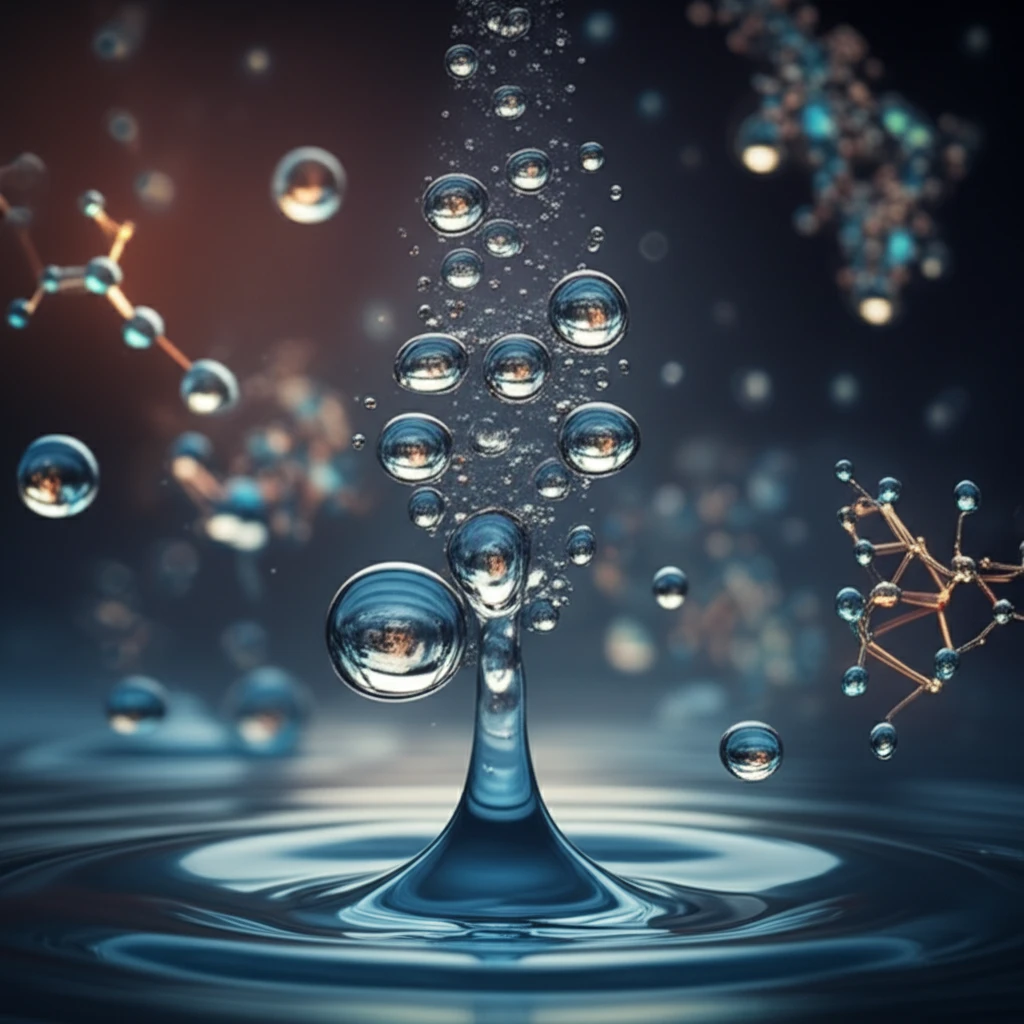
Water droplets transforming into molecular structures as pollutants are broken down.

Could Enzymes Be the Key to Cleaner Water? The Science of Breaking Down Pollutants

"Emerging research explores how ligninolytic enzymes can eliminate endocrine-disrupting chemicals in wastewater, offering a potential solution for cleaner, safer water resources."


Our modern world relies on countless chemical compounds, but the increasing presence of these chemicals in our water supply raises serious concerns. Endocrine-disrupting chemicals (EDCs) are a particularly worrisome group, known to interfere with hormonal systems, leading to a range of negative health effects in both humans and wildlife. These effects can include reproductive issues, developmental problems, and neurological impacts.

Traditional wastewater treatment methods often fall short when it comes to completely removing these EDCs. This is where the fascinating field of enzymatic treatment comes in, offering a potentially more effective and environmentally friendly approach. Among the different enzymes being explored, ligninolytic enzymes stand out as promising candidates for EDC removal.

Ligninolytic enzymes possess unique catalytic properties that allow them to break down a wide variety of organic compounds. This article dives into the science behind these enzymes, exploring their potential to transform wastewater treatment and safeguard our precious water resources.

The EDC Challenge: Why Current Wastewater Treatment Isn't Enough

Water droplets transforming into molecular structures as pollutants are broken down.

Wastewater treatment plants (WWTPs) are designed to remove a variety of contaminants from water before it's discharged back into the environment. However, many conventional WWTPs aren't equipped to handle the complex task of eliminating EDCs entirely. This leads to the discharge of treated wastewater containing residual EDCs into rivers and lakes, which can then impact drinking water sources and aquatic ecosystems.

Runoff from agricultural land and industrial discharge are other significant sources of EDC contamination. The U.S. Environmental Protection Agency (EPA) has recognized EDCs as "contaminants of emerging concern," highlighting the need for more effective removal strategies.

  • Incomplete Removal: Traditional methods often fail to fully break down EDCs.
  • Source of Contamination: Discharged wastewater introduces EDCs into freshwater systems.
  • Public Exposure: Contaminated water sources expose the public to potential health risks.
  • Ecological Impact: EDCs harm fish, wildlife, and overall ecosystem health.
The limitations of current wastewater treatment technologies have spurred research into new and innovative methods for EDC removal. Enzymatic treatment, particularly using ligninolytic enzymes, is gaining traction as a viable solution.

Enzymes: A Promising Path Forward

Ligninolytic enzymes offer a powerful and potentially sustainable approach to tackling the challenge of EDCs in our water supply. While more research and development are needed, these versatile biocatalysts hold immense promise for revolutionizing wastewater treatment and ensuring cleaner, safer water for all.

About this Article -

This article was crafted using a human-AI hybrid and collaborative approach. AI assisted our team with initial drafting, research insights, identifying key questions, and image generation. Our human editors guided topic selection, defined the angle, structured the content, ensured factual accuracy and relevance, refined the tone, and conducted thorough editing to deliver helpful, high-quality information.See our About page for more information.

Everything You Need To Know

1

What are endocrine-disrupting chemicals (EDCs), and why are they a concern in our water supply?

Endocrine-disrupting chemicals (EDCs) are chemical compounds that interfere with hormonal systems. They are a significant concern in our water supply because they can lead to a range of negative health effects in both humans and wildlife. These effects include reproductive issues, developmental problems, and neurological impacts. The increasing presence of EDCs in water, stemming from sources like wastewater discharge and agricultural runoff, poses a threat to public health and the environment.

2

How do traditional wastewater treatment methods fall short in removing EDCs, and what are the consequences?

Traditional wastewater treatment methods often fail to completely eliminate endocrine-disrupting chemicals (EDCs) from water. These methods are not always equipped to break down the complex nature of EDCs, leading to their discharge into rivers and lakes. The consequences of this incomplete removal include the contamination of drinking water sources, exposure of the public to potential health risks, and adverse effects on aquatic ecosystems, harming fish, wildlife, and overall ecosystem health.

3

What are ligninolytic enzymes, and how do they work to address the EDC problem in wastewater?

Ligninolytic enzymes are a type of enzyme being explored for their ability to break down endocrine-disrupting chemicals (EDCs) in wastewater. These enzymes possess unique catalytic properties that allow them to break down a wide variety of organic compounds, including EDCs. By using ligninolytic enzymes, the aim is to offer a potentially more effective and environmentally friendly approach to eliminating EDCs. This can lead to cleaner and safer water resources.

4

What are the potential benefits of using ligninolytic enzymes in wastewater treatment compared to conventional methods?

Compared to conventional wastewater treatment methods, ligninolytic enzymes offer several potential benefits. Firstly, they hold promise for more effectively eliminating endocrine-disrupting chemicals (EDCs) that often persist through traditional processes. Secondly, ligninolytic enzymes offer a more environmentally friendly approach, avoiding some of the drawbacks of conventional methods. This leads to cleaner and safer water resources for all and protects aquatic ecosystems from the harmful effects of EDCs.

5

What further research and development is needed for ligninolytic enzymes to become a widespread solution for EDC removal?

While ligninolytic enzymes show great potential for removing endocrine-disrupting chemicals (EDCs), further research and development are needed before they can be widely implemented. This includes optimizing the use of ligninolytic enzymes for different types of wastewater, scaling up the treatment processes, and conducting more extensive testing to ensure the effectiveness and safety of this approach. Further work is also needed to understand the long-term effects of ligninolytic enzymes on the environment.

Newsletter Subscribe

Subscribe to get the latest articles and insights directly in your inbox.