
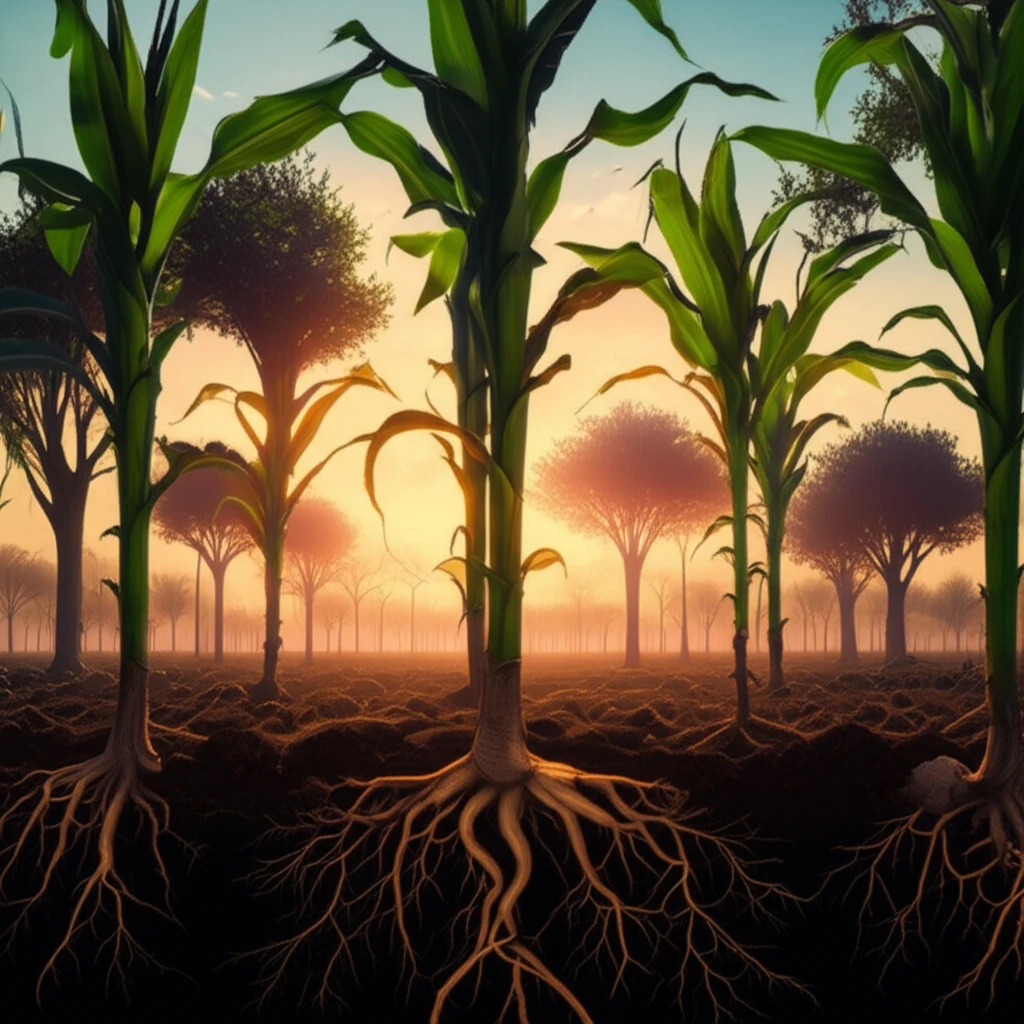
Corn field intercropped with Gliricidia trees at sunrise.

Corn Yield Secrets: Optimizing Density and Intercropping for Weed Control

"Unlock the potential of your corn harvest by mastering sowing density and integrating Gliricidia for natural weed management."


For corn farmers, balancing high yields with sustainable practices is a constant challenge. New corn hybrids offer exciting possibilities, but optimizing their performance requires a fresh look at traditional methods. One area of particular interest is finding the ideal seeding density to maximize productivity while minimizing the need for herbicides.

Weed control is another critical factor. As concerns about herbicide resistance and environmental impact grow, farmers are increasingly interested in alternative strategies. Intercropping, the practice of growing two or more crops in the same field, is gaining traction as a potential solution for natural weed suppression.

This article dives into a study exploring the combined effects of corn sowing density and intercropping with Gliricidia, a nitrogen-fixing tree, on weed control and overall corn yield. Discover how these strategies can work together to create a more sustainable and productive farming system.

The Sweet Spot: Finding the Right Seeding Density for Your Corn

Corn field intercropped with Gliricidia trees at sunrise.

The research investigated various seeding densities, ranging from 30,000 to 90,000 plants per hectare, to determine their impact on green ear and grain yield. The results highlighted a clear trend: increasing seeding density generally boosts the total number and weight of marketable green ears. This is likely due to the greater overall plant population capturing more resources and converting them into harvestable product.

However, there's a limit to this benefit. The study found that the maximum grain yield was achieved at specific densities, around 67,000 to 74,000 plants per hectare, depending on the weed control method used. Beyond this point, increasing density can actually decrease yield due to increased competition for resources like light, water, and nutrients.

  • Optimize density: Higher seeding densities (67,000 to 74,000 plants/hectare) result in increased green ear and grain yield.
  • The right Balance: Finding the balance prevents decreases in yields, by avoiding increased competition.
  • Weed biomass: Increased plant density decreases weed and gliricidia biomass, increasing yields further.
This highlights the importance of finding the "sweet spot" for seeding density – a balance that maximizes plant population without causing excessive competition and yield reduction. Factors like hybrid variety, soil fertility, and water availability can all influence this optimal density.

Embrace Nature's Help: Intercropping with Gliricidia as a Weed Control Ally

The study also explored the potential of intercropping corn with Gliricidia as a natural weed control method. Gliricidia is a fast-growing tree legume known for its nitrogen-fixing abilities and its potential to suppress weed growth through shading and allelopathic effects.

While the study's results on Gliricidia's weed control effectiveness were mixed, there were some encouraging findings. In plots intercropped with Gliricidia, grain yield at higher seeding densities was comparable to that in hoed plots, suggesting that Gliricidia can contribute to weed suppression under certain conditions.

These findings suggest that integrating Gliricidia into corn farming systems could be a valuable strategy for reducing herbicide use and promoting more sustainable agricultural practices. Further research is needed to optimize intercropping techniques and identify the most effective Gliricidia varieties for weed control in corn.

About this Article -

This article was crafted using a human-AI hybrid and collaborative approach. AI assisted our team with initial drafting, research insights, identifying key questions, and image generation. Our human editors guided topic selection, defined the angle, structured the content, ensured factual accuracy and relevance, refined the tone, and conducted thorough editing to deliver helpful, high-quality information.See our About page for more information.

This article is based on research published under:

DOI-LINK: 10.1590/s0100-83582010000200006, Alternate LINK

Title: Influence Of Corn Sowing Density And Gliricidia Intercropping On Weed Control

Subject: Plant Science

Journal: Planta Daninha

Publisher: FapUNIFESP (SciELO)

Authors: P.S.L. Silva, A.D. Souza, V.F.S. Paula, F.H.T. Oliveira, K.M.B. Silva

Published: 2010-06-01

Everything You Need To Know

1

What's the best seeding density for maximizing corn yield?

Optimizing corn yield involves finding the ideal seeding density, with the study suggesting a range of 67,000 to 74,000 plants per hectare. Higher densities boost the green ear and grain yield initially. However, going beyond this range can lead to resource competition, diminishing yields. The 'sweet spot' is a critical balance, dependent on factors like hybrid variety, soil fertility, and water availability.

2

How does intercropping with Gliricidia help with weed control?

Intercropping with Gliricidia is a sustainable method for weed control. Gliricidia, a nitrogen-fixing tree, offers weed suppression through shading and allelopathic effects. This approach reduces the need for herbicides, supporting both environmental and economic sustainability in corn farming. This also improves the yield and has positive effects on the corn crop.

3

How does seeding density affect green ear and grain yield?

Seeding density directly impacts the number and weight of marketable green ears in corn. Increased density generally boosts the overall plant population, enabling greater resource capture and conversion into harvestable product. The research indicates that higher seeding densities lead to higher yields up to a certain point (around 67,000 to 74,000 plants per hectare). Beyond this 'sweet spot', competition for resources can decrease yields.

4

What is the role of Gliricidia in this farming approach?

Gliricidia, a fast-growing tree legume, is significant for weed control and its nitrogen-fixing abilities. It provides a sustainable alternative to herbicides. By suppressing weeds, Gliricidia helps to increase overall corn yield and promotes a more environmentally friendly farming system.

5

What are the key strategies explored in the research?

The study explores the combined effects of corn sowing density and intercropping with Gliricidia. The research investigates how different seeding densities influence corn yield and how intercropping with Gliricidia can act as a natural weed control method. This dual approach aims to maximize productivity while minimizing the negative impacts of herbicides, promoting sustainable farming practices.

Newsletter Subscribe

Subscribe to get the latest articles and insights directly in your inbox.