
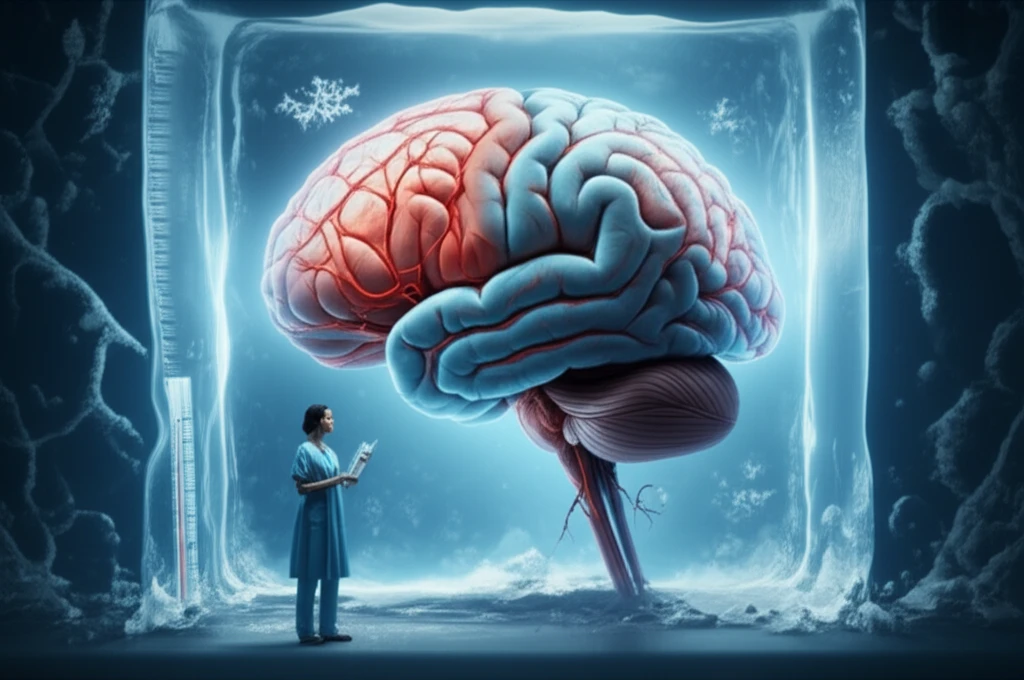
Brain surrounded by ice with constricted blood vessels, illustrating the risk of blood clots during hypothermia therapy.

Cooling Gone Wrong: How Hypothermia Therapy Can Sometimes Lead to Blood Clots

"A Deep Dive into the Risks and Benefits of Therapeutic Hypothermia After Cardiac Arrest"


When someone’s heart stops, every second counts. Cardiopulmonary resuscitation (CPR) can keep blood flowing, but often it’s not enough to prevent brain damage. That's where therapeutic hypothermia, or targeted temperature management (TTM), comes in. This involves carefully cooling the body to protect the brain after cardiac arrest.

The idea behind therapeutic hypothermia is simple: lower temperatures reduce the brain's need for oxygen, slowing down harmful processes that lead to long-term neurological damage. Guidelines recommend inducing mild hypothermia (32-34°C or 89.6-93.2°F) for comatose patients who regain spontaneous circulation after an out-of-hospital cardiac arrest. This has shown promise in improving neurological outcomes and survival rates.

However, like any medical intervention, therapeutic hypothermia isn't without potential complications. One of the most concerning is the increased risk of blood clots, or venous thromboembolism (VTE). While hypothermia slows down many bodily functions, it can also disrupt the delicate balance of the body's clotting system. Let's delve into a case where cooling therapy led to a serious blood clot, explore the delicate balance between benefits and risks, and equip you with the knowledge to navigate this complex medical landscape.

Why Does Cooling Therapy Sometimes Trigger Blood Clots?

Brain surrounded by ice with constricted blood vessels, illustrating the risk of blood clots during hypothermia therapy.

The development of blood clots during or after therapeutic hypothermia is a complex issue, stemming from several factors. Hypothermia affects the body's coagulation cascade, which is responsible for forming blood clots. The normal process of clot formation is disrupted, leading to an increased risk of thrombosis. Studies have shown that hypothermia can lead to alterations in platelet function, reduced platelet count, and changes in the production and kinetics of coagulation factors.

Furthermore, the insertion of catheters, often through a major vein like the femoral vein, adds another layer of complexity. Catheters are essential for administering the cooling process, but they can damage the inner lining of blood vessels, creating a site for clot formation. The relatively long length and the diameter of the catheters used can disrupt the normal blood flow, leading to venous thrombosis.

  • Compromised Blood Flow: Catheters physically obstruct the vein, disrupting normal laminar blood flow.
  • Endothelial Damage: Insertion and presence of a catheter can injure the vessel lining, initiating clot formation.
  • Inflammation: The body's inflammatory response to a foreign object (the catheter) can activate clotting mechanisms.
  • Altered Coagulation: Hypothermia affects platelet function and coagulation factors, increasing clot risk.
It's important to note that while these risks exist, they don't negate the overall benefits of therapeutic hypothermia. The key is to be aware of the potential for blood clots and to take preventive measures, and regular screening of patients undergoing cooling procedures to identify and address complications like thrombosis early. The focus is on maintaining that balance between saving the brain and minimizing other risks. Now, let's look at strategies and recommendations to mitigate these clotting complications.

Striking the Balance: Vigilance and Prevention

Therapeutic hypothermia remains a vital tool in improving outcomes for cardiac arrest survivors. The potential for blood clots shouldn't deter its use, but rather highlight the importance of careful monitoring, preventive strategies, and prompt treatment. With a vigilant approach, healthcare providers can continue to harness the neuroprotective benefits of cooling therapy while minimizing the risk of complications. The best approach involves a collaborative effort of continuous research, refinement of protocols, and clinical expertise to provide the best possible care for vulnerable patients.

About this Article -

This article was crafted using a human-AI hybrid and collaborative approach. AI assisted our team with initial drafting, research insights, identifying key questions, and image generation. Our human editors guided topic selection, defined the angle, structured the content, ensured factual accuracy and relevance, refined the tone, and conducted thorough editing to deliver helpful, high-quality information.See our About page for more information.

This article is based on research published under:

DOI-LINK: 10.4067/s0034-98872011000900014, Alternate LINK

Title: Trombosis Venosa Mayor Asociada A Catéter De Hipotermia Terapéutica En Un Paciente Con Paro Cardiorrespiratorio Recuperado: Comunicación De Un Caso Y Revisión De La Literatura

Subject: General Medicine

Journal: Revista médica de Chile

Publisher: SciELO Agencia Nacional de Investigacion y Desarrollo (ANID)

Authors: Jaime Retamal, Jean Bachler, Ricardo Mejía, Orlando Concha, Max Andresen

Published: 2011-09-01

Everything You Need To Know

1

What is Therapeutic Hypothermia and what is its primary purpose?

Therapeutic hypothermia, also known as targeted temperature management (TTM), is a medical procedure that involves carefully cooling the body to a mild hypothermic state (32-34°C or 89.6-93.2°F) after cardiac arrest. Its primary goal is to protect the brain from damage by reducing its need for oxygen. This is crucial because during cardiac arrest, the brain is deprived of oxygen, which can lead to severe and irreversible neurological damage. By slowing down the harmful processes triggered by this lack of oxygen, therapeutic hypothermia aims to improve neurological outcomes and survival rates for cardiac arrest survivors.

2

Why can cooling therapy sometimes lead to blood clots?

The cooling therapy can sometimes trigger blood clots, also known as venous thromboembolism (VTE), due to several factors. One of the primary reasons is that therapeutic hypothermia disrupts the body's coagulation cascade, which is essential for blood clotting. This disruption can lead to an increased risk of thrombosis. Additionally, the insertion of catheters, often through a major vein like the femoral vein, which is necessary for administering the cooling process, can damage the inner lining of blood vessels, creating a site for clot formation. These catheters can also physically obstruct the vein, disrupting normal blood flow, and the body's inflammatory response to the catheter can activate clotting mechanisms. These factors increase the likelihood of blood clots during or after the treatment.

3

What complications can arise from inserting catheters during therapeutic hypothermia?

The insertion of catheters during therapeutic hypothermia can lead to several complications related to blood clots. The catheters themselves can physically obstruct blood flow within the vein, which can disrupt the normal laminar blood flow, which is essential for preventing clots. Moreover, the insertion of a catheter can injure the vessel lining, initiating the formation of blood clots. The body's inflammatory response to the presence of a foreign object, like the catheter, can further activate clotting mechanisms. These issues underscore the importance of careful monitoring and preventive measures to minimize the risk of blood clots in patients undergoing therapeutic hypothermia.

4

What preventive measures can be taken to reduce the risk of blood clots during therapeutic hypothermia?

Preventive measures are crucial when using therapeutic hypothermia to minimize the risk of blood clots. These can include regular screening of patients to identify and address potential complications early, like thrombosis. Healthcare providers should be vigilant in monitoring patients for any signs or symptoms of blood clots. Continuous research and refinement of protocols are essential to providing the best possible care for vulnerable patients undergoing therapeutic hypothermia. Healthcare professionals need to maintain a balance between the benefits of cooling therapy and the risks of complications, such as blood clots.

5

Why is Therapeutic Hypothermia considered significant?

Therapeutic hypothermia is significant because it is a critical intervention for cardiac arrest survivors. Its importance lies in its neuroprotective effects, which can dramatically improve neurological outcomes and increase survival rates. However, it's essential to understand that while it can be life-saving, it also carries potential risks, such as the increased likelihood of blood clots. This highlights the need for a careful balance between leveraging the benefits of therapeutic hypothermia and mitigating its potential complications. This involves a collaborative effort of continuous research, refinement of protocols, and clinical expertise to provide the best possible care for vulnerable patients.

Newsletter Subscribe

Subscribe to get the latest articles and insights directly in your inbox.