
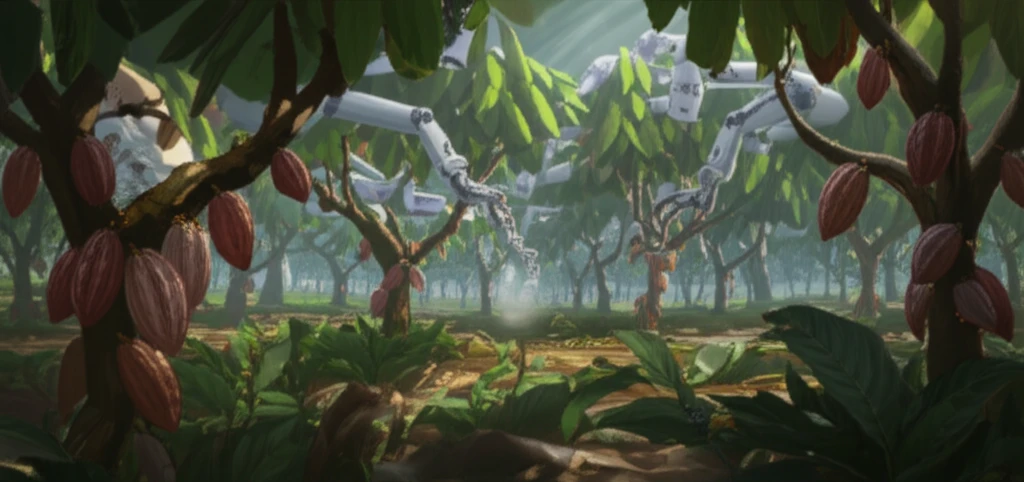
Cocoa Farming Revolution: Can Smarter Pollination Boost Your Harvest?

"Unlocking the secrets of artificial pollination to maximize cocoa yields and transform farming practices for a sweeter future."
The cocoa industry is vital to many economies, particularly in regions where Theobroma cacao L. thrives. For Ecuador, cocoa bean production has long been a cornerstone, with exports reaching impressive volumes annually. Yet, despite its significance, the productivity of cocoa farms often falls short of their potential, creating economic challenges for farmers.
Traditional cocoa farming faces numerous hurdles, including reliance on natural pollination, which can be inconsistent and inefficient. Factors such as the lack of specific pollinating insects, the age of the cocoa trees, incompatibility issues, and excessive shade can all limit fruit production. This has spurred researchers and farmers alike to explore alternative methods, particularly artificial pollination techniques, to enhance yields and improve the economic viability of cocoa farming.
In a quest to address these challenges, a study was conducted to evaluate three different artificial pollination methods on CCN-51 cocoa clones, known for their self-compatibility and disease resistance. The goal was to identify the most effective technique for increasing fruit set and overall yield, potentially revolutionizing cocoa farming practices in the Quevedo region and beyond.
Decoding the Science: Comparing Pollination Techniques
The study, conducted at the Hacienda San Antonio in Ecuador, focused on seven-year-old CCN-51 cocoa clones. Researchers compared the effectiveness of natural pollination (control) against three artificial methods:
- Number of fertilized flowers
- Number of healthy harvested fruits
- Total fruit weight (g)
- Number of seeds per fruit
- Estimated yield (kg/ha)
Smarter Farming for a Sustainable Future
The study's findings suggest that artificial pollination methods, particularly those involving air pressure, hold promise for increasing cocoa yields. By optimizing pollination techniques, farmers can enhance fruit production, improve their economic livelihoods, and contribute to a more sustainable cocoa industry. The move towards smarter, scientifically-backed farming practices is crucial for securing the future of cocoa farming and ensuring a steady supply of this beloved commodity.