
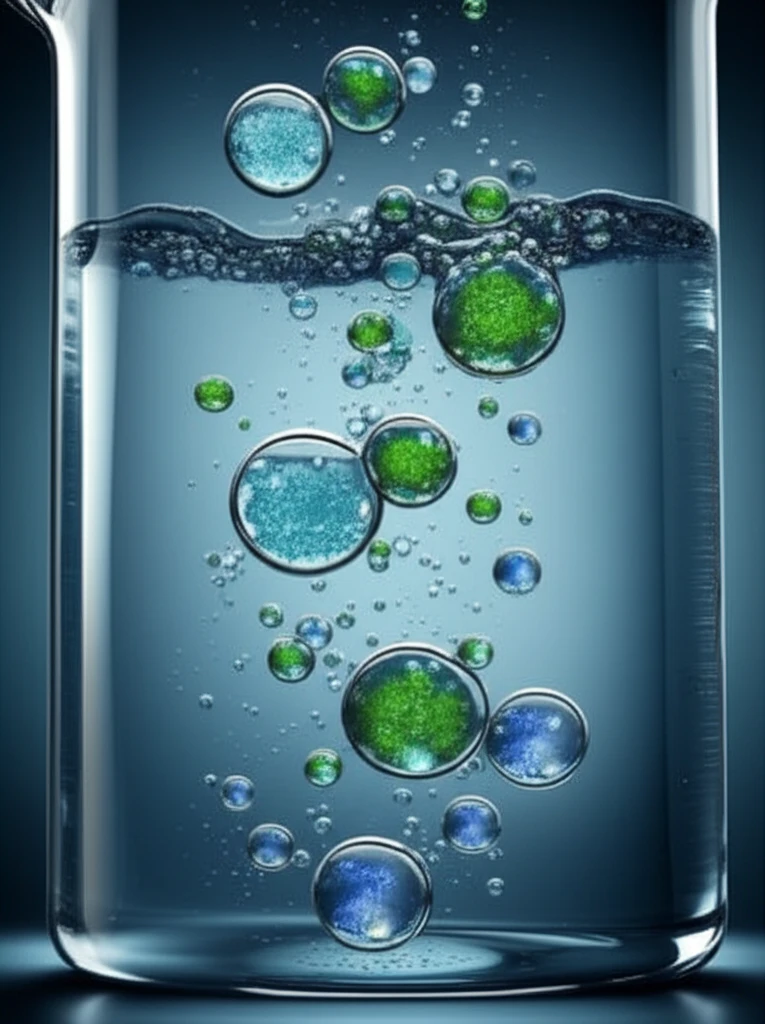
Microscopic bubbles removing fluoride in water

Clean Water Revolution: How Micro-Nano Bubbles Are Changing Water Treatment

"Discover how a cutting-edge pretreatment process using micro-nano bubbles is revolutionizing fluoride removal and improving water quality, making clean water more accessible."


In an era where environmental concerns are at the forefront, innovative technologies play a pivotal role in safeguarding our natural resources. Nanotechnology, in particular, has emerged as a game-changer in pollution control, offering unprecedented solutions for water purification and beyond. Initial studies focused on enhancing material efficiency and post-pollution processing have paved the way for diverse applications of nanoparticles in treating pollutants while minimizing toxicity.

Water, the lifeblood of our planet, sustains all living beings and ecosystems. Covering 75% of the Earth's surface, its contamination poses significant risks to human health and the environment. Among the various water contaminants, fluoride stands out due to its potential health hazards, with elevated concentrations reported in groundwater and coal deposits worldwide. Exposure to high levels of fluoride can lead to irreversible fluorosis, a debilitating bone disease affecting dental and skeletal structures.

Fluoride ions in wastewater primarily originate from manufacturing industries such as semiconductor and metal processing, fertilizer production, and gas industries. While fluoride is commonly used in everyday products like toothpaste, concerns linger regarding its long-term effects on human health, even in small doses. As scientists continue to investigate its benefits and risks, effective methods for fluoride removal from water and wastewater become increasingly crucial.

The Science of Micro-Nano Bubble Technology

Microscopic bubbles removing fluoride in water

Traditional methods for fluoride removal include chemical precipitation using activated alumina, bone char, and synthetic tricalcium phosphate. Other approaches involve activated carbon adsorption, lime treatments, ion exchange resins, and electrochemical methods. While these techniques have proven effective to varying degrees, researchers continue to explore innovative solutions for enhanced efficiency and cost-effectiveness.

One promising avenue lies in the application of micro-nano bubble technology, which harnesses the unique properties of extremely fine bubbles with diameters of less than 50 μm and 1 μm, respectively. These micro-nano bubbles are typically used in combination to break down large molecules in water into smaller, more manageable components. This pretreatment process enhances the effectiveness of subsequent chemical treatments, leading to improved pollutant removal.

  • Enhanced Reaction Rates: The high surface area of micro-nano bubbles facilitates faster and more efficient reactions between pollutants and treatment agents.
  • Improved Coagulation: These bubbles aid in the coagulation process, allowing for easier removal of suspended solids and contaminants.
  • Reduced Chemical Usage: By pre-treating water with micro-nano bubbles, the amount of chemicals required in subsequent treatment stages can be reduced.
  • Better Mixing: Micro-nano bubbles promote thorough mixing, ensuring that treatment agents are evenly distributed throughout the water.
A recent study delved into the effectiveness of micro-nano bubble pretreatment in reducing fluoride levels in water. Researchers combined this innovative approach with conventional coagulation and pH control methods to assess its performance. The study involved adjusting the pH of wastewater using calcium hydroxide (Ca(OH)2) and employing various coagulants such as poly aluminum chloride (PAC), aluminum sulfate (Alum), and specialized polymers like A-polymer and A430P polymer.

The Future of Water Purification

Micro-nano bubble pretreatment offers a sustainable and effective solution for addressing water contamination challenges. By enhancing fluoride removal and reducing chemical usage, this innovative approach contributes to a cleaner, healthier environment for communities worldwide. As research and development in nanotechnology continue to advance, we can expect even more groundbreaking solutions to emerge, paving the way for a future where clean water is accessible to all.

About this Article -

This article was crafted using a human-AI hybrid and collaborative approach. AI assisted our team with initial drafting, research insights, identifying key questions, and image generation. Our human editors guided topic selection, defined the angle, structured the content, ensured factual accuracy and relevance, refined the tone, and conducted thorough editing to deliver helpful, high-quality information.See our About page for more information.

This article is based on research published under:

DOI-LINK: 10.1166/jnn.2019.15939, Alternate LINK

Title: Reduction Of Fluoride In Water Phase By Micro-Nano Bubble Pretreatment Process

Subject: Condensed Matter Physics

Journal: Journal of Nanoscience and Nanotechnology

Publisher: American Scientific Publishers

Authors: Eun-Sik Kim, Sharifuzzamanm Md., Seong-Gyu Seo, In-Won Kang, Hyung-Sun Yoon

Published: 2019-02-01

Everything You Need To Know

1

What is micro-nano bubble technology, and why is it important in water treatment?

Micro-nano bubble technology is a pretreatment process designed to improve water quality. It uses extremely fine bubbles, with diameters less than 50 μm and 1 μm, to break down large molecules in water into smaller components. This pretreatment enhances the effectiveness of subsequent chemical treatments, leading to improved pollutant removal. Its significance lies in its ability to reduce fluoride levels and chemical oxygen demand (COD), making clean water more accessible.

2

What are the health risks associated with fluoride in water, and where does it come from?

Fluoride is a contaminant found in water that can pose health risks, particularly leading to fluorosis. Fluoride ions primarily come from manufacturing industries. Exposure to high levels of fluoride can cause dental and skeletal issues. Addressing fluoride contamination is crucial for public health. Traditional methods include chemical precipitation with activated alumina, bone char, and synthetic tricalcium phosphate, or activated carbon adsorption, lime treatments, ion exchange resins, and electrochemical methods.

3

How does micro-nano bubble technology work in water treatment, and what methods are combined with it?

Micro-nano bubble technology works by utilizing bubbles with diameters of less than 50 μm and 1 μm. These bubbles enhance reaction rates between pollutants and treatment agents, improve coagulation for easier removal of contaminants, reduce chemical usage in subsequent treatment stages, and promote thorough mixing of treatment agents. A recent study combined this approach with conventional coagulation and pH control methods, using calcium hydroxide (Ca(OH)2), poly aluminum chloride (PAC), aluminum sulfate (Alum), and specialized polymers like A-polymer and A430P polymer.

4

What are the main advantages of using micro-nano bubble technology for water purification?

The main benefits of using micro-nano bubble technology include enhanced reaction rates, improved coagulation, reduced chemical usage, and better mixing. The high surface area of the bubbles facilitates faster and more efficient reactions. They aid in the coagulation process, allowing for easier removal of suspended solids and contaminants. By pre-treating water with micro-nano bubbles, the amount of chemicals needed can be reduced. The bubbles promote thorough mixing, ensuring that treatment agents are evenly distributed.

5

What is the future of water purification with the application of micro-nano bubble technology?

Micro-nano bubble pretreatment, combined with traditional treatments, offers a sustainable and effective solution for addressing water contamination. This approach enhances fluoride removal, reduces chemical usage, and contributes to a cleaner and healthier environment. As research and development in nanotechnology advance, further groundbreaking solutions are expected to emerge, potentially ensuring clean water access for everyone. This shows the evolution of water treatment using innovative technologies.

Newsletter Subscribe

Subscribe to get the latest articles and insights directly in your inbox.