
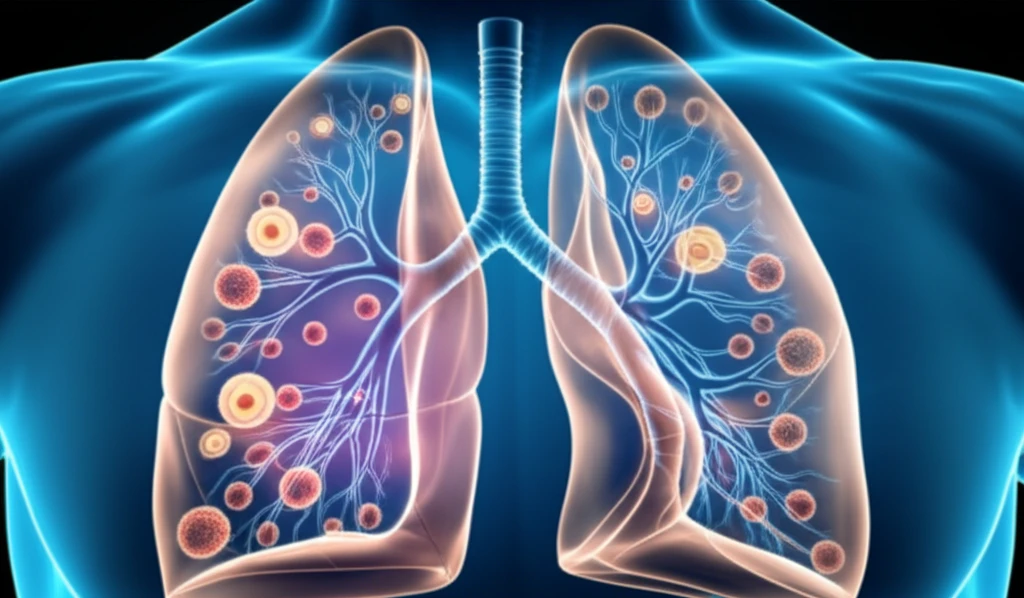
Digital illustration of a healthy lung interwoven with cholesterol molecules and immune cells, symbolizing the relationship between cholesterol and immunity.

Cholesterol's Unexpected Role: How It Impacts Your Lung Health and Immunity

"Emerging research reveals the surprising connection between cholesterol, lung function, and your body's ability to fight off infections. Are your cholesterol levels secretly affecting your respiratory health?"


For years, cholesterol has been primarily associated with heart health. However, groundbreaking research is revealing its significant role in lung physiology and the innate immune response – your body's first line of defense against pathogens. This is not just about preventing heart attacks anymore; it's about understanding how cholesterol impacts your ability to breathe easy and stay healthy.

The connection is now clear: the innate immune response and the cholesterol biosynthesis/trafficking network regulate each other. This has profound implications for how our bodies respond to pathogen invasion and maintain overall health. In fact, cellular cholesterol levels can critically affect how well our bodies recognize and fight off harmful invaders.

With over half of adults in the U.S. having cholesterol abnormalities, and pneumonia remaining a leading cause of death, understanding this link is crucial. This article will explore the emerging relationship between cholesterol, innate immunity, and respiratory infections, and what it could mean for potential therapeutic developments.

Cholesterol 101: Synthesis, Trafficking, and Why It Matters

Digital illustration of a healthy lung interwoven with cholesterol molecules and immune cells, symbolizing the relationship between cholesterol and immunity.

To understand cholesterol's role in lung health, it's helpful to have a basic understanding of how cholesterol is synthesized and transported in the body. Cholesterol is vital for cell membranes and the production of steroid hormones and bile acids. Cells obtain cholesterol in two ways: either by producing it from acetyl-CoA or by importing it using receptors like LDLR or SR-A.

Cellular cholesterol levels are tightly controlled by two key regulators: Liver X Receptors (LXRs) and Sterol Response Element Binding Proteins (SREBPs). When cholesterol levels are high, LXRs are activated, which trigger the expression of genes that promote cholesterol export and degradation. Conversely, when cholesterol is low, SREBPs are activated, boosting cholesterol production and import.

  • The Mevalonate Pathway: Cholesterol synthesis starts with acetyl-CoA, leading to isoprenoids, heme A, dolichol, and ubiquinone.
  • Lipoproteins as Carriers: At the organism level, cholesterol and other lipids are transported in the plasma as cargo on lipoprotein particles, such as VLDL, LDL, and HDL.
  • VLDL vs. LDL vs. HDL: VLDL is produced in the liver. It’s cleared via apolipoprotein E (apoE)-mediated receptor binding or lipases and lipid-transfer proteins in the plasma ultimately processed into LDL. LDL, via apoB-mediated binding to LDLR, delivers cholesterol to peripheral tissues. HDL promotes cholesterol efflux from peripheral cells and is ultimately cleared by the liver.
Over the years, studies using gene-targeted mice, where specific genes related to cholesterol traffic are modified, have helped define the roles of cholesterol regulators in cardiovascular health. Now, these tools and insights are being applied to lung biology, revealing exciting connections.

The Future of Lung Health: Harnessing Cholesterol for Therapeutic Benefit

The intricate dance between cholesterol homeostasis and host defense is now more apparent than ever. Pathogens can reprogram cholesterol trafficking to their advantage, and our body's own cholesterol regulators play critical roles in fighting back.

Studies have now shown that cholesterol traffic plays a key role in lung homeostasis, including the lung's response to inflammatory and infectious particles. These findings suggest that targeting cholesterol traffic could lead to new and improved therapies for lung disease.

The lung, relative latecomer to the cholesterol discussion, now offers new and exciting opportunities for therapeutic development, potentially benefiting from the knowledge gained by cardiovascular sciences and offering new insights in return.

About this Article -

This article was crafted using a human-AI hybrid and collaborative approach. AI assisted our team with initial drafting, research insights, identifying key questions, and image generation. Our human editors guided topic selection, defined the angle, structured the content, ensured factual accuracy and relevance, refined the tone, and conducted thorough editing to deliver helpful, high-quality information.See our About page for more information.

This article is based on research published under:

DOI-LINK: 10.2174/1874467209666160112123603, Alternate LINK

Title: Roles Of The Mevalonate Pathway And Cholesterol Trafficking In Pulmonary Host Defense

Subject: General Health Professions

Journal: Current Molecular Pharmacology

Publisher: Bentham Science Publishers Ltd.

Authors: Kristin Gabor, Michael Fessler

Published: 2017-01-13

Everything You Need To Know

1

How might my cholesterol levels be affecting my respiratory health and ability to fight off infections?

Research indicates a connection between cholesterol levels, lung function, and the body's defense against infections. Cholesterol imbalances can weaken the innate immune response, the body's first line of defense, potentially increasing the risk of respiratory infections.

2

How does the body control cholesterol levels, and what roles do Liver X Receptors (LXRs) and Sterol Response Element Binding Proteins (SREBPs) play in this process?

Cholesterol is crucial for cell membranes and producing steroid hormones and bile acids. Cells synthesize cholesterol from acetyl-CoA or import it using receptors like LDLR or SR-A. Two key regulators, Liver X Receptors (LXRs) and Sterol Response Element Binding Proteins (SREBPs), tightly control cellular cholesterol levels. When cholesterol levels are high, LXRs are activated, which trigger the expression of genes that promote cholesterol export and degradation. Conversely, when cholesterol is low, SREBPs are activated, boosting cholesterol production and import.

3

What are VLDL, LDL, and HDL, and how do they transport cholesterol throughout the body?

Cholesterol and other lipids are transported in the plasma as cargo on lipoprotein particles, such as VLDL, LDL, and HDL. VLDL, produced in the liver, is processed into LDL. LDL delivers cholesterol to peripheral tissues via apoB-mediated binding to LDLR. HDL promotes cholesterol efflux from peripheral cells and is ultimately cleared by the liver.

4

Can cholesterol regulation be used to improve lung health?

Pathogens can manipulate cholesterol trafficking to benefit themselves. However, the body's cholesterol regulators, such as Liver X Receptors (LXRs) and Sterol Response Element Binding Proteins (SREBPs), play essential roles in fighting back. Understanding these mechanisms can guide the development of new therapies that harness cholesterol homeostasis to improve lung health.

5

What is the mevalonate pathway, and what is its significance in cholesterol synthesis and overall health?

The mevalonate pathway is critical for cholesterol synthesis, starting with acetyl-CoA and leading to the production of essential compounds like isoprenoids, heme A, dolichol, and ubiquinone. These compounds support various cellular functions beyond cholesterol production, indicating the pathway's broad importance in cell health and overall physiology. Disruptions in the mevalonate pathway can affect not only cholesterol levels but also the synthesis of these other vital molecules, potentially impacting lung health and innate immunity.

Newsletter Subscribe

Subscribe to get the latest articles and insights directly in your inbox.