
Charcot's Final Chapter: Unraveling the Last Days and Legacy of a Neurology Pioneer

"Explore the life, death, and lasting impact of Jean-Martin Charcot, the father of modern neurology, whose contributions continue to shape our understanding of the brain."
Jean-Martin Charcot (1825-1893) is celebrated as the father of modern neurology, a pivotal figure whose influence extends far beyond his immediate field. His groundbreaking work touched internal medicine, rheumatology, pulmonology, geriatrics, orthopedics, pathology, psychiatry, and psychology.
By the late 19th century, Charcot had become the most renowned neurologist in the world, transforming the Salpêtrière Hospital in Paris into the epicenter of international neurological study. His teachings and observations shaped the understanding of numerous conditions, including amyotrophic lateral sclerosis, multiple sclerosis, and hysteria.
At the height of his career, Charcot's life took an unexpected turn. This article delves into the circumstances surrounding his death at age 67, his elaborate funeral, and his final resting place in Montmartre cemetery, paying tribute to a life dedicated to unraveling the mysteries of the human brain.
The Unexpected Demise of a Medical Titan
Jean-Martin Charcot's later years were marked by a decline in health. Despite his intellectual vigor, he led an unhealthy lifestyle, characterized by obesity, poor hygiene, and heavy smoking. He also experienced disturbed sleep cycles due to his intense work habits. These factors contributed to the development of coronary artery disease, leading to episodes of angina pectoris.
- August 1893: Charcot, accompanied by Professors Debove and Straus, embarked on a summer holiday to Morvan, a rural lake district in Burgundy.
- August 15: After a full day, Charcot and his assistants enjoyed a substantial meal at their countryside inn, L'Auberge du Lac des Settons.
- August 16: At 3 a.m., Charcot's condition took a critical turn. He developed acute dyspnea, intense perspiration, and coarse rales in his chest. A diagnosis of acute pulmonary edema was made. Despite efforts to revive him, Charcot died that morning at the age of 67, confirming the earlier diagnosis of coronary artery insufficiency.
A Final Farewell: Charcot's Funeral and Enduring Legacy
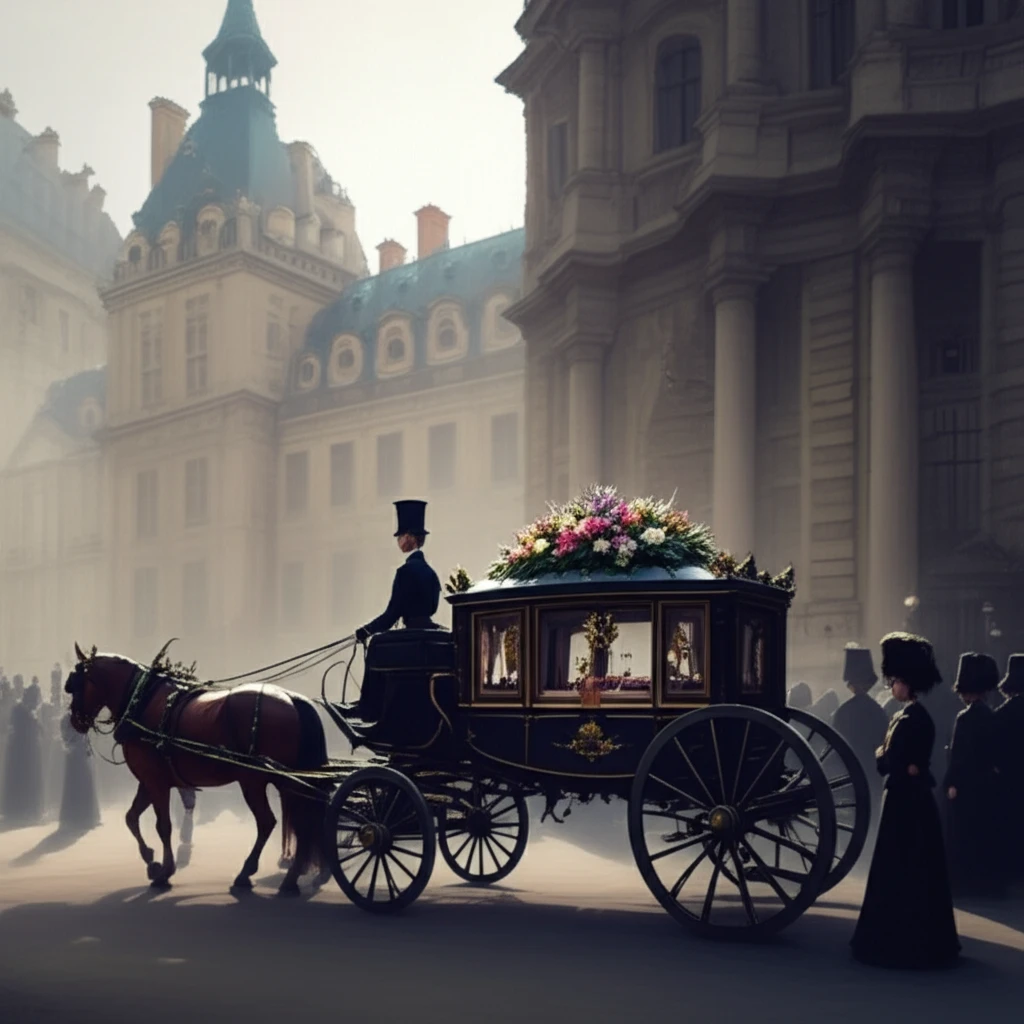
Following his death, Charcot's coffin was transported to Paris and placed in the chapel of the Salpêtrière Hospital. The next day, countless patients, medical students, nurses, physicians, and members of the Parisian intelligentsia attended the visitation.
The funeral service, held at the Saint-Louis church of La Salpêtrière Hospital, was simple, without speakers or religious manifestations, as Charcot had requested. Military honors were rendered, and Beethoven's Funeral March and Saint-Saens's Pie Jesu were played. Afterward, the coffin was taken to Montmartre cemetery for burial.
Charcot was laid to rest in the family tomb in Montmartre cemetery. His death was mourned worldwide, with over 70 eulogies published in various countries. Tributes poured in from prominent figures like Osler, Freud, and others, underscoring the profound impact of his work and the enduring legacy of the father of modern neurology.