
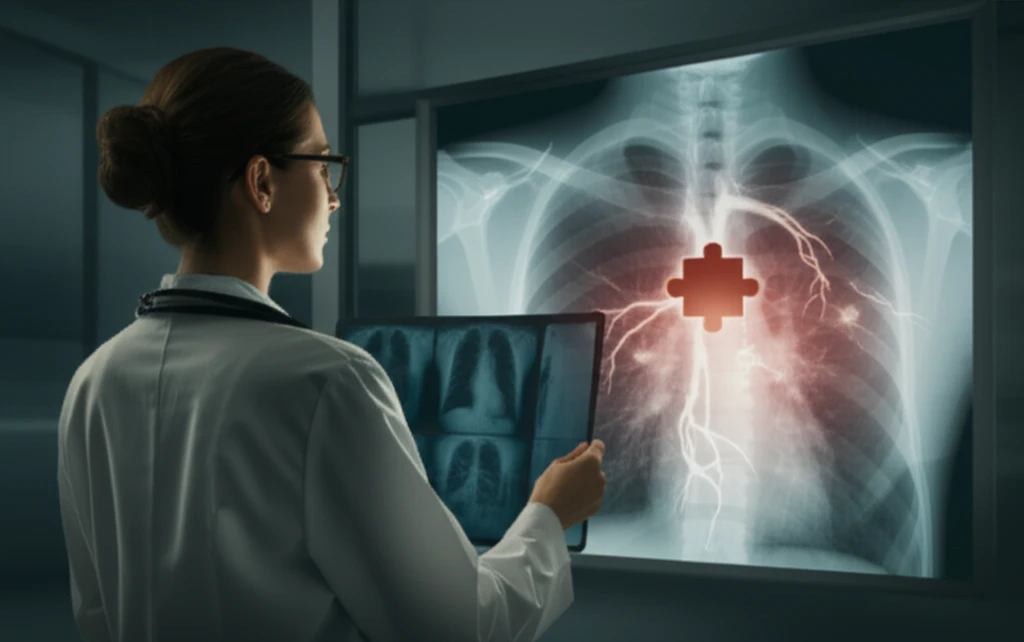
Castleman Disease: When a Tumor Isn't Just a Tumor

"Uncover the diagnostic challenge of Castleman disease and its critical distinction from other mediastinal tumors."
Mediastinal tumors, or growths in the chest area between your lungs, are often discovered by chance during routine check-ups or scans for something else. While many are benign, figuring out exactly what they are can be tricky for doctors. Benign mediastinal lesions pose a significant diagnostic challenge to radiologists and pathologists.
These growths often have patterns that hint at certain conditions, but certainty can be elusive. When doctors can't be sure, surgeons may need to perform a biopsy during surgery to get a diagnosis and decide on the best course of action. This is where understanding rare conditions like Castleman disease becomes critical.
This article explores a case of Castleman disease, highlighting why it should always be considered when evaluating mediastinal tumors. By understanding this condition, we can improve diagnostic accuracy and patient care.
What is Castleman Disease?
Castleman's disease (CD) is a rare condition where the lymph nodes, part of your immune system, become enlarged. It's not cancer, but rather a type of lymphoproliferative disorder, meaning it involves an abnormal increase in the number of lymphocytes, a type of white blood cell.
- Unicentric Castleman Disease (UCD): Affects a single lymph node or region. Often asymptomatic and treatable with surgery.
- Multicentric Castleman Disease (MCD): Affects multiple lymph nodes throughout the body. Can cause systemic symptoms like fever, weight loss, and fatigue. May be associated with other conditions like HIV or HHV-8 infection.
- Hyaline Vascular Variant: The most common type, characterized by distinctive changes in the lymph node structure, including prominent blood vessels.
The Importance of Awareness
Castleman disease, though rare, represents a critical consideration in the differential diagnosis of mediastinal tumors. By increasing awareness and understanding of this condition, healthcare professionals can improve diagnostic accuracy, leading to better outcomes for patients. If you experience unusual symptoms or have concerns about your health, always consult with a qualified medical professional for personalized advice and treatment.