
Unlocking the Mystery of Obturator Hernias: A Comprehensive Guide

"Navigating diagnosis, treatment, and recovery of this rare abdominal condition."
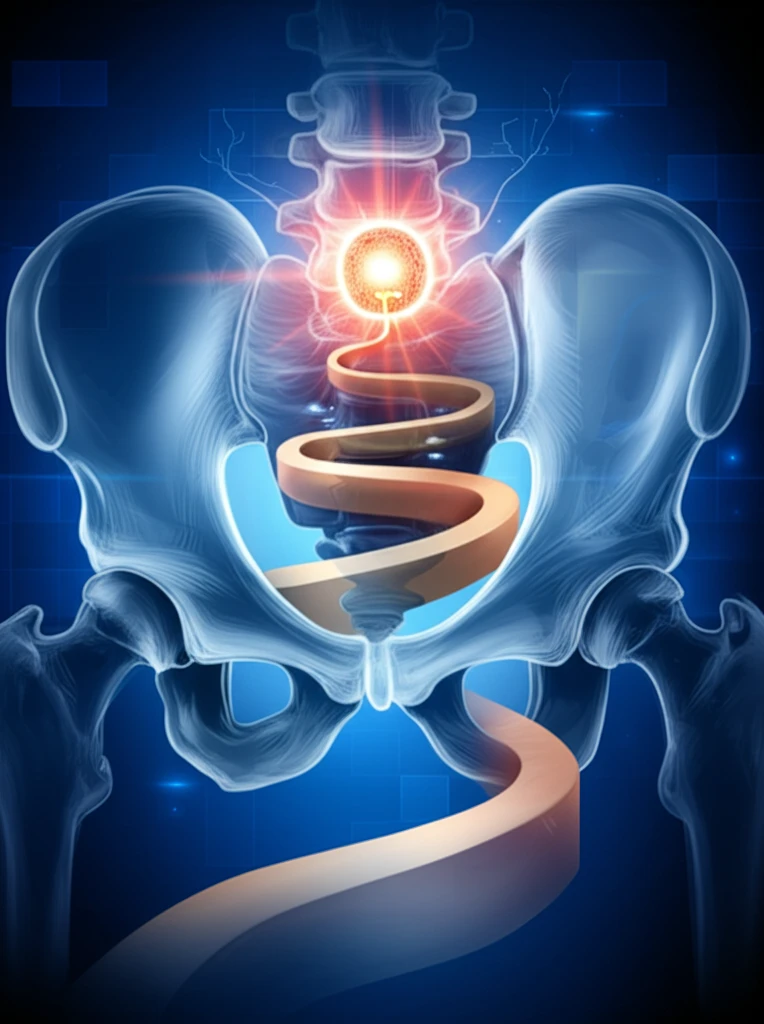
Obturator hernias, first described in 1724 by Ronsil, represent a rare type of abdominal wall hernia. They account for a small percentage (0.05% to 0.14%) of all abdominal wall hernias but are a notable cause (0.2% to 1.6%) of small bowel obstructions. These hernias occur when abdominal contents protrude through the obturator foramen, a bony opening in the pelvis.
What makes obturator hernias particularly challenging is their nonspecific presentation. Often occurring in thin, elderly, multiparous women, the symptoms can be vague, leading to delayed diagnosis and treatment. Preoperative diagnosis rates historically range from a mere 10% to 30%. This delay significantly increases the risk of bowel strangulation (25% to 100%) and mortality (12% to 70%).
Given the high stakes, early diagnosis and intervention are crucial. This article explores the complexities of obturator hernias, drawing upon a retrospective study of 17 cases to shed light on effective management strategies. Let’s navigate the diagnostic pathways, treatment options, and recovery considerations for this rare condition.
Rare but Serious Condition
Obturator hernias are extremely rare, accounting for approximately 0.07–1% of all hernias according to a systematic review of 74 studies. A nationwide Danish Hernia Database study examined all adults who underwent obturator hernia surgery in Denmark between 1998 and 2023. Recent reviews have focused on the condition's clinical presentation, diagnosis, and management.
Established Care Challenges
Because no source material was provided for this subsection, a detailed account of standard methods cannot be established here. In general terms, evaluation and treatment decisions for a rare hernia such as this may depend heavily on the clinical setting and available diagnostic expertise. The limitations of any specific approach should therefore be assessed against the individual presentation and the evidence directly available to the treating team.
Evolving Clinical Understanding
The available material does not identify specific historical milestones or foundational discoveries in the study of obturator hernias. A careful historical account would require sources addressing the condition's original description, diagnostic development, and surgical evolution. Those details are therefore not asserted here.
Deciphering Obturator Hernias: Who is at Risk and Why?
Obturator hernias arise due to a combination of factors that weaken the pelvic floor and increase abdominal pressure. A deficiency in preperitoneal fat and lymphatic tissue within the obturator canal creates a space for herniation. Several conditions can contribute to this weakening:
- Extreme thinness or cachexia: Reduced fat and tissue support.
- Pregnancy and multiple births: Weakening of abdominal muscles and pelvic floor.
- Chronic Obstructive Pulmonary Disease (COPD): Persistent coughing increases intra-abdominal pressure.
- Chronic constipation: Straining during bowel movements elevates abdominal pressure.
- Kyphoscoliosis: Spinal deformity alters abdominal mechanics and pressure distribution.
- Ascites: Fluid accumulation in the abdomen increases pressure.
Current Evidence Landscape
No source material was supplied for this subsection's review of the latest research. Accordingly, no specific recent study, intervention, outcome, or research trend can be stated without risking unsupported claims. Current conclusions should be drawn from dedicated contemporary reviews and primary studies.
Why Diagnosis Fails
Obturator hernia is described as a rare but life-threatening pelvic floor hernia occurring predominantly in elderly, underweight women, with delayed diagnosis and high perioperative mortality. Preoperative recognition remains difficult because the hernia lies deep and may present nonspecifically as mechanical small bowel obstruction. These diagnostic pitfalls help explain why an otherwise classic condition can be missed until complications develop.
Signs, Imaging, and Urgency
A case report and literature review identifies a positive Howship-Romberg sign as a specific sign of obturator hernia. The same source describes computed tomography as the first-choice diagnostic test. Because incarcerated intestine may progress to intestinal necrosis, emergency surgical treatment is often required.
The Road to Recovery: Optimizing Outcomes for Obturator Hernia Patients
Early diagnosis and prompt surgical intervention are the cornerstones of successful obturator hernia management. While the featured study highlights the challenges in reducing intestinal resection and mortality rates, it also underscores the importance of heightened clinical suspicion, advanced imaging, and tailored surgical approaches. By understanding the risk factors, recognizing the subtle signs, and embracing technological advancements, healthcare professionals can improve outcomes and enhance the quality of life for individuals affected by this rare and elusive condition.
A High-Stakes Diagnosis
No sources were provided for this subsection, so a source-specific expert synthesis cannot be offered. Based only on the broader structure of the supplied material, obturator hernia is best approached as a rare condition in which diagnostic uncertainty can carry serious consequences. More detailed commentary would require directly cited clinical evidence.
Areas for Further Study
No source material was supplied for this subsection. It is therefore not possible to identify specific future technologies, research priorities, or emerging treatments without introducing unsupported information. Future outlook statements should be grounded in dedicated prospective studies or validated research reviews.
Hidden Risk Factors
Common reported risk factors include advanced age, low body mass index, multiparity, and a weakened pelvic floor. Obturator hernias lack external manifestations, which makes diagnosis challenging. Another review describes the condition as contributing to less than 1% of all hernias and states that clinical diagnosis can be nearly impossible.
Consequences for Patients
Obturator hernia is an external abdominal hernia in which abdominal visceral organs or extraperitoneal fat protrude through the obturator of the hip bone toward the femoral triangle. A reported case of intestinal obstruction emphasizes including obturator hernia in the differential diagnosis for bowel obstruction in elderly patients. The same report highlights CT imaging as pivotal for timely and accurate diagnosis.