
Can Viruses Fight Cancer? The Promising Future of Oncolytic Adenovirus Therapy

"Explore how genetically engineered adenoviruses are being developed as a potential breakthrough in prostate cancer treatment, offering new hope for patients resistant to traditional therapies."
Prostate cancer remains a significant health challenge, ranking as a leading cause of cancer-related deaths among men in the Western world. While initial treatments like androgen-deprivation therapy (ADT) can effectively slow the disease's progression, many tumors eventually develop resistance, leading to advanced, castration-resistant prostate cancer (CRPC). This resistance often renders conventional therapies, including chemotherapy, ineffective, highlighting the urgent need for innovative treatment strategies.
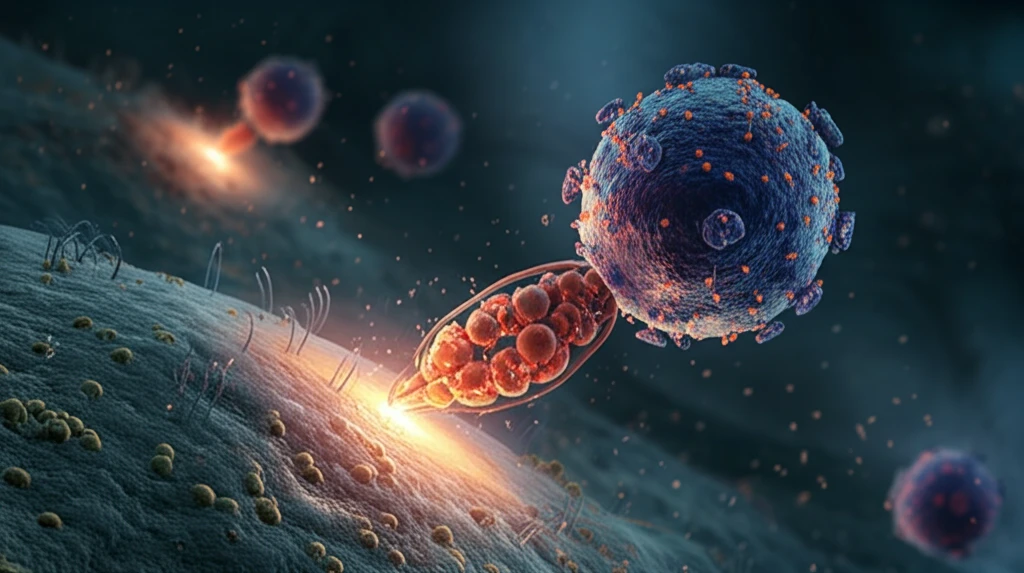
Enter oncolytic adenovirus therapy, a cutting-edge approach that harnesses the power of viruses to selectively target and destroy cancer cells. These genetically engineered adenoviruses are designed to replicate within cancer cells, causing them to lyse (break apart) and die, while leaving healthy tissues unharmed. This targeted action offers a potential solution to overcome drug resistance and improve outcomes for patients with advanced prostate cancer.
This article delves into the exciting world of oncolytic adenovirus therapy, exploring its mechanisms of action, clinical trial results, and future directions. We'll examine how these modified viruses are being developed to enhance tumor elimination, stimulate the immune system, and ultimately offer new hope for men battling prostate cancer.
Oncolytic Adenoviruses in Cancer Therapy
Oncolytic adenoviruses (Ads) have emerged as a promising class of anticancer agents, based on their well-studied viral vector biology. These viruses are modified to selectively infect and replicate in tumor cells while sparing normal tissue. Recent clinical data from the ESMO Immuno-Oncology Congress 2024 showed that oncolytic adenoviruses demonstrate promise in inducing immune responses in prostate cancer patients. Their ability to selectively target tumor cells through specific cellular receptors distinguishes them from conventional cancer therapies.
Current Prostate Cancer Treatments and Their Constraints
Current treatment approaches for prostate cancer successfully manage local disease, with reported 5-year survival rates of 100% for localized cases. However, these conventional methods have notable limitations. Oncolytic virotherapy (OVT) offers the potential for highly specific and less toxic treatment options compared to traditional approaches. A key limitation of oncolytic adenoviral therapy is limited Beta-3 integrin expression, which affects viral tropism and effectiveness. Clinical trials have demonstrated that adenoviral mutants show limited toxicity to normal tissues and appear safe when administered to patients.
The Origins of Oncolytic Viral Therapy
The history of oncolytic viral therapy spans over a century of scientific discovery. The early 1900s marked the first observations of tumor remission following viral infection in cancer patients. During the late 1940s and 1950s, researchers gained initial insights into the mechanism of viral oncolysis. By the 1990s, advances in genetic engineering enabled scientists to modify viruses to improve their oncolytic properties. This foundational work laid the groundwork for modern oncolytic adenovirus therapies targeting cancers like prostate cancer.
How Do Oncolytic Adenoviruses Work?
Oncolytic adenoviruses are engineered to exploit the unique characteristics of cancer cells. Here’s a breakdown of their key mechanisms:
- Selective Replication: The viruses are modified to replicate efficiently only within cancer cells, often by targeting pathways that are deregulated in tumors.
- Cell Lysis: As the virus replicates inside the cancer cell, it eventually causes the cell to burst open (lyse), releasing more viruses to infect neighboring cancer cells.
- Immune Stimulation: Some oncolytic adenoviruses are designed to express immune-stimulatory factors that activate the body's own immune system to recognize and attack the remaining cancer cells.
- Transgene Delivery: These viruses can also be engineered to carry therapeutic genes (transgenes) that further enhance their anti-cancer effects, such as those that promote apoptosis (programmed cell death) or convert prodrugs into active cytotoxic agents.
Emerging Findings in Oncolytic Virotherapy
Research into oncolytic adenoviruses continues to advance, with scientists exploring novel combinations and delivery methods. While specific recent clinical trial results are still being compiled, the field is actively investigating ways to enhance viral selectivity and anti-tumor efficacy. Multiple research groups are working on strategies to overcome current limitations and improve patient outcomes. These efforts suggest that oncolytic virotherapy remains a dynamic and evolving area of cancer treatment research.
Challenges Facing Oncolytic Adenoviral Therapy
Despite their promise, oncolytic adenoviruses face significant challenges that have limited their clinical success. Oncolytic virotherapy has shown limited efficacy against solid tumors due to physical barriers, including issues with manufacturing and immune system clearance. Major limitations include poor systemic administrability and difficulties in achieving adequate intratumoral distribution. These obstacles represent critical hurdles that must be addressed before oncolytic adenoviruses can achieve widespread clinical adoption.
Evaluating Oncolytic Virotherapy Against Alternatives
When considering treatment options for advanced cancers, patients and clinicians weigh multiple factors including efficacy, side effects, and accessibility. Oncolytic virotherapy represents one approach among several available cancer treatments. The field continues to gather data comparing oncolytic adenoviruses to other immunotherapy and targeted therapy options. Ongoing research aims to determine which patient populations benefit most from virotherapy approaches compared to established treatments.
The Future of Oncolytic Adenovirus Therapy
Oncolytic adenovirus therapy represents a paradigm shift in cancer treatment, offering a targeted and multifaceted approach to overcome drug resistance and stimulate the immune system. As research progresses and clinical trials continue, these innovative therapies hold the potential to significantly improve outcomes for patients with prostate cancer and other malignancies. With ongoing advancements in virus engineering and delivery strategies, the future of oncolytic adenovirus therapy looks promising, offering new hope in the fight against cancer.
Combination Strategies Show Most Promise
Expert commentary and emerging research suggest that combination approaches may offer the greatest potential for oncolytic adenovirus therapy. Studies indicate that combining chemotherapy with oncolytic adenovirus-mediated gene therapy is a promising strategy for treating advanced prostate cancer. This integrated approach leverages the complementary mechanisms of viral oncolysis and conventional treatment. Researchers believe such combinations could overcome individual treatment limitations and improve patient outcomes.
Market Growth and Clinical Advancement
The oncolytic adenovirus market is experiencing significant growth, projected to expand from USD 140.2 billion in 2025 to USD 288.9 billion by 2035, representing a compound annual growth rate of 7.5%. Currently, CAN-2409, an adenovirus-associated oncolytic virus therapy, is in Phase III clinical trials for prostate cancer treatment. This commercial momentum and clinical progression suggest increasing confidence in the therapeutic potential of oncolytic adenoviruses. Additional candidates in various stages of development may further expand treatment options in the coming decade.
Overcoming Delivery and Immune Barriers
The broader context of oncolytic virotherapy reveals significant systemic challenges that span manufacturing, delivery, and immune response. Physical barriers including issues with manufacturing oncolytic viruses and immunological defenses limit efficacy against solid tumors. To maximize therapeutic potential, researchers must address major limitations such as poor systemic administrability and intratumoral distribution. These challenges require coordinated efforts across virology, immunology, and clinical medicine to advance the field.
Patient Outcomes and Clinical Responses
Real-world clinical data provides encouraging evidence for the effectiveness of oncolytic virotherapy in cancer treatment. Reported response rates have reached up to 88.5% in clinical settings, with complete response rates as high as 61.5% documented in some patient cohorts. These outcomes represent meaningful improvements for patients facing difficult-to-treat cancers. Such real-world evidence complements clinical trial data and supports the continued development of oncolytic adenovirus therapies.