
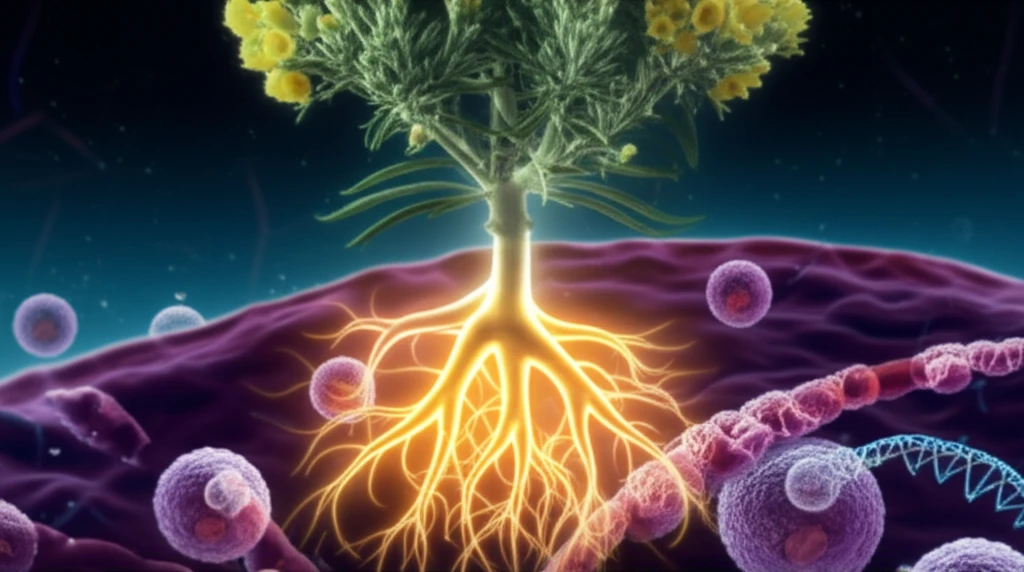
Teucrium alopecurus targeting colon cancer cells.

Can This Herb Fight Colon Cancer? The Science Behind Teucrium alopecurus

"Discover how compounds from Teucrium alopecurus target colon cancer cells, offering new hope for treatment and prevention."


Colorectal cancer stands as a formidable health challenge, known for its complex progression and resistance to conventional treatments. As scientists and medical professionals seek innovative approaches, natural compounds, particularly those found in plants, are receiving considerable attention for their potential therapeutic benefits.

Among these, Teucrium alopecurus, a plant traditionally used in medicine, is emerging as a promising candidate in cancer research. Recent studies highlight its unique ability to target and neutralize colon cancer cells through multiple pathways.

This article dives into the science behind Teucrium alopecurus, exploring how its extracts can induce apoptosis (cell death) in cancer cells while minimizing harm to healthy tissues. We’ll examine the specific compounds responsible for these effects, offering insights into how this herb could revolutionize cancer treatment.

Decoding Teucrium alopecurus's Anticancer Arsenal

Teucrium alopecurus targeting colon cancer cells.

Research indicates that Teucrium alopecurus contains potent compounds, including terpenes and phenolics, which contribute to its anticancer properties. These compounds work synergistically to disrupt cancer cell growth and promote cell death.

Here’s a closer look at how Teucrium alopecurus targets colon cancer:

  • Apoptosis Induction: Teucrium alopecurus triggers apoptosis in colon cancer cells by activating caspases, enzymes that play a crucial role in programmed cell death. This process ensures that cancer cells self-destruct, preventing further proliferation.
  • PARP Cleavage: The plant’s extracts facilitate the cleavage of Poly (ADP-ribose) polymerase (PARP), a key enzyme in DNA repair. By disrupting PARP, Teucrium alopecurus impairs cancer cells' ability to repair damaged DNA, leading to cell death.
  • Suppression of Survival Signals: It reduces the expression of genes involved in cancer cell survival, proliferation, invasion, and metastasis. This multi-targeted approach weakens cancer cells and reduces their ability to spread.
  • Anti-Inflammatory Action: The herb inhibits LPS-induced colon inflammation, addressing a critical factor in cancer development. By reducing inflammation, it helps create an environment less conducive to cancer growth.
These mechanisms highlight Teucrium alopecurus's potential as a comprehensive anticancer agent. By targeting multiple pathways critical to cancer cell survival and spread, it offers a multi-faceted approach to cancer treatment.

The Future of Teucrium alopecurus in Cancer Therapy

Teucrium alopecurus shows promise as a potential agent in the fight against colon cancer. More studies are warranted to fully harness its therapeutic potential and determine how it can be integrated into cancer treatment plans.

About this Article -

This article was crafted using a human-AI hybrid and collaborative approach. AI assisted our team with initial drafting, research insights, identifying key questions, and image generation. Our human editors guided topic selection, defined the angle, structured the content, ensured factual accuracy and relevance, refined the tone, and conducted thorough editing to deliver helpful, high-quality information.See our About page for more information.

Everything You Need To Know

1

What is *Teucrium alopecurus*, and why is it being researched in relation to cancer?

*Teucrium alopecurus* is a herb that is being researched for its potential anticancer properties, especially in relation to colon cancer. Studies suggest it contains compounds that can target and neutralize cancer cells. This is significant because colorectal cancer is often resistant to conventional treatments, and new approaches are needed. The implications could be huge, potentially offering a new, natural way to combat cancer.

2

How does *Teucrium alopecurus* target and neutralize colon cancer cells?

*Teucrium alopecurus* contains compounds like terpenes and phenolics, which work together to disrupt cancer cell growth and cause cell death. The herb induces apoptosis in cancer cells by activating caspases and facilitates the cleavage of Poly (ADP-ribose) polymerase (PARP), impairing cancer cells' ability to repair damaged DNA, leading to cell death. Furthermore, it reduces the expression of genes involved in cancer cell survival, proliferation, invasion, and metastasis. This is significant because it offers a multi-targeted approach to weaken cancer cells and reduce their ability to spread. The absence of any one of these mechanisms might make treatment less effective.

3

What does it mean that *Teucrium alopecurus* induces apoptosis in cancer cells, and why is this important?

Apoptosis is a process of programmed cell death, and it's crucial in cancer treatment because it ensures that cancer cells self-destruct, preventing them from further dividing and spreading. *Teucrium alopecurus* triggers apoptosis in colon cancer cells by activating caspases, enzymes that play a critical role in this process. This is important because cancer cells often have ways to avoid normal cell death, and activating apoptosis can overcome this resistance. If apoptosis isn't effectively triggered, cancer cells can continue to proliferate unchecked.

4

What is PARP, and how does *Teucrium alopecurus* affect it in cancer cells?

Poly (ADP-ribose) polymerase, or PARP, is a key enzyme involved in DNA repair within cells. *Teucrium alopecurus* facilitates the cleavage of PARP, which impairs the ability of cancer cells to repair damaged DNA. This is important because cancer cells rely on DNA repair mechanisms to survive and proliferate, especially when exposed to damaging treatments. By disrupting PARP, *Teucrium alopecurus* can make cancer cells more vulnerable to cell death. If PARP remained fully functional, cancer cells would be better equipped to recover from DNA damage.

5

How does *Teucrium alopecurus*'s anti-inflammatory action contribute to its potential as an anticancer agent?

*Teucrium alopecurus* exhibits anti-inflammatory action by inhibiting LPS-induced colon inflammation, which is a critical factor in cancer development. By reducing inflammation, it helps create an environment less conducive to cancer growth. This is important because chronic inflammation can promote cancer development and progression. The absence of this anti-inflammatory action might result in a less effective treatment, as inflammation could continue to support cancer growth.

Newsletter Subscribe

Subscribe to get the latest articles and insights directly in your inbox.