
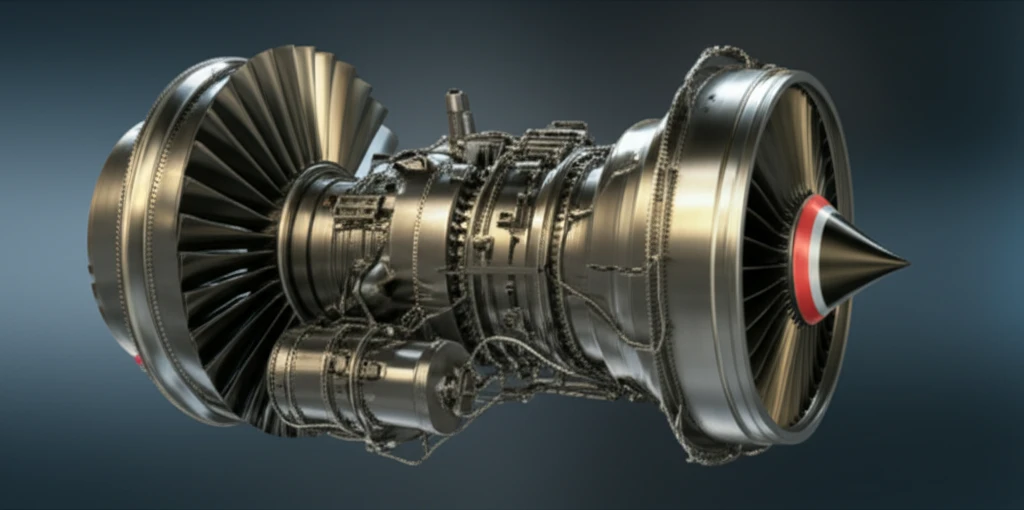
Gas turbine engine with protective chromium coating.

Can This Coating Keep Your Gas Turbine Running Longer?

"New research explores chromium-based coatings to protect gas turbines from wear and tear, potentially extending their operational life."


Gas turbines operate under extreme conditions, demanding materials that can withstand high temperatures and constant wear. One crucial strategy for improving turbine durability is the application of protective hard coatings. These coatings act as a barrier, shielding the underlying metal from damage and extending the lifespan of critical components.

Chromium-based coatings are popular because of their excellent wear resistance and thermal conductivity. Researchers are exploring ways to enhance these coatings further by adding elements like carbon (C) and cobalt (Co). The goal is to create coatings that are even harder and more resistant to wear, ensuring longer operational life for gas turbines.

This article explores the findings of a study that investigates the performance of chromium-based hard coatings, specifically Cr-C and Cr-Co, under accelerated wear testing. The research aims to predict how these coatings will perform in real-world gas turbine applications, potentially leading to significant improvements in turbine maintenance and longevity.

Decoding the Wear Resistance of Chromium Coatings

Gas turbine engine with protective chromium coating.

The study focused on two types of chromium-based coatings: Cr-C (chromium-carbide) and Cr-Co (chromium-cobalt). These coatings were applied to nickel-based substrates, mimicking the materials used in gas turbine combustor liners. The coatings were then subjected to accelerated wear tests at 100°C and 200°C to simulate the operating temperatures of gas turbines.

To predict the wear characteristics at higher operating temperatures, researchers used an accelerated wear test. This pin-on-disc method simulated metal-to-metal contact under controlled laboratory conditions. By measuring the volumetric loss of the coatings after different sliding times, the scientists could estimate their wear rate and predict their performance over extended periods.

The key parameters of the accelerated wear test included:
  • Coating Material: Cr-C and Cr-Co based coatings
  • Normal Load: 100 N
  • Rotational Speed: 200 rpm
  • Contact Temperatures: 100°C and 200°C
  • Sliding Time: 3,600 s (1 hour), 10,800 s (3 hours), and 18,000 s (5 hours)
The results showed that both Cr-C and Cr-Co coatings experienced a decrease in hardness with increasing temperatures. However, the Cr-Co coatings exhibited higher volume loss, indicating a lower wear resistance compared to the Cr-C coatings. By analyzing the data and establishing a logarithmic trend line, researchers quantitatively predicted the wear performance of both coatings at 370°C, a typical operating temperature for gas turbines.

The Verdict: Which Coating Extends Turbine Life?

The study concluded that Cr-C coatings exhibit superior wear resistance compared to Cr-Co coatings in gas turbine applications. The quantitative predictions indicated that Cr-C coated nickel alloy could significantly delay wear and prolong turbine operation from 8,000 to 12,000 operating hours at 370°C.

These findings suggest that Cr-C coatings are a promising solution for enhancing the durability and reliability of gas turbines. By reducing wear and extending the lifespan of critical components, these coatings can lead to significant cost savings and improved operational efficiency.

Further research and development in coating technology could lead to even more advanced solutions for protecting gas turbines from wear and tear. The insights gained from this study provide a valuable foundation for future innovations in materials science and engineering.

About this Article -

This article was crafted using a human-AI hybrid and collaborative approach. AI assisted our team with initial drafting, research insights, identifying key questions, and image generation. Our human editors guided topic selection, defined the angle, structured the content, ensured factual accuracy and relevance, refined the tone, and conducted thorough editing to deliver helpful, high-quality information.See our About page for more information.

This article is based on research published under:

DOI-LINK: 10.1088/1757-899x/429/1/012063, Alternate LINK

Title: Wear Prediction Via Accelerated Test On Chromium Based Hard Coatings For Gas Turbine Interfaces Applications Up To 370 °C

Subject: General Medicine

Journal: IOP Conference Series: Materials Science and Engineering

Publisher: IOP Publishing

Authors: S M Yunus, A A Pauzi, S Husin

Published: 2018-11-09

Everything You Need To Know

1

What specific coatings were tested for protecting gas turbines from wear?

The study specifically investigated chromium-carbide (Cr-C) and chromium-cobalt (Cr-Co) coatings applied to nickel-based substrates, which are commonly found in gas turbine combustor liners. By subjecting these coatings to accelerated wear tests under controlled conditions, the research aimed to determine their wear rate and predict their performance over extended periods.

2

What were the key parameters used in the accelerated wear test?

The accelerated wear test mimicked the metal-to-metal contact that occurs within gas turbines. Key parameters included using Cr-C and Cr-Co based coatings, applying a normal load of 100 N, maintaining a rotational speed of 200 rpm, testing at contact temperatures of 100°C and 200°C, and varying the sliding time from 3,600 s (1 hour) to 18,000 s (5 hours). This pin-on-disc method allowed researchers to measure the volumetric loss of the coatings, thus estimating their wear resistance.

3

Which coating, chromium-carbide (Cr-C) or chromium-cobalt (Cr-Co), is better for extending gas turbine life, and why?

The research indicates that chromium-carbide (Cr-C) coatings offer superior wear resistance compared to chromium-cobalt (Cr-Co) coatings in gas turbine applications. The study predicts that using Cr-C coated nickel alloy could extend turbine operation from 8,000 to 12,000 operating hours at 370°C. The difference in wear resistance is attributed to Cr-Co coatings exhibiting higher volume loss compared to Cr-C coatings at elevated temperatures.

4

Besides the chromium-based coatings mentioned, are there other types of coatings used for gas turbines, and what aspects were not explored in this research?

While the study focused on chromium-based coatings like Cr-C and Cr-Co, other coating materials are also used to protect gas turbines. These include but are not limited to ceramic coatings, which offer excellent thermal barrier properties. Further research comparing different coating types and compositions could help optimize turbine performance under various operating conditions. Additionally, the study did not explicitly explore the effects of different environmental factors, such as humidity or corrosive gases, which could also impact coating wear.

5

What are the economic implications of using Cr-C coatings to extend the operational life of gas turbines?

The use of Cr-C coatings to extend the operational life of gas turbines has significant economic implications. By prolonging the lifespan of turbine components, maintenance costs can be reduced, and the overall efficiency of power generation can be improved. This could lead to lower energy prices and increased reliability of power plants. Furthermore, the reduced frequency of turbine replacements translates to lower material consumption and waste generation, aligning with sustainability goals.

Newsletter Subscribe

Subscribe to get the latest articles and insights directly in your inbox.