
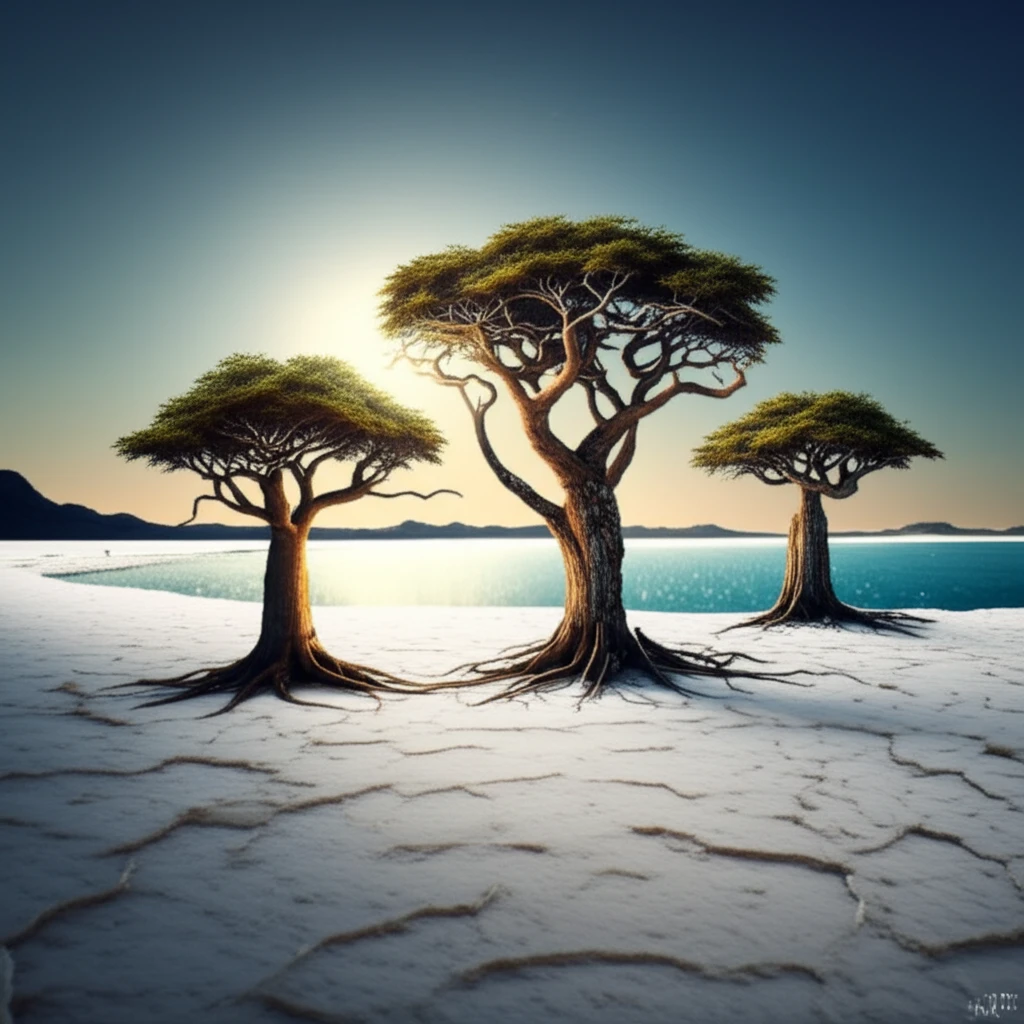
Can These African Trees Save Our Soil? Unlocking Nature's Salinity Solutions

"Discover how Senegalia senegal, Vachellia seyal, and Prosopis juliflora are leading the charge against soil degradation and offering hope for sustainable land restoration."
Soil salinity is a growing global crisis, turning fertile lands into barren landscapes, especially in arid and semi-arid regions. This silent threat impacts agriculture, ecosystems, and livelihoods worldwide. The challenge calls for innovative and sustainable solutions that harness the power of nature.
In Senegal, researchers are exploring the potential of three indigenous tree species—Senegalia senegal, Vachellia seyal, and Prosopis juliflora—to combat soil salinity. These trees, already known for their multiple uses, are now being studied for their remarkable ability to tolerate and even thrive in salty environments.
This research delves into the germination, growth, and physiological responses of these trees under saline conditions, revealing the secrets behind their resilience and their potential role in restoring degraded lands. Understanding these natural mechanisms could pave the way for more sustainable and eco-friendly approaches to land management and agricultural practices.
How Can These Trees Combat Salinity?
The study, conducted in greenhouse conditions, meticulously examined how different concentrations of salt (NaCl) affected the germination and growth of Senegalia senegal, Vachellia seyal, and Prosopis juliflora. Seeds were tested on Petri dishes with varying salt concentrations to observe germination rates. Seedlings were then grown in soil with controlled salinity levels to assess growth and physiological responses.
- Germination Rate: How well the seeds germinated under different salt concentrations.
- Plant Height and Collar Diameter: Indicators of overall growth and development.
- Shoot and Root Dry Biomass: Measures of plant productivity and health.
- Total Chlorophyll Content: Essential for photosynthesis and plant energy production.
- Proline Content: An amino acid that helps plants tolerate stress.
- Ion Accumulation (Na+, K+, Cl-): How the plants managed salt ions in their tissues.
- Salt Tolerance Index (STI): A measure of the plant's overall ability to tolerate salt stress.
Looking Ahead: A Future with Salt-Tolerant Trees
The research underscores the potential of Senegalia senegal and Vachellia seyal as key players in land restoration efforts, particularly in areas affected by salinity. Their ability to maintain good germination rates and overall growth, even under high salt concentrations, makes them valuable assets in combating desertification and promoting sustainable agriculture. Further studies, including field trials and molecular analysis of salt-tolerance genes, will help confirm their capabilities and guide their effective deployment in real-world restoration projects. These salt-tolerant trees offer a promising path forward, turning environmental challenges into opportunities for ecological and economic resilience.