
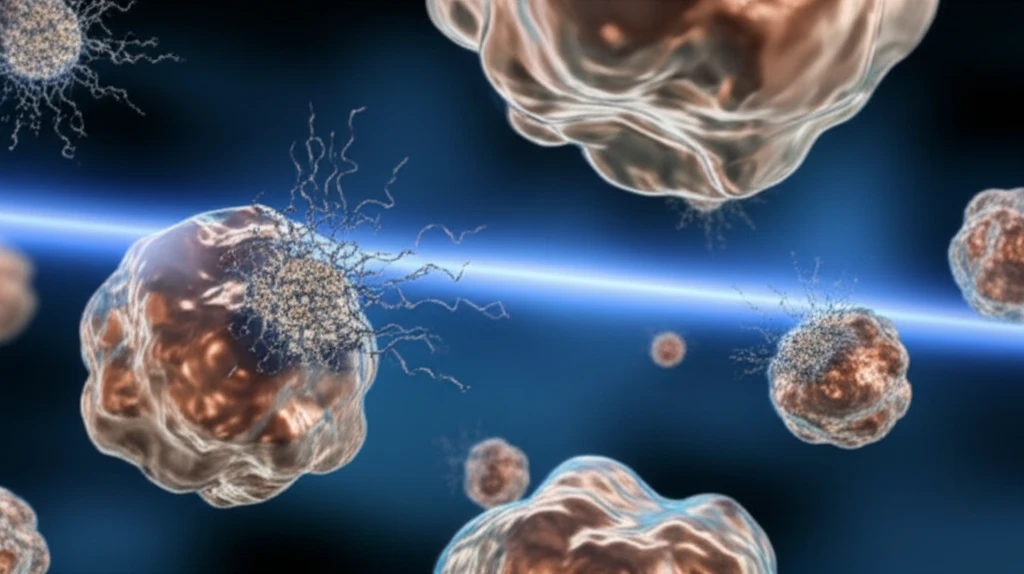
Selenium nanoparticles attacking lung cancer cells

Can Selenium Nanoparticles Be a New Hope for Lung Cancer Treatment?

"A New Study Reveals the Potential of Selenium Nanoparticles Combined with Radiotherapy in Fighting Lung Cancer"


Lung cancer remains a leading cause of cancer-related deaths worldwide. While treatments like chemotherapy and radiotherapy exist, they often come with harsh side effects, and resistance can develop. Scientists are constantly searching for new, more effective, and less toxic ways to combat this deadly disease. One promising area of research focuses on nanoparticles – tiny particles with unique properties that can be used for targeted drug delivery and enhanced treatment outcomes.

Selenium, an essential trace element, has gained attention for its antioxidant and anti-carcinogenic properties. However, selenium in its regular form can be toxic at high doses. Nanoparticles made of selenium (SeNPs) offer a potential solution, as they exhibit reduced toxicity and enhanced bioavailability. New research is exploring whether SeNPs, especially when combined with traditional treatments like radiotherapy, can offer a more effective approach to treating lung cancer.

This article dives into a recent study investigating the use of selenium nanoparticles (SeNPs) in combination with X-ray induced radiotherapy for the treatment of lung cancer, particularly in cases complicated by interstitial lung disease. We'll break down the research, explain the science, and explore what this could mean for the future of lung cancer treatment.

How Selenium Nanoparticles Enhance Lung Cancer Treatment

Selenium nanoparticles attacking lung cancer cells

The study focuses on the biosynthesis of selenium nanoparticles, their characterization, and their impact on X-ray induced radiotherapy for lung cancer treatment. Researchers synthesized SeNPs and tested their effectiveness against lung cancer cells in the lab. Key findings suggest that SeNPs exhibit several beneficial properties:

Selenium nanoparticles (SeNPs) show minimal toxicity and efficient antioxidant properties, making them attractive for anti-cancer applications. The anti-carcinogenic effect of selenium nanoparticles against lung cancer was studied.

  • Enhanced Radiosensitivity: SeNPs make lung cancer cells more sensitive to radiation, increasing the effectiveness of radiotherapy.
  • Reduced Toxicity: SeNPs appear to be less toxic to healthy cells compared to traditional chemotherapy drugs, potentially leading to fewer side effects.
  • Synergistic Effect: The combination of SeNPs and X-ray irradiation demonstrates a synergistic effect, meaning the combined treatment is more effective than either treatment alone.
Researchers observed that SeNPs effectively induce cell death (apoptosis) in lung cancer cells, particularly when combined with X-ray exposure. This combined approach appears to disrupt the cancer cells' ability to repair themselves, leading to improved treatment outcomes.

The Future of Lung Cancer Treatment: A Nanoparticle Approach?

This research provides compelling evidence that selenium nanoparticles hold significant promise as a new approach to lung cancer treatment. By enhancing the effectiveness of radiotherapy and reducing toxicity to healthy cells, SeNPs could potentially improve patient outcomes and quality of life.

While these findings are encouraging, it's important to remember that this research is still in its early stages. More studies are needed to fully understand the long-term effects of SeNPs and to optimize their use in clinical settings. Future research will likely focus on:

<ul> <li><b>Clinical trials:</b> Testing the safety and efficacy of SeNPs in human patients with lung cancer.</li> <li><b>Targeted delivery:</b> Developing methods to deliver SeNPs specifically to cancer cells, further reducing toxicity to healthy tissues.</li> <li><b>Personalized medicine:</b> Identifying which patients are most likely to benefit from SeNP-based therapies.</li> </ul>

About this Article -

This article was crafted using a human-AI hybrid and collaborative approach. AI assisted our team with initial drafting, research insights, identifying key questions, and image generation. Our human editors guided topic selection, defined the angle, structured the content, ensured factual accuracy and relevance, refined the tone, and conducted thorough editing to deliver helpful, high-quality information.See our About page for more information.

This article is based on research published under:

DOI-LINK: 10.1016/j.jphotobiol.2018.12.008, Alternate LINK

Title: Biosynthesis Of Selenium Nanoparticles, Characterization And X-Ray Induced Radiotherapy For The Treatment Of Lung Cancer With Interstitial Lung Disease

Subject: Radiology, Nuclear Medicine and imaging

Journal: Journal of Photochemistry and Photobiology B: Biology

Publisher: Elsevier BV

Authors: Liza Yue Cruz, Di Wang, Jiwei Liu

Published: 2019-02-01

Everything You Need To Know

1

Why is it important to find new treatments for lung cancer?

Lung cancer is a significant health concern, remaining a leading cause of cancer-related deaths globally. Traditional treatments like chemotherapy and radiotherapy often lead to harsh side effects and the potential for resistance to develop. This context highlights the urgent need for more effective and less toxic treatment options.

2

What are selenium nanoparticles (SeNPs)?

Selenium nanoparticles (SeNPs) are tiny particles made of selenium, an essential trace element known for its antioxidant and anti-carcinogenic properties. These nanoparticles are designed to have reduced toxicity and enhanced bioavailability compared to selenium in its regular form. The specific properties of SeNPs, such as their ability to enhance radiosensitivity and reduce toxicity, make them a promising area of research for lung cancer treatment.

3

How do Selenium nanoparticles (SeNPs) help treat lung cancer?

SeNPs enhance radiosensitivity by making lung cancer cells more vulnerable to radiation, boosting the effectiveness of radiotherapy. They appear to be less harmful to healthy cells compared to traditional chemotherapy drugs, thus possibly resulting in fewer side effects. The combined effect of SeNPs with X-ray irradiation shows a synergistic action, meaning the combined treatment is more effective than either treatment separately. This combination disrupts the cancer cells' ability to repair themselves, leading to better treatment results.

4

What was the study about?

The study explores the use of selenium nanoparticles (SeNPs) in combination with X-ray induced radiotherapy for the treatment of lung cancer, particularly in cases complicated by interstitial lung disease. Key findings highlight that SeNPs exhibit several advantageous properties, like minimal toxicity, efficient antioxidant properties, and an anti-carcinogenic effect. Researchers discovered that SeNPs can effectively induce cell death (apoptosis) in lung cancer cells, especially when used with X-ray exposure.

5

What does this research mean for the future of lung cancer treatment?

By enhancing the effectiveness of radiotherapy and reducing toxicity to healthy cells, Selenium nanoparticles hold significant promise as a new approach to lung cancer treatment. This research could improve patient outcomes and quality of life. Further research is needed to fully understand the benefits and potential long-term effects of using SeNPs in treating lung cancer. This could lead to more targeted and personalized treatment strategies.

Newsletter Subscribe

Subscribe to get the latest articles and insights directly in your inbox.