
Can Nanotechnology Conquer Brain Cancer? A Promising New Approach

"Researchers are developing innovative gold nanocages to deliver targeted therapy for glioblastoma, offering hope for improved outcomes."
Brain cancer remains one of the most formidable challenges in modern medicine. Glioblastoma, in particular, stands out due to its aggressive nature and resistance to conventional treatments. Complete removal of these tumors through surgery is often impossible because of their infiltrative growth, making them a severe threat to human health. Existing treatments, including surgery, radiation, and chemotherapy, offer limited success, with a median overall survival of just 14.6 months post-diagnosis.
Photodynamic therapy (PDT) has emerged as a clinically approved treatment for various cancers. PDT involves using a photosensitizer (PS), a specific wavelength of light, and molecular oxygen to destroy cancer cells. However, traditional PDT faces limitations due to the poor water solubility of many photosensitizers and their short wavelength absorption, which restricts the depth of light penetration into tissues. This is especially problematic for deep-seated tumors like glioblastoma.
To overcome these obstacles, researchers are exploring innovative approaches using nanotechnology. One promising strategy involves encapsulating near-infrared (NIR) photosensitizers within gold nanocages coated with biocompatible materials. This method aims to improve drug delivery, enhance treatment efficacy, and minimize side effects, potentially revolutionizing how we combat brain cancer.
How Do Gold Nanocages Enhance Glioblastoma Treatment?
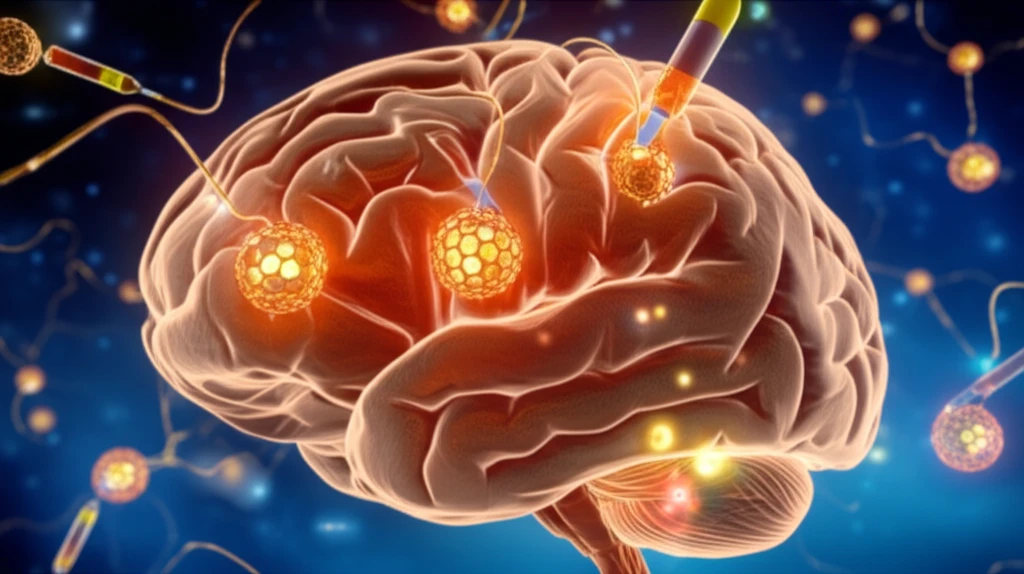
Researchers have developed a novel approach using gold nanocages to deliver a potent near-infrared (NIR) photosensitizer (SiNC) directly to glioblastoma cells. These nanocages are structured with pores that allow small molecules to be encapsulated, providing a protective environment for the drug. The surface of these nanocages is then coated with glycol chitosan (GC), a biocompatible polymer, using either a cleavable peptide linkage or a stable cysteine linkage. This coating serves multiple purposes:
- Improved Water Solubility: NIR photosensitizers are often poorly soluble in water, limiting their effectiveness. Encapsulation within gold nanocages improves their water solubility, allowing for better dispersion and delivery in the body.
- Enhanced Biocompatibility: Gold nanoparticles, while effective carriers, can sometimes be toxic. Coating them with glycol chitosan enhances their biocompatibility, making them safer for clinical applications.
- Targeted Drug Release: The cleavable peptide linkage ensures that the photosensitizer is released specifically within the tumor cells, minimizing damage to healthy tissues.
- Photothermal Effects: Gold nanocages also act as photothermal agents, generating heat when exposed to NIR light. This heat can further damage cancer cells, enhancing the therapeutic effect of the photosensitizer.
The Future of Nanotechnology in Brain Cancer Treatment
This research highlights the potential of nanotechnology to revolutionize brain cancer treatment. By combining the unique properties of gold nanocages, biocompatible polymers, and targeted drug release mechanisms, scientists are developing more effective and less toxic therapies for glioblastoma. While further studies are needed to translate these findings into clinical applications, this approach offers a promising new avenue for improving patient outcomes and ultimately conquering this deadly disease.