
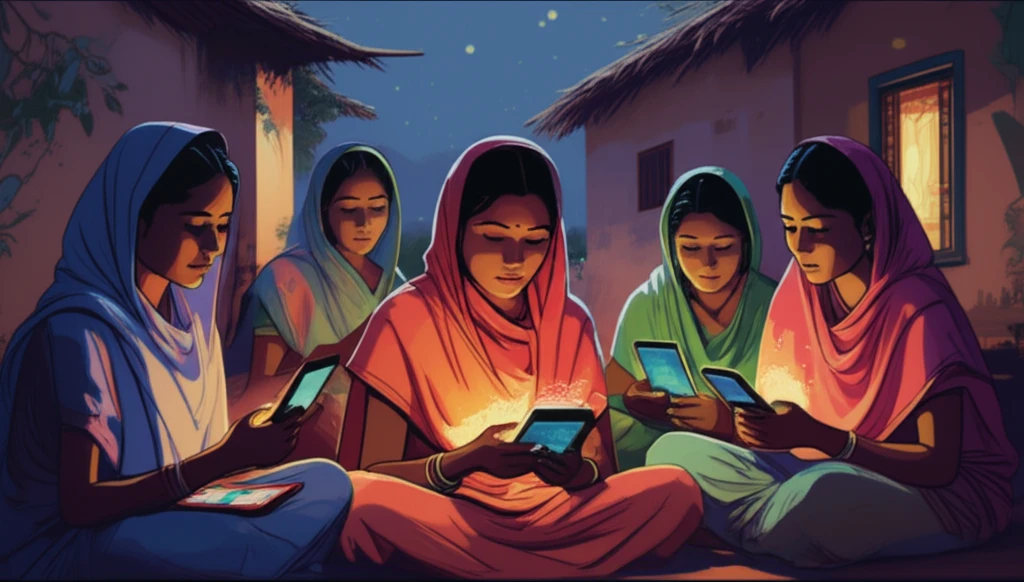
Empowered ASHA workers using mHealth technology in rural India.

Can Mobile Health Improve Healthcare Access in Rural India? The Impact of mHealth Interventions

"A look at how technology is transforming community health and empowering frontline workers."


India, with its vast and diverse population, faces significant challenges in delivering adequate healthcare, especially to its rural and tribal communities. Despite improvements in maternal, newborn, and child health (MNCH) care coverage since the launch of the National Rural Health Mission (NRHM) in 2005, disparities persist. One promising solution lies in the innovative use of mobile health (mHealth) interventions.

mHealth leverages mobile technology to provide health services, including disseminating health education, reminders, emergency responses, support, and monitoring. Given the increasing mobile connectivity in India, mHealth presents an opportunity to enhance the capacity and effectiveness of health workers, particularly Accredited Social Health Activists (ASHAs), who play a pivotal role in bridging the gap between communities and healthcare services.

A recent study published in 'Acta Pædiatrica' delves into the impact of an mHealth intervention on improving the knowledge and skills of ASHAs in tribal areas of Gujarat, India. This nested study within an implementation research trial, explores the effectiveness of the ImTeCHO (Innovative Mobile Health Technology for Community Health Operations) application in enhancing MNCH care.

How Does mHealth Empower ASHAs in Rural India?

Empowered ASHA workers using mHealth technology in rural India.

The ImTeCHO application is designed to support ASHAs in their daily tasks by:

This mHealth intervention provides ASHAs with essential tools and resources to enhance their knowledge and skills, ultimately improving healthcare delivery in underserved areas.

  • Scheduling visits to infants and mothers with automatic mobile phone alerts.
  • Reminding ASHAs of essential tasks during home visits.
  • Providing inbuilt health education videos for effective counseling and behavior change communication.
  • Offering algorithms for diagnosing high-risk low birth weight (LBW) infants and their treatment plans.
  • Training and regular updates through audio and video lectures to increase knowledge and skills.
  • Providing access to an ImTeCHO helpline for support and guidance on MNCH care.
The training component includes vital information on institutional delivery, antenatal examinations, essential newborn care, exclusive breastfeeding, complementary feeding, and the recognition of danger signs during pregnancy, the newborn period, and early infancy. Short videos demonstrate skills such as recognizing anemia, measuring a newborn’s weight and temperature, counting breaths for pneumonia, and identifying dehydration during diarrhea.

The Future of mHealth in India: Scaling Impact and Overcoming Challenges

The study confirms that the ImTeCHO application has the potential to improve the knowledge and skills of ASHAs. By using mobile phone technology, we can provide ongoing training to ASHAs, enhancing their capabilities and, in turn, improving healthcare outcomes for mothers and children in rural India. Further research is needed to explore additional mHealth strategies and address challenges such as network connectivity in remote areas, ensuring that technology continues to bridge the healthcare gap and empower communities.

About this Article -

This article was crafted using a human-AI hybrid and collaborative approach. AI assisted our team with initial drafting, research insights, identifying key questions, and image generation. Our human editors guided topic selection, defined the angle, structured the content, ensured factual accuracy and relevance, refined the tone, and conducted thorough editing to deliver helpful, high-quality information.See our About page for more information.

Everything You Need To Know

1

What exactly is mobile health (mHealth) and why is it important in the context of healthcare in India?

Mobile health, or mHealth, refers to the use of mobile technology, such as smartphones and tablets, to deliver health services and information. mHealth includes a range of applications, from sending health education messages to providing remote monitoring and support. It is important because it leverages the increasing mobile connectivity to enhance the capacity and effectiveness of health workers and bridge gaps in healthcare access.

2

Who are Accredited Social Health Activists (ASHAs) and why are they so important in rural Indian healthcare?

Accredited Social Health Activists, or ASHAs, are community health workers who play a crucial role in connecting communities with healthcare services, particularly in rural areas. ASHAs are significant because they are often the first point of contact for healthcare in underserved areas. mHealth interventions can empower ASHAs by providing them with tools, resources, and training to improve their knowledge and skills, ultimately enhancing healthcare delivery.

3

What is the ImTeCHO application, and what makes it significant for healthcare operations?

The ImTeCHO (Innovative Mobile Health Technology for Community Health Operations) application is an mHealth intervention designed to support ASHAs in their daily tasks. The ImTeCHO application is significant because it enhances MNCH care by providing ASHAs with essential tools and resources, such as scheduling reminders, health education videos, diagnostic algorithms, and access to a helpline. By using the ImTeCHO application, ASHAs can improve their knowledge and skills, leading to better healthcare outcomes for mothers and children.

4

How can mHealth specifically improve maternal, newborn, and child health (MNCH) care?

mHealth can improve maternal, newborn, and child health (MNCH) care by providing health workers with the tools and resources they need to deliver quality care. For example, the ImTeCHO application includes features such as reminders for essential tasks, health education videos, and algorithms for diagnosing high-risk infants. This enables health workers to provide timely and effective care, improving outcomes for mothers and children. Further research is needed to explore additional mHealth strategies and address challenges such as network connectivity in remote areas.

5

What are the biggest challenges facing mHealth initiatives in India, and why is it important to overcome them?

mHealth faces challenges such as network connectivity in remote areas. Overcoming these challenges is important to ensure that technology continues to bridge the healthcare gap and empower communities. Further research is needed to explore additional mHealth strategies to improve coverage.

Newsletter Subscribe

Subscribe to get the latest articles and insights directly in your inbox.