
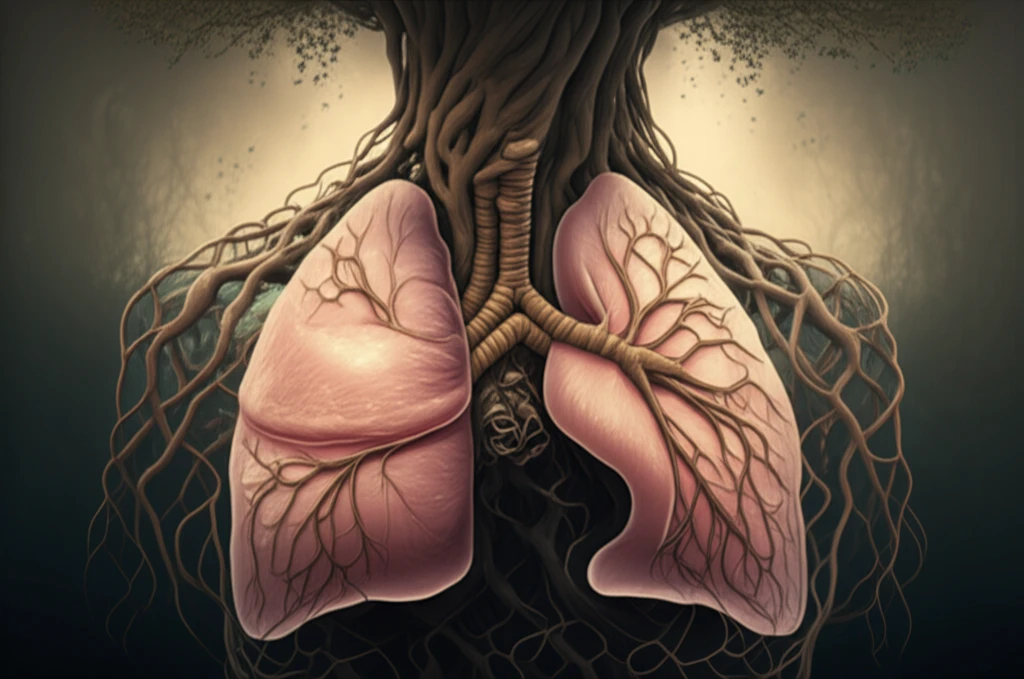
Lungs intertwined with tree roots representing the connection between movement and respiratory health.

Can Limited Movement Impact Your Breathing? What the Research Says

"A new study explores how restricting movement affects lung function and offers insights for maintaining respiratory health."


Immobilization, whether due to injury, illness, or lifestyle, affects more than just your muscles and bones. It can have a ripple effect throughout your body, including your respiratory system. When movement is restricted, it can lead to structural and functional changes in the lungs, potentially impacting how well you breathe.

While many studies have explored the impact of immobilization on the musculoskeletal system, less is known about its specific effects on respiratory health. Therefore, a study was conducted to analyze pulmonary function and the lung's micromechanical structure following movement restriction.

This article will break down the key findings of a study published in Fisioter Pesqui (2017) that investigated the effects of movement restriction on the respiratory system in female rats. We'll explore how limited movement can lead to reversible functional changes in the lungs, emphasizing the importance of staying active for respiratory well-being. This research provides valuable insights applicable to anyone experiencing restricted movement, offering a deeper understanding of how to maintain healthy lung function.

How Does Movement Restriction Affect Lung Function?

Lungs intertwined with tree roots representing the connection between movement and respiratory health.

The Fisioter Pesqui study involved immobilizing female Wistar rats for 14 days and then assessing their pulmonary function and lung structure. The researchers divided the rats into two groups: a control group with normal movement and an immobilized group. The immobilization process involved restricting movement in the abdomen, pelvis, hips, knees, and ankles.

After the immobilization period, the researchers analyzed the rats' lung function using a mechanical ventilator and alveolar recruitment maneuvers. They also examined lung tissue samples to assess micromechanical properties. The study revealed significant changes in the immobilized group, specifically:

  • Increased Airway Resistance: The immobilized rats showed higher airway resistance (Raw), indicating it was more difficult for air to flow in and out of their lungs.
  • Elevated Hysteresivity: The immobilized rats also exhibited increased hysteresivity (n), suggesting that their lungs were becoming mechanically heterogeneous, leading to irregular ventilation distribution.
  • Reversible Changes: The good news is that these changes were reversible. After recruitment maneuvers (a technique to open up collapsed alveoli), the Raw and n values returned to normal levels.
These findings suggest that even short periods of movement restriction can lead to functional changes in the respiratory system. The increased airway resistance and hysteresivity indicate a potential compromise in lung function, but the reversibility of these changes highlights the lung's capacity to recover with appropriate interventions.

What Does This Mean for You?

The study's findings underscore the importance of maintaining an active lifestyle for respiratory health. Even if you're temporarily limited in your movement due to injury or other circumstances, simple steps can help mitigate the negative effects on your lungs.

If you are experiencing restricted movement, consult with a healthcare professional. They can recommend exercises and breathing techniques to help maintain lung function and prevent complications. Even gentle movements and deep breathing exercises can make a significant difference.

This research provides a valuable reminder that our bodies are interconnected, and movement plays a crucial role in maintaining overall health. By prioritizing an active lifestyle and taking proactive steps to support respiratory function, we can breathe easier and live healthier lives.

About this Article -

This article was crafted using a human-AI hybrid and collaborative approach. AI assisted our team with initial drafting, research insights, identifying key questions, and image generation. Our human editors guided topic selection, defined the angle, structured the content, ensured factual accuracy and relevance, refined the tone, and conducted thorough editing to deliver helpful, high-quality information.See our About page for more information.

Everything You Need To Know

1

What was the main focus of the study?

The research specifically examined the impact of movement restriction on the respiratory system. This was done by immobilizing female Wistar rats for 14 days. The study then assessed their pulmonary function and lung structure. The results revealed significant changes, specifically increased Airway Resistance and elevated Hysteresivity in the immobilized group, emphasizing the connection between movement and lung health.

2

What changes did the study find in the lungs due to movement restriction, and were these changes permanent?

The study's findings revealed that movement restriction can lead to functional changes in the lungs, such as increased Airway Resistance and elevated Hysteresivity. Increased Airway Resistance indicates it's harder for air to flow, while elevated Hysteresivity suggests the lungs become mechanically heterogeneous. The study on female Wistar rats found that these changes were reversible. This reversibility means that lung function can recover with appropriate interventions, such as recruitment maneuvers, highlighting the lungs' ability to adapt and heal.

3

What does 'Airway Resistance' mean in the context of this research, and why is it important?

The term 'Airway Resistance' (Raw) refers to the opposition to airflow within the respiratory passages. When movement is restricted, as shown in the study with female Wistar rats, the Airway Resistance can increase. This means it becomes more difficult for air to move in and out of the lungs, potentially affecting the efficiency of breathing. Elevated Airway Resistance is a key finding in the research, directly linking limited movement to compromised lung function.

4

What does 'Hysteresivity' indicate, and what were the implications of its increase in the study?

Hysteresivity (n), in the context of this research, describes the mechanical heterogeneity of the lungs. Elevated Hysteresivity, observed in the immobilized rats, indicates that the lungs' mechanical properties become uneven, leading to irregular ventilation distribution. This means that different parts of the lungs may not be expanding and contracting uniformly, potentially reducing the efficiency of gas exchange. The study on female Wistar rats found the elevated Hysteresivity was a result of movement restriction.

5

What are the key takeaways from the study regarding maintaining respiratory health?

The implications of these findings highlight the importance of maintaining an active lifestyle for healthy lungs. Even short periods of movement restriction can lead to negative changes in lung function, such as increased Airway Resistance and elevated Hysteresivity. However, the reversibility of these changes suggests that engaging in activities that promote lung health, such as recruitment maneuvers, can help mitigate these effects. This emphasizes the need to stay active to support respiratory well-being.

Newsletter Subscribe

Subscribe to get the latest articles and insights directly in your inbox.